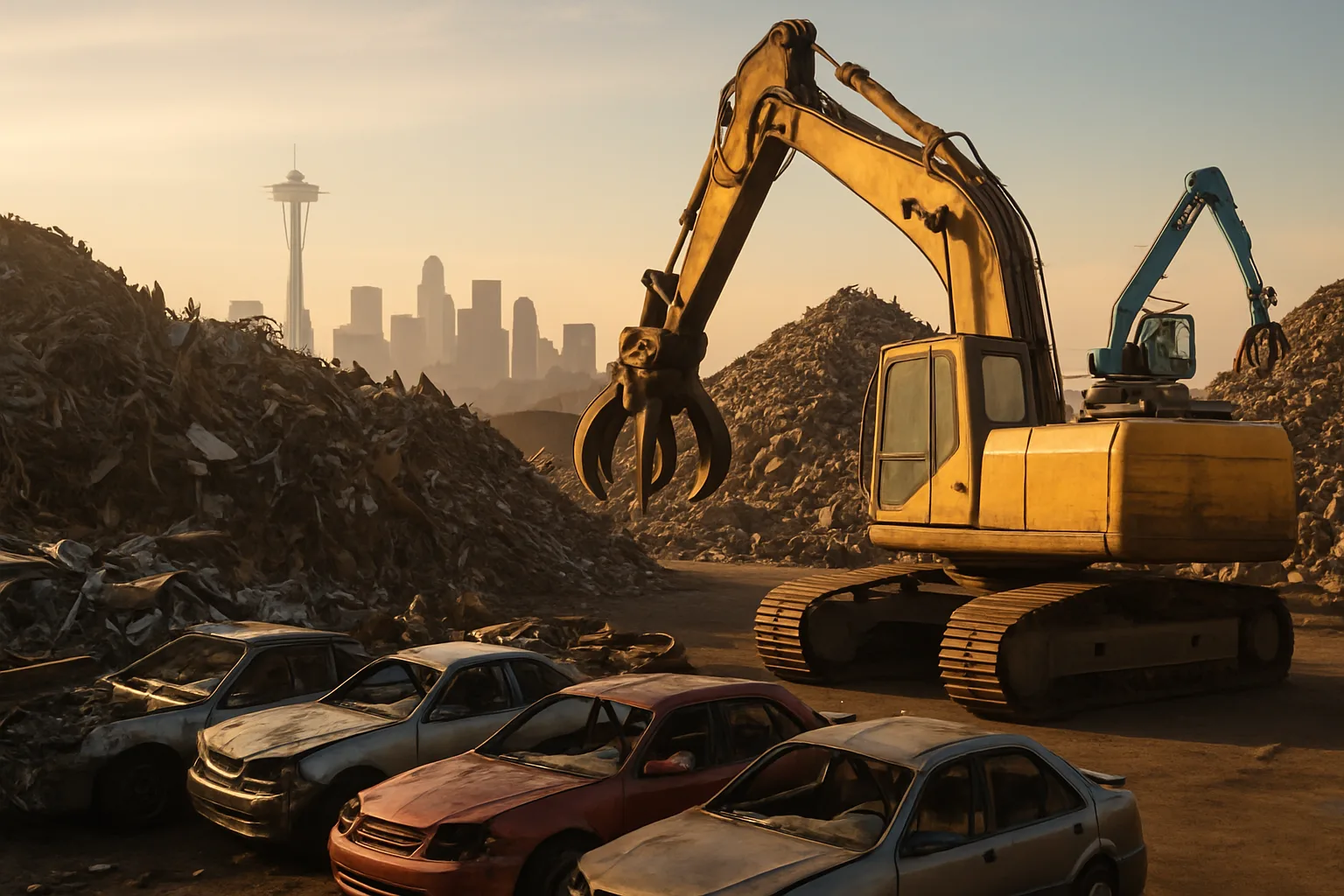
Most cars spend their whole lives being driven, ignored, and taken for granted. Then one day, the repair bill lands — and suddenly that 2009 Civic with 190,000 miles isn't worth fixing anymore. What happens next? Where does it actually go? If you're sitting in Seattle wondering whether to sell your scrap car for fair pricing, understanding the full lifecycle of a vehicle might be the most useful thing you read today.
This is a story about steel, rubber, copper wire, and catalytic converters. It's about the gap between "this car is dead" and "this car is a resource." And it's about how platforms like SMASH are changing what happens at the end of that road — for yards, buyers, and vehicle owners alike.
From Assembly Line to Open Road: How a Car Begins
A new vehicle rolls out of the factory as roughly 3,000 pounds of mixed materials. Steel and iron make up the bulk — typically around 55–60% of total vehicle weight. The rest is aluminum, copper, plastics, rubber, glass, and precious metals. That last category includes platinum, palladium, and rhodium locked inside the catalytic converter. Small amounts. Big value.
Every part is engineered with a lifespan in mind. Brake pads wear out in 30,000–70,000 miles. Timing belts go at 60,000–100,000. Transmissions can last 150,000 miles with proper care — or blow at 80,000 without it. The vehicle is, from day one, a countdown clock. The question is never if it ends. It's when, and what happens after.
The Middle Years: Ownership, Wear, and the Slow Decline
Most passenger vehicles change hands two to four times before they reach the end of their drivable life. A car might start as a new purchase in Bellevue, get traded in after five years, get resold to a family in Tacoma, then passed to a college student before finally sitting dead in a driveway in South Seattle. Each owner adds miles, adds wear, and slowly reduces the vehicle's market value.
The decline isn't always dramatic. Sometimes it's rust creeping up from the wheel wells after too many Washington winters. Sometimes it's a blown head gasket that costs more than the car is worth. Sometimes the transmission slips, the AC dies, and the check engine light becomes permanent furniture. At some point, the math stops working. Repair costs exceed resale value — and the car crosses an invisible line from "used vehicle" to "junk car."
That moment feels like a loss. But it's actually the beginning of a second life.
What Happens When a Car Reaches the Scrap Yard
When a vehicle arrives at an auto recycler or scrap yard, the process is more methodical than most people picture. It's not just crushed and melted. There's a specific sequence — and every step extracts value.
- Depollution: Fluids are drained first. Engine oil, transmission fluid, coolant, brake fluid, refrigerants — all removed and either recycled or disposed of properly. This is legally required in Washington state and most of North America.
- Parts harvesting: High-value components get pulled before anything else. Catalytic converters (the cats) come off first — they contain precious metals and can be worth hundreds of dollars each. Engines, transmissions, alternators, starters, doors, mirrors, and electronics follow depending on demand.
- Fluids and batteries: Lead-acid batteries are removed and recycled separately. Tires go to rubber recyclers.
- Hulk processing: What's left — the shell — gets shredded or baled. Steel is separated magnetically. Aluminum and copper are recovered through downstream processing. Very little goes to landfill.
A well-processed scrap vehicle recovers roughly 80% of its material weight for reuse. The automotive recycling industry in North America processes millions of vehicles every year. It's one of the most material-efficient industries that exists.
The Seattle Angle: Why Local Matters When You Sell Scrap Car Seattle
If you're in the Pacific Northwest looking to sell scrap car Seattle, location shapes your experience more than most people realize. Seattle's climate — wet winters, mild temps, salt air near the water — accelerates certain kinds of corrosion. Frames rust. Brake lines corrode. Body panels pit faster than in drier climates like Arizona or Nevada.
That affects scrap value. A vehicle with heavy frame rust may be worth less in salvageable parts, but the steel scrap weight stays the same. Local Seattle scrap metal services understand these regional patterns. They know what parts pull from Pacific Northwest vehicles, what's in demand locally, and how to quote your specific car accurately — not based on a national average that has nothing to do with your actual vehicle.
Washington state also has clear regulations around vehicle title transfers and environmental compliance at dismantlers. Working with a licensed service protects you legally. It ensures the car gets properly depolluted and doesn't end up abandoned — which can create liability for the original owner.
Getting free scrap car pickup Seattle means the tow truck comes to you. No trailer rental. No hauling a dead car across town. The vehicle gets picked up, the paperwork gets handled, and you get paid. That's it.
Where SMASH Fits Into the Scrap Car Lifecycle
Here's where the story gets interesting for the yards and buyers involved. Once your vehicle arrives at a recycler, the real question is: what happens to the parts and materials that come off it?
The old model? One buyer, one phone call, one price — take it or leave it. A yard in Renton would call the same copper buyer they've called for years, get a number, and move on. Nobody knew if that number was fair. Nobody pushed back. The market stayed opaque.
SMASH — the scrap metal auction platform — changes that dynamic completely. Yards list their loads, cores, and non-ferrous material on a vetted buyer network. Multiple buyers compete. Price discovery happens in real time, not behind closed doors. That competition can help reveal the actual market value of what you've got — whether it's a load of shredded steel, a batch of catalytic converter cores, or a pallet of aluminum wheels.
When yards get better prices for the material that comes off your vehicle, the whole ecosystem moves better. The SMASH scrap platform uses photo documentation, serial tracking, and VIN lookup tools so buyers can bid with confidence — not guesswork. That transparency is good for everyone downstream.
If you want to read scrap car selling guides that go deeper on how scrap pricing works, how your car's value gets calculated, and what to expect from the process, there's a full library of resources available.
How to Actually Sell Your Scrap Car in Washington — Step by Step
First-time sellers in Washington often overthink this. The process is straightforward when you work with the right service.
- Get a quote. Give the service your year, make, model, mileage, and condition. Be honest about damage and missing parts — accuracy gets you a real number, not a lowball adjusted at pickup.
- Schedule your free pickup. Most services in the Seattle area can schedule within 24–72 hours. You pick the time. They come to your address.
- Have your title ready. Washington requires a signed title to transfer vehicle ownership legally. If your title is lost, you'll need to apply for a duplicate through the Washington DOL before the sale. Some services can advise on this process.
- Get paid. Payment happens at pickup or shortly after, depending on the service. Cash, check, or electronic transfer — confirm the method before you book.
- Cancel your insurance and plates. Once the vehicle is gone, contact your insurer. In Washington, you can return plates or transfer them to a replacement vehicle.
The whole process — from quote to pickup — can happen in a single day if you're organized. Most people are done in 48 hours. Then the car moves into its second life at the yard, and the cycle continues.
Ready to close the chapter on that old car? Schedule a free scrap car pickup and get a real quote based on your actual vehicle — not a generic estimate.
If you've been sitting on a vehicle that hasn't moved in months — or years — the lifecycle it started on the assembly line isn't over yet. The steel in your frame, the copper in your wiring harness, the aluminum in your wheels: all of it still has value. Sell your scrap car today — get a fair quote at sell-myscrapcar.com and put that value where it belongs: in your pocket, not your driveway.
Frequently Asked Questions
Q: How do I sell a scrap car in Seattle without a title?
Washington state generally requires a title to legally transfer vehicle ownership to a scrap buyer. If your title is lost, you'll need to apply for a duplicate through the Washington Department of Licensing (DOL) before completing the sale. Some buyers can walk you through the process, but be cautious of any service that offers to skip this step — it can create legal liability for you down the road.
Q: Is free scrap car pickup actually free in Seattle?
Yes — legitimate scrap car services in the Seattle area offer free towing as part of the deal. The cost of pickup is built into their operating model, not charged to you. You should not pay anything out of pocket for a standard scrap car removal. If a service quotes you a towing fee, shop around.
Q: What is my junk car actually worth in Washington?
Scrap car value depends on the vehicle's weight, the current price of scrap steel, the condition of salvageable parts (especially the catalytic converter), and your location. Prices fluctuate with the scrap metal market, so a quote today may differ from a quote next week. Always get your quote close to the time you plan to sell, and confirm it's good for a set number of days.
Q: How does a scrap metal auction platform like SMASH affect what I get paid?
SMASH operates at the yard and buyer level — it's the tool recyclers use to sell the material that comes off your car at competitive prices. When yards get better prices for their loads through competitive auctions, it supports a healthier pricing environment for the whole supply chain. It's not a consumer-facing tool, but it's part of why working with established recyclers can result in better offers.
Q: How long does scrap car pickup take in Seattle?
Most services in the Seattle area can schedule pickup within 24–72 hours of your quote. Same-day pickup is sometimes available depending on your location and the service's schedule. The actual pickup — including paperwork — typically takes 20–30 minutes once the driver arrives.
Follow SMASH on LinkedIn for scrap metal market updates, industry insights, and news from the auction platform built for yards and buyers across North America.