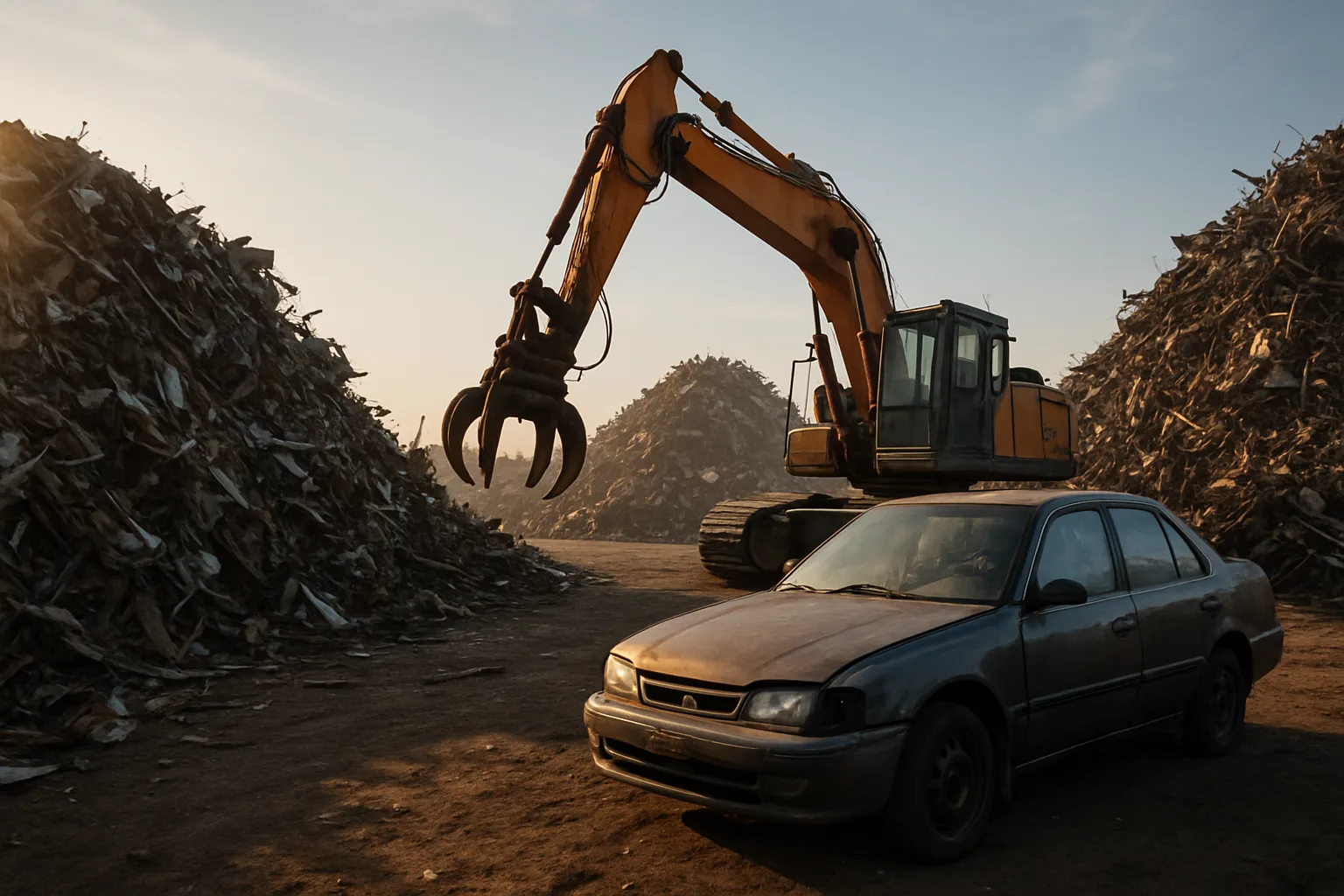
Most junk car buyers are counting on one thing: that you won't negotiate. They make a lowball offer, you take it because you just want the thing gone, and they pocket the difference. If you're trying to sell scrap car Oakland residents actually get fair money for, you need to walk into that conversation differently.
Here's the reality — your end-of-life vehicle has real value. The steel, aluminum, copper wiring, and especially the catalytic converter all have market prices attached to them. The buyer knows those numbers. The question is whether you do too.
This guide breaks down exactly how to negotiate stronger offers from junk car buyers, what information gives you leverage, and how platforms like SMASH are changing the way scrap vehicles get sold.
1. Know What Your Car Is Actually Worth Before You Make a Single Call
Negotiation without data is just guessing. Before you contact any junk car buyer, spend 20 minutes gathering real information about your vehicle. This is the single most impactful thing you can do to protect your payout.
Start with the basics: year, make, model, trim level, mileage, and condition. Then go deeper. Does it run? Are the catalytic converters intact? Is the transmission still in the car? Each of these factors moves your number — sometimes significantly. A scrap car value calculator can give you a rough baseline, but the real leverage comes from understanding the commodity breakdown underneath your hood.
- Ferrous metal (steel/iron): The bulk of most vehicles. Price fluctuates with steel markets.
- Non-ferrous metals (aluminum, copper): Higher value per pound. Wheels, radiators, and wiring matter.
- Catalytic converters: Often the highest-value single component on a scrap vehicle. Precious metal content (platinum, palladium, rhodium) drives prices wildly based on the market.
- Engine and transmission: If they're intact and functional, some buyers pay a premium for core value.
Walk into any negotiation knowing roughly what your car weighs (most passenger vehicles run 3,000–4,500 lbs), what metals it contains, and whether your catalytic converter is still attached. That knowledge alone separates you from 90% of sellers.
2. Get Multiple Offers — and Don't Hide That Fact
Single-buyer conversations are where money disappears. When only one buyer knows you're selling, they set the price. When three buyers know you're selling, the price finds its real level through competition.
This is exactly the principle behind a catalytic converter auction model — and it works just as well for whole vehicles. When buyers compete, they have to sharpen their pencils. The first offer is almost never the best offer. Getting multiple quotes from junk car buyers near me for cash is free, and the price spread between the lowest and highest offer can be surprisingly wide.
Be transparent about it. When a buyer calls with an offer, it's completely fair to say: "I've got a couple of other buyers looking at this. Can you do better?" That sentence alone has moved offers. You're not bluffing — you're creating legitimate competition, which is how markets are supposed to work.
In Oakland, you have access to a healthy ecosystem of auto recyclers, salvage yards, and online buyers. Use that. Don't call one number and stop.
3. Protect Your Catalytic Converter — It Changes Everything
If your car still has its catalytic converter, that's not a footnote — it's potentially the most important line item in your deal. Catalytic converters contain precious metals, and their value depends on the specific vehicle (a Toyota Prius cat is worth dramatically more than one from a compact sedan) and current commodity prices.
Here's where sellers lose money without realizing it: some buyers quote you a "whole car" price that quietly bakes in a low cat value. Then they strip it out and sell it separately for full market rate. You can avoid this by asking directly: "What are you pricing my catalytic converter at?" If they can't or won't answer clearly, that's information.
Platforms like SMASH run a competitive catalytic converter auction format specifically because transparency on cat pricing creates better outcomes for sellers. That same principle applies when you're negotiating with a local buyer — the more specific the line items, the harder it is to bury value in vague lump-sum offers.
If you're selling in California, be aware that regulations around catalytic converter sales have tightened in recent years. Make sure any buyer you deal with is operating within current California state requirements — ask for their license or recycler credentials before you hand over the vehicle.
4. Use Documentation as a Negotiating Tool
Most sellers show up with a title and nothing else. Organized documentation signals to a buyer that you're serious, informed, and not someone to lowball. It also protects you legally and logistically.
What to have ready before you negotiate:
- Vehicle title: Non-negotiable. No legitimate buyer completes a purchase without it.
- VIN number: Lets buyers quickly pull vehicle specs, weight class, and history. Having it ready speeds up the process and shows you've done your homework.
- Photos: Clear images of the vehicle's condition, the catalytic converter location, any intact components (engine, wheels, glass), and any damage. Buyers who can see what they're getting are more confident — and confidence translates into better offers.
- Service history or known issues: If the car ran recently, say so and show it. A car that ran six months ago in Oakland is worth more to a buyer than one that's been sitting for five years with no known history.
SMASH uses photo documentation and serial tracking as standard parts of the listing process because documented inventory gives buyers more confidence — and more confident buyers bid higher. You can apply the same logic even in a one-on-one negotiation. The better your documentation, the harder it is to justify a lowball number.
5. Understand What "Free Towing" Actually Covers — and Use It as Leverage
Most reputable junk car buyers offer free scrap car pickup Oakland sellers can count on — meaning no deductions from your offer for towing or transport. But not every buyer plays it straight. Some quote a strong number and then subtract a "transport fee" at pickup. That's a bait-and-switch, and it happens more than it should.
Ask explicitly before you commit: "Is towing included, or will there be any deductions at pickup?" Get the answer in writing if you can — even a text message creates a record. A legitimate buyer offering free scrap car pickup won't hesitate to confirm it.
Use this as a comparison point when you have multiple offers. If Buyer A quotes $400 with a $75 tow fee and Buyer B quotes $350 with free towing, Buyer B is actually the better deal. Total payout is what matters, not the headline number.
When you're ready to sell your scrap car for fair pricing, make sure you're comparing apples to apples. A transparent buyer who explains every line item is worth more than a flashy number that shrinks at pickup.
6. Time Your Sale Strategically — Scrap Metal Markets Move
Scrap car pricing isn't fixed. It tracks steel, aluminum, and precious metal commodity markets — and those markets shift week to week. Selling during a dip costs you real money. Waiting for even a modest recovery can mean a meaningfully better outcome.
You don't need to become a metals trader to benefit from this. Just pay attention. Check current scrap steel prices periodically. If prices have dropped recently and you're not in a rush, give it a few weeks. If prices are elevated, move quickly — markets can reverse fast.
In the Oakland and broader California market, demand from local auto recyclers and exporters influences pricing too. A busy port quarter in the Bay Area can push scrap values up. Regional factors matter, and local buyers understand them — use that context when you're negotiating.
To stay current on commodity trends and what's moving in the recycling market, read scrap car selling guides that track real market conditions rather than generic advice.
And if you're in Canada and looking for similar transparent service, get free scrap car pickup across Canada through a network built on the same fair-pricing principles.
Why Competitive Auctions Beat One-Buyer Deals Every Time
Everything in this guide points toward one underlying principle: competition creates fair prices. Whether you're negotiating manually between three local buyers or listing through a platform built around competitive bidding, more buyers means better price discovery.
This is the core idea behind SMASH. The platform connects sellers with vetted buyers and runs a competitive process so that the market — not a single buyer's guess — determines what your vehicle or its components are worth. No subscription fees. No guessing. SMASH only wins when you win.
For high-value components like catalytic converters, SMASH runs a dedicated auction format that brings real buyer competition to a market that's historically been opaque and one-sided. If you're sitting on a load of cats or a fleet of end-of-life vehicles, that transparency matters. If you want to schedule a free scrap car pickup and start getting competitive offers on your vehicle today, the process is straightforward.
When you're ready, head to sell-myscrapcar.com for a free quote — and go in knowing what you have, what it's worth, and what you're willing to accept.
Frequently Asked Questions
Q: How do I find the best junk car buyers near me in Oakland?
Start by searching for licensed auto recyclers and salvage yards in the Oakland area, then request quotes from at least three. Compare total payout — not just the headline offer — including whether free towing is included. Vetted buyer networks like those on platforms such as SMASH take the guesswork out of who you're dealing with.
Q: Does it cost anything to get a scrap car picked up in Oakland?
Reputable buyers offering free scrap car pickup in Oakland will not charge you for towing or removal. Always confirm before scheduling — ask directly whether any fees will be deducted from your quoted price at the time of pickup. Get that confirmation in writing if possible.
Q: How much is a scrap car worth in California in 2026?
Value depends on the vehicle's weight, metal composition, condition, and whether components like the catalytic converter and engine are intact. Steel markets, regional demand, and precious metal prices all influence the final number. Use a scrap car value calculator as a starting point, but get real quotes from multiple buyers to find the true market price. Note: Scrap metal prices fluctuate — always check current rates before committing to a sale.
Q: Can I negotiate the price with a junk car buyer?
Yes — and you should. Most initial offers have room to move, especially if you have competing quotes and documentation ready. Knowing your vehicle's weight, component value, and current metal prices gives you real leverage. Buyers expect some back-and-forth from informed sellers.
Q: What happens to my catalytic converter when I sell my scrap car in Oakland?
The catalytic converter is typically one of the highest-value components on a scrap vehicle. A reputable buyer will price it separately or disclose what value they're assigning to it within their offer. Ask directly how they're pricing the cat — and if you have a high-value vehicle like a hybrid or a truck, consider whether a specialized catalytic converter auction platform might get you a better return on that component specifically.
Follow SMASH on LinkedIn for scrap metal market updates, industry news, and insights that help you sell smarter.