From Assembly Line to Auction Lot: What Really Happens to Your Car Over Its Lifetime
Most vehicles on the road today will never see a museum. They'll end up crushed, shredded, and melted down — and that's not a bad thing. The average car contains roughly 65% steel and iron by weight, plus significant volumes of aluminum, copper, and non-ferrous metals. When the lifecycle ends, those materials re-enter the supply chain. The question is whether you get fair value when your car reaches that final stage.
If you're searching for ways to sell my car fast San Francisco, understanding the full lifecycle of a vehicle gives you real leverage. You'll know what buyers are actually after, why some cars command more at scrap, and how to avoid leaving money on the table when you're ready to let go.
---Stage One: Manufacturing — Where the Metal Story Begins
A new vehicle rolling off an assembly line is essentially a large bundle of raw materials shaped by engineering. Steel forms the frame and body panels. Aluminum shows up in engine blocks, wheels, and increasingly in body structures as automakers chase fuel efficiency targets. Copper runs through every wire harness. Platinum, palladium, and rhodium sit inside the catalytic converter — the single most valuable individual component on most passenger vehicles.
The average passenger car weighs between 3,000 and 4,500 pounds at the factory gate. A full-size truck or SUV tips the scale higher — sometimes well above 6,000 pounds. Every pound of that weight has a future value at the scrap yard. Automakers know this. Recyclers know this. Now you do too.
- Steel and iron: Largest volume by weight — structural components, doors, rooflines
- Aluminum: Engine blocks, transmission housings, wheels, hood panels on newer models
- Copper: Wiring, electric motors, alternators, starters
- Catalytic converter: Platinum group metals (PGMs) — among the most valuable components per ounce
- Plastic and rubber: Lower scrap value but increasingly recyclable through specialized processors
That breakdown matters because when a car arrives at a yard, the operator isn't just looking at a vehicle — they're looking at a commodity basket. The mix of metals and the condition of high-value parts determines what the car is actually worth.
---Stage Two: The Road Years — Depreciation, Repairs, and the Break-Even Point
Between leaving the factory and arriving at a scrap yard, a vehicle typically travels somewhere between 150,000 and 300,000 miles over 10 to 20 years. Maintenance costs accumulate. Parts wear out. Body panels rust in humid climates or corrode from road salt exposure. In California, the salt issue is less severe than in northern states, but the heat, stop-and-go traffic, and sheer mileage accumulation in metro areas like San Francisco take their own toll on drivetrains and suspension components.
There's a real financial break-even point in every car's life — the moment when the cost of the next repair exceeds the vehicle's resale or functional value. That's usually when owners start searching for cash for junk cars San Francisco or asking local auto recyclers what the car is worth as scrap. The honest answer: it depends on the weight, the condition of recoverable parts, and current metal prices. Anyone quoting you a firm number without asking those questions is guessing.
A few factors that accelerate the end of a vehicle's useful life:
- Transmission failure — costly to replace, often exceeds vehicle value on older models
- Frame damage from accidents — limits the car's resale path even after body repairs
- Engine seizure — rebuilding rarely pencils out on high-mileage vehicles
- Flood damage — compromises wiring, electronics, and structural integrity simultaneously
- Regulatory changes — emissions standards updates can price older vehicles out of legal operation in states like California
Stage Three: The Yard — How Auto Recyclers Actually Process a Vehicle
When a vehicle arrives at a licensed auto recycler or scrap yard, the process is more systematic than most owners realize. It's not just crushed and gone. There's a depollution stage first — fluids are drained (oil, coolant, brake fluid, refrigerant), and hazardous materials are removed per environmental regulations. California has some of the most stringent depollution requirements in the country, and legitimate yards in San Francisco and across the state comply with those rules.
After depollution, high-value components are pulled. Catalytic converters — called cats in the industry — are removed and processed separately. Wheels, batteries, starters, alternators, and usable body parts may be pulled for resale through the used parts market. What remains goes to the crusher, and the resulting metal bale or shred gets sold to mills and foundries.
This is where platforms like SMASH change the dynamic. Instead of a single buyer making a take-it-or-leave-it offer on a load of shredded steel or a pallet of cats, sell your scrap car for fair pricing through a competitive process where vetted buyers bid. More buyers means better price discovery. The old way — one phone call, one number, no context — doesn't reflect what the market will actually pay.
---Stage Four: Price Discovery — Why One Quote Is Never the Full Picture
Here's where most private sellers and small yards leave money behind. Scrap metal prices move daily. The value of a catalytic converter fluctuates based on platinum group metal spot prices. The spread between what a buyer offers and what the market will actually bear can be significant — and you'd never know if you only called one number.
In a city like San Francisco, you're not short on options. California has a dense network of auto recyclers, scrap processors, and junk car removal services. That density should work in your favor. But density only creates competition if you actually put your car in front of multiple buyers at the same time. That's the entire logic behind auction-based platforms like SMASH — documented inventory, VIN lookup, photo documentation, and vetted buyers competing in real time for your material.
A few things that affect what your end-of-life vehicle is worth right now:
- Current steel scrap prices (check current rates — prices fluctuate weekly)
- Whether the catalytic converter is intact and which vehicle it came from
- The weight class of the vehicle — heavier trucks and SUVs yield more scrap tonnage
- Condition of aluminum components — wheels, engine, and transmission housing
- Demand in your regional market and proximity to processing facilities
Disclaimer: Scrap metal prices fluctuate based on market conditions. Check current rates before finalizing any transaction.
If you want to read scrap car selling guides that break down what specific components are worth and how pricing works, that's the fastest way to walk into any transaction with confidence instead of guesswork.
---Stage Five: Free Towing and Getting Paid — What the Process Should Look Like
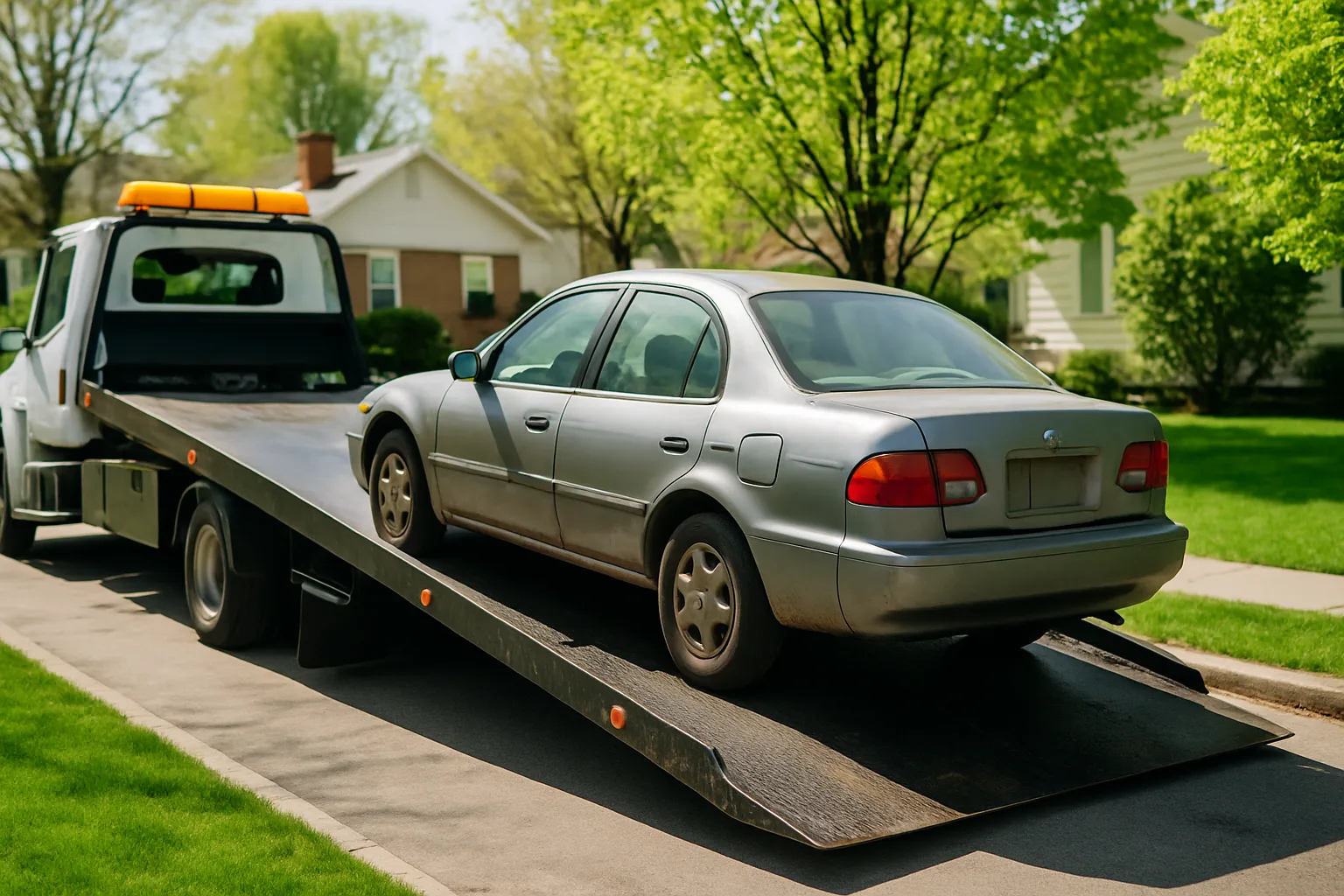
Once you've made the decision to scrap your vehicle, the logistics should be simple. If they aren't, something's wrong. A legitimate junk car removal service will pick up your vehicle at no cost to you, handle the paperwork, and pay you on the spot — or arrange same-day payment. Free towing isn't a perk; it's the baseline expectation in this market.
For owners in San Francisco and across California, the process typically looks like this:
- Request a quote — provide the year, make, model, mileage, and condition
- Confirm the offer and schedule a pickup time that works for you
- Sign over the title at pickup — make sure you have it ready
- Receive payment — cash, check, or electronic transfer depending on the service
- Cancel your registration and insurance once the vehicle is gone
Don't skip step five. In California, failing to notify the DMV after a vehicle transfer can leave you liable for tickets or impound fees tied to the old plates. It takes five minutes and it matters.
If you're ready to move forward, you can schedule a free scrap car pickup or explore scrap car removal services at GetMyScrapCar to compare your options and move fast.
---The Bigger Picture: Why the Scrap Lifecycle Matters in 2026
The scrap metal recycling industry isn't slowing down. Steel mills across North America increasingly rely on recycled feedstock — it's cheaper and less energy-intensive than producing virgin steel. Electric vehicle production is accelerating demand for copper and aluminum. The materials in your old car have genuine industrial value right now, in 2026, in ways that weren't true a decade ago.
That context matters for sellers. When you sell my junk car for cash, you're not disposing of a worthless hulk — you're selling a commodity package into an active market. Getting paid fairly for it requires transparency, competition, and the right buyers. That's what SMASH is built to deliver: no subscription fees, no guessing, and a process where we only win when the seller wins.
If your car has reached the end of its road in San Francisco, don't settle for the first number you hear. The market has more to offer than a single cold call can reveal. sell your scrap car for fair pricing — get a free quote at sell-myscrapcar.com and see what competitive price discovery actually looks like.
---Frequently Asked Questions
Q: How do I sell my car fast in San Francisco without getting lowballed?
Get multiple quotes before accepting anything. The fastest way to do this is through a platform that puts your vehicle in front of several vetted buyers at once. One quote from one buyer gives you no leverage — competition does. Knowing your car's weight and whether the catalytic converter is intact will also help you evaluate offers accurately.
Q: What documents do I need to sell a junk car in California?
You'll need the vehicle title. California requires a signed title transfer for all vehicle sales, including scrap. If you've lost the title, you can apply for a duplicate through the California DMV before selling. Some services will work with you during the process, but having the title ready speeds everything up considerably.
Q: Does free towing actually mean free, or are there hidden fees?
With legitimate junk car removal services, free towing means no cost to you — the tow is included in the transaction. Watch out for services that quote high over the phone and then deduct "fees" at pickup. Get the offer confirmed in writing before they show up, and clarify that the quoted amount is what you receive after all deductions.
Q: How is scrap car pricing calculated in San Francisco?
The base calculation starts with vehicle weight multiplied by the current price per ton for shredded steel or auto scrap. From there, valuable components like the catalytic converter, aluminum wheels, and copper wiring can increase the offer. Prices shift with the metals market, so a quote from two weeks ago may not reflect today's value. Always check current rates.
Q: What happens to my car after it's picked up by a scrap yard?
The yard depollutes the vehicle first — draining fluids and removing hazardous materials per state regulations. High-value parts like the catalytic converter and usable components are pulled for resale or processing. The remaining shell goes to a crusher or shredder, and the resulting metal is sold to mills that melt it down for new steel production. Nothing useful goes to waste.
---Follow SMASH on LinkedIn for weekly industry updates, scrap metal market insights, and platform news: linkedin.com/company/scrap-metal-auction-sales-hub