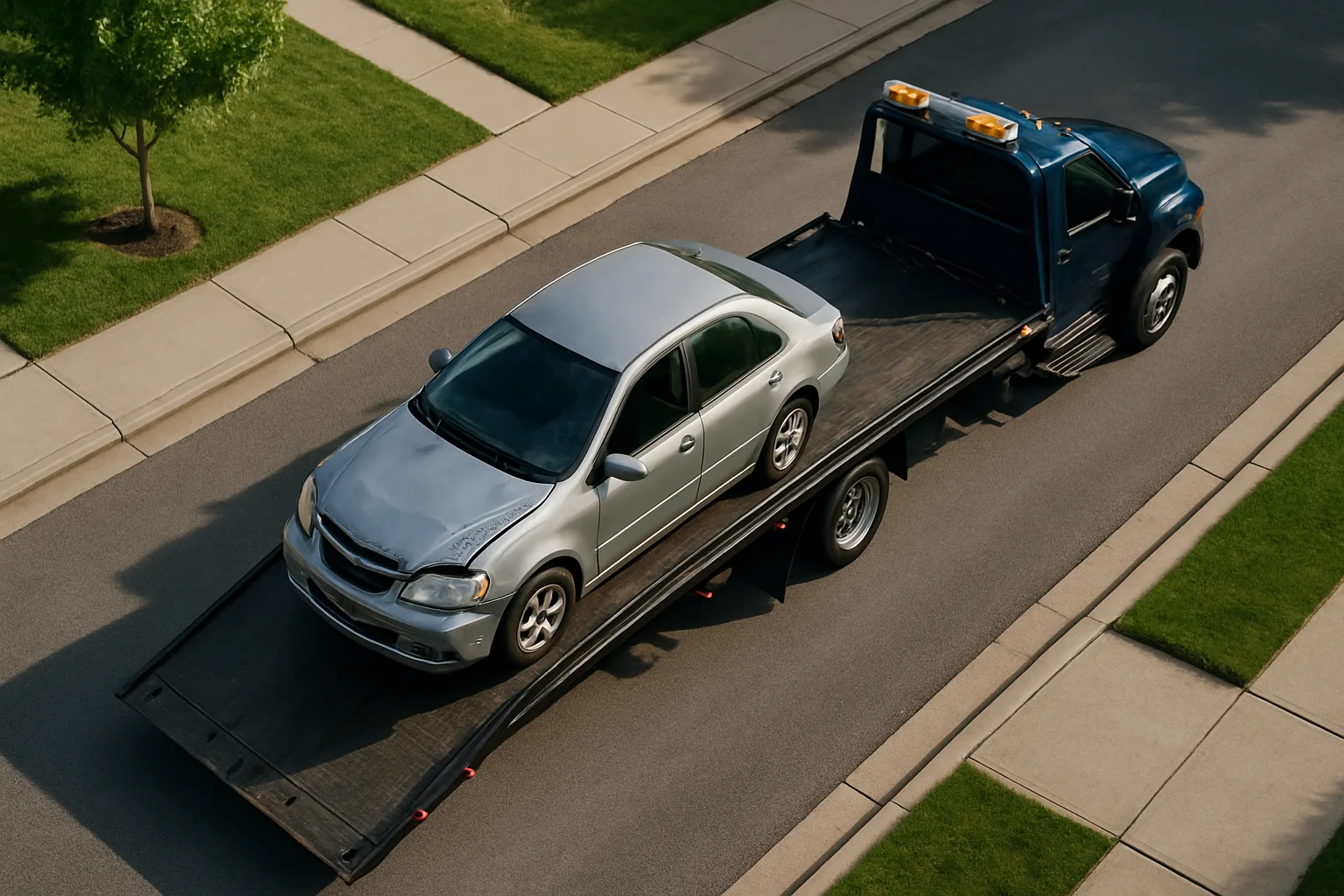
Most people use the words "junkyard," "salvage yard," and "auto recycler" like they mean the same thing. They don't. And if you're trying to sell my junk car Denver owners trust for a fair deal, knowing the difference could put more cash in your pocket — or cost you money if you call the wrong place.
Here's the reality: each of these businesses operates differently, pays differently, and values your vehicle for different reasons. The 2026 scrap and recycling market has made these distinctions even sharper. Metal commodity prices, catalytic converter demand, and evolving buyer networks all affect what you get offered — and by whom.
Let's break it down so you know exactly where your car belongs and who's going to give you the best return for it.
What Is a Junkyard — And Is It the Right Place for Your Car?
A junkyard is the oldest model in the business. You bring your car in (or they tow it), it gets stripped for usable parts, and the shell eventually gets crushed for scrap metal. The operation is typically low-tech, cash-based, and built on volume. Thousands of vehicles move through a busy junkyard every year.
The problem? Junkyards often function as price-takers, not price-makers. They quote you what they want to pay — not what the market says your car is worth. There's no competitive bidding, no documented inventory valuation, and no real incentive to offer you top dollar. You take it or leave it. For vehicle owners in Denver looking to get fair value, that model has serious limitations.
Junkyards also vary wildly in legitimacy. Some are fully licensed and compliant. Others are less rigorous about documentation, title handling, and environmental disposal. If you're selling a vehicle, paper trails matter — for liability, for your own records, and increasingly for local compliance requirements in Colorado.
Salvage Yards: Parts-First, Scrap Second
A salvage yard overlaps with a junkyard in a lot of ways, but the business logic is different. Salvage yards prioritize extracting and reselling usable parts before the vehicle goes to crush. Engines, transmissions, doors, bumpers, airbags, seats — all of it gets catalogued and sold to mechanics, body shops, and DIY repair folks who need affordable replacement parts.
This matters for your payout because a salvage yard may offer more for a car that has valuable components still intact. A 2018 pickup with a working engine is worth more to a salvage yard than a 2004 sedan with a blown motor. The parts potential drives the offer.
That said, salvage yards are still working off their own internal pricing. They know what they can sell the parts for. You don't. That information gap is where sellers leave money on the table. You walk in with a car that has a $400 catalytic converter, a working alternator, and a solid transmission — and you walk out with a flat $250 offer. The yard knew. You didn't.
This is exactly where platforms like SMASH change the game. SMASH creates competitive auction environments where buyers — including salvage yards and auto recyclers — bid against each other. You're not negotiating blind against one buyer's internal numbers. You're letting the market speak.
Auto Recyclers: The Professional End of the Spectrum
Auto recyclers are the most regulated and often the most sophisticated players in this space. They follow environmental compliance requirements for fluid extraction, hazardous material disposal, and vehicle documentation. Many are members of the Automotive Recyclers Association (ARA) and operate under strict standards for titling and recordkeeping.
In Denver and across Colorado, licensed auto recyclers handle a significant volume of end-of-life vehicles. They tend to offer a more transparent process than a traditional junkyard — you're more likely to get a documented transaction, a clear explanation of how they valued your car, and a proper title transfer.
Auto recyclers are also more likely to participate in digital platforms and auction networks. They're buying at scale and sourcing from multiple channels. That competitive buying behavior is what makes them valuable counterparts when you sell your scrap car for fair pricing through a marketplace that pits buyers against each other.
If your car has specific high-value components — particularly catalytic converters — a recycler who participates in a catalytic converter auction environment will typically pay more than a standalone buyer who sets their own floor price. Competition does what it's supposed to do: it moves the price toward actual market value.
How Denver's Scrap Car Market Shapes Your Options in 2026
The Denver metro area has a dense and competitive scrap vehicle market. You've got large-format recycling operations along the I-70 corridor, regional salvage networks, and individual yards scattered across Adams County, Commerce City, and the southern suburbs. That concentration of buyers is good news for sellers — in theory.
In practice, many Denver vehicle owners still call one number, take the first offer, and move on. That's leaving real money behind. The Denver scrap metal services market is active enough that competition exists — you just have to access it. A single phone call to a single buyer is not accessing competition. It's handing leverage to the buyer.
In 2026, non-ferrous metals, catalytic converter precious metals (platinum, palladium, rhodium), and aluminum have all experienced market movement. Prices fluctuate — check current rates before committing to any offer. What your neighbor got for a similar car six months ago may not reflect today's market. Don't anchor your expectations to stale numbers.
For Colorado sellers, the free towing piece matters too. Denver geography is spread out. Whether you're in Aurora, Lakewood, Thornton, or closer to the city center, free pickup eliminates the logistics barrier. Schedule a free scrap car pickup and the vehicle comes to the buyer — not the other way around.
What Actually Determines Your Scrap Car's Value
Regardless of whether a junkyard, salvage yard, or auto recycler ends up buying your vehicle, the underlying value drivers are the same. Understanding them helps you push back on low offers and identify when you're being underpaid.
- Gross vehicle weight: Heavier vehicles yield more in base scrap metal value. A full-size truck or SUV will always outperform a compact sedan on weight alone.
- Catalytic converter presence and condition: Cats are among the most valuable components on any late-model vehicle due to their platinum group metals content. A missing or cracked cat significantly reduces your offer.
- Powertrain condition: A running engine and transmission can add meaningful value to a salvage buyer's offer, even if the car itself is non-drivable.
- Year, make, and model: High-demand vehicles — particularly domestic trucks and popular import models — command higher parts interest from salvage buyers.
- Title status: A clean title in your name makes the transaction faster and cleaner. A missing or salvage title introduces friction and often reduces offers.
- Current scrap metal commodity prices: Steel, aluminum, and copper markets move constantly. Your car's timing affects your payout. Always check current rates — this is not a fixed market.
SMASH gives buyers full visibility into documented inventory — photos, VIN data, condition notes, and serial tracking where applicable. That documentation gives buyers more confidence, which typically translates to stronger bids. It's a smarter process than "take a look and give me a number."
Choosing the Right Path to Sell My Junk Car Today
Here's the honest answer: junkyard, salvage yard, or auto recycler — the label matters less than the process. What you want is competition, documentation, and free removal. That combination is what moves your outcome from "whatever they offered" to "what the market actually pays."
If you read scrap car selling guides, you'll find the same advice repeated across reputable sources: don't sell to the first buyer who picks up the phone. Gather multiple offers. Understand what your vehicle has on it before you negotiate. Know your title situation. And get the tow included — paying to have a car removed cuts directly into your net.
For vehicle owners in Denver, the local market has enough active buyers that you shouldn't accept a lowball offer out of convenience. The infrastructure is there. You just need a platform that puts you in front of those buyers simultaneously — not one at a time.
And for anyone curious how Canadian vehicle sellers navigate a similar landscape, get free scrap car pickup across Canada through a parallel service built on the same principles: competition, transparency, and no-cost removal.
If you're ready to stop guessing and start selling, the process is straightforward. Get your car documented, get it in front of multiple buyers, and let competitive bids tell you what it's actually worth. That's how SMASH approaches every transaction — and it's what separates a fair deal from a fast one that benefits the buyer, not you.
Don't leave the next few hundred dollars on the table because you called one number and took one offer. The Denver market is competitive. Use that to your advantage. Get a free quote at sell-myscrapcar.com and find out what your car is actually worth today.
Frequently Asked Questions
Q: What's the fastest way to sell my junk car in Denver?
The fastest way is to use an online quote service that connects you with multiple buyers at once. You submit your vehicle details, receive offers, and schedule free towing — often within 24 to 48 hours. Avoid calling individual yards one at a time; that process is slower and gives you fewer options.
Q: Do I need a title to sell my junk car in Colorado?
In most cases, yes — Colorado requires a title for a legal vehicle transfer. If you've lost your title, you can apply for a duplicate through the Colorado DMV before selling. Some buyers will work with a bill of sale and proof of ownership in specific circumstances, but a clean title always results in a smoother, faster transaction and often a better offer.
Q: Will they tow my junk car for free in Denver?
Reputable scrap car buyers and recyclers in the Denver area typically include free towing as part of the transaction. Always confirm this upfront before agreeing to a sale. If a buyer is quoting you a great price but charging a tow fee, factor that into your net payout — it changes the comparison.
Q: How do scrap car prices get determined in 2026?
Scrap car values in 2026 depend on current steel and non-ferrous metal commodity prices, the presence and condition of high-value components like catalytic converters, and the vehicle's weight and make. Prices fluctuate with the commodities market — check current rates when you're ready to sell, and don't anchor to offers you heard about months ago.
Q: Is there a difference between what a junkyard and an auto recycler will pay me?
Often, yes. Auto recyclers are typically more sophisticated buyers with broader networks and may offer more for vehicles with intact, high-demand parts. The most reliable way to find the best offer is to let multiple buyers — junkyards, salvage yards, and recyclers alike — compete for your vehicle at the same time, rather than negotiating with each one sequentially.
Stay current on scrap metal market movements and industry insights by following SMASH on LinkedIn — useful updates for anyone buying or selling scrap in today's market.
```