Most people never think about what happens to a car after they stop driving it. It gets old, breaks down, sits in the driveway — and then what? The full lifecycle of a vehicle, from the assembly line to the scrap yard, is actually a story about value. Value created, value lost, and value recovered. Understanding that arc helps you make smarter decisions when your car reaches the end of the road — especially if you want to know your scrap car value today.
Stage One: Built to Last (But Not Forever)
Every vehicle starts as raw material — steel, aluminum, copper wiring, rubber, glass. A modern passenger car contains roughly 2,400 pounds of steel on average, along with significant amounts of aluminum in the engine block, wheels, and body panels. Manufacturers source these metals, shape them, and assemble a vehicle designed to run for 150,000 to 200,000 miles under normal conditions.
Here's the thing nobody tells you at the dealership: the moment you drive off the lot, the clock starts ticking on that vehicle's useful life. Every mile adds wear. Every winter adds rust. Every repair deferred brings the car one step closer to the scrap yard. That isn't a pessimistic view — it's just physics. Steel oxidizes. Rubber degrades. Engines wear. The car was always going to end up somewhere, and for millions of vehicles every year, that somewhere is a recycling facility.
Stage Two: Depreciation, Wear, and the Long Middle
Between "new" and "scrap" lies the longest phase of a vehicle's life — daily use, resale markets, and gradual decline. A car loses a significant chunk of its retail value in the first few years of ownership. By year five or six, most vehicles have settled into a more stable (but still falling) value range. By year ten or twelve, the retail market gets thin. Buyers want newer. Repair costs start climbing. That's when a lot of cars quietly transition from "used car" to "project car" to "sitting in the driveway."
In Florida, that timeline can accelerate. The combination of heat, humidity, and road salt near coastal areas accelerates rust and seal degradation faster than drier climates. A vehicle that might last fifteen years in the desert Southwest could show serious wear signs by year ten in Central Florida. For Orlando drivers, that means your car may reach end-of-life status sooner than you expect — and knowing what it's worth as scrap matters.
- Body rust: Accelerated in humid, coastal environments
- Engine wear: Heat stress shortens gasket and seal life
- Transmission stress: Stop-and-go traffic in cities like Orlando adds wear
- AC system degradation: Running constantly in Florida heat wears components faster
What Determines Scrap Car Value Today
When a vehicle reaches the end of its useful life, it doesn't become worthless — it becomes raw material again. The scrap car value today is driven by a handful of real factors, and understanding them puts money back in your pocket instead of leaving it on the table.
The single biggest factor is weight. Scrap metal buyers price vehicles based on the weight of recoverable steel and other metals. A heavier vehicle — a full-size truck or an older American sedan with a heavy steel frame — typically recovers more value than a lightweight compact car. Beyond weight, the market price of steel on any given day plays a major role. Scrap metal prices fluctuate based on global demand, domestic manufacturing activity, and commodity markets. Always check current rates before you accept a quote — prices can shift week to week.
Other factors that affect your payout include:
- Catalytic converter condition: Cats contain platinum, palladium, and rhodium — all high-value metals. An intact cat can meaningfully boost your vehicle's scrap value.
- Non-ferrous metals: Aluminum wheels, copper wiring, and brass fittings are worth more per pound than steel.
- Battery condition: EV and hybrid batteries contain lithium and cobalt — both increasingly valuable in 2026 recycling markets.
- Body damage and completeness: A car missing its engine or catalytic converter is worth less to a scrap buyer.
- Year, make, and model: Some vehicles have parts that retain retail value and can be pulled before scrapping.
Platforms like SMASH help connect scrap sellers with a competitive pool of vetted buyers, so you're not guessing what your material is worth. More buyers competing for your load means better price discovery — that's the whole point of a SMASH scrap metal auction format. If you're a yard or a buyer operating in the B2B space, the B2B scrap metal marketplace model changes how deals get done entirely.
Stage Three: From Driveway to Scrap Yard — How the Process Works
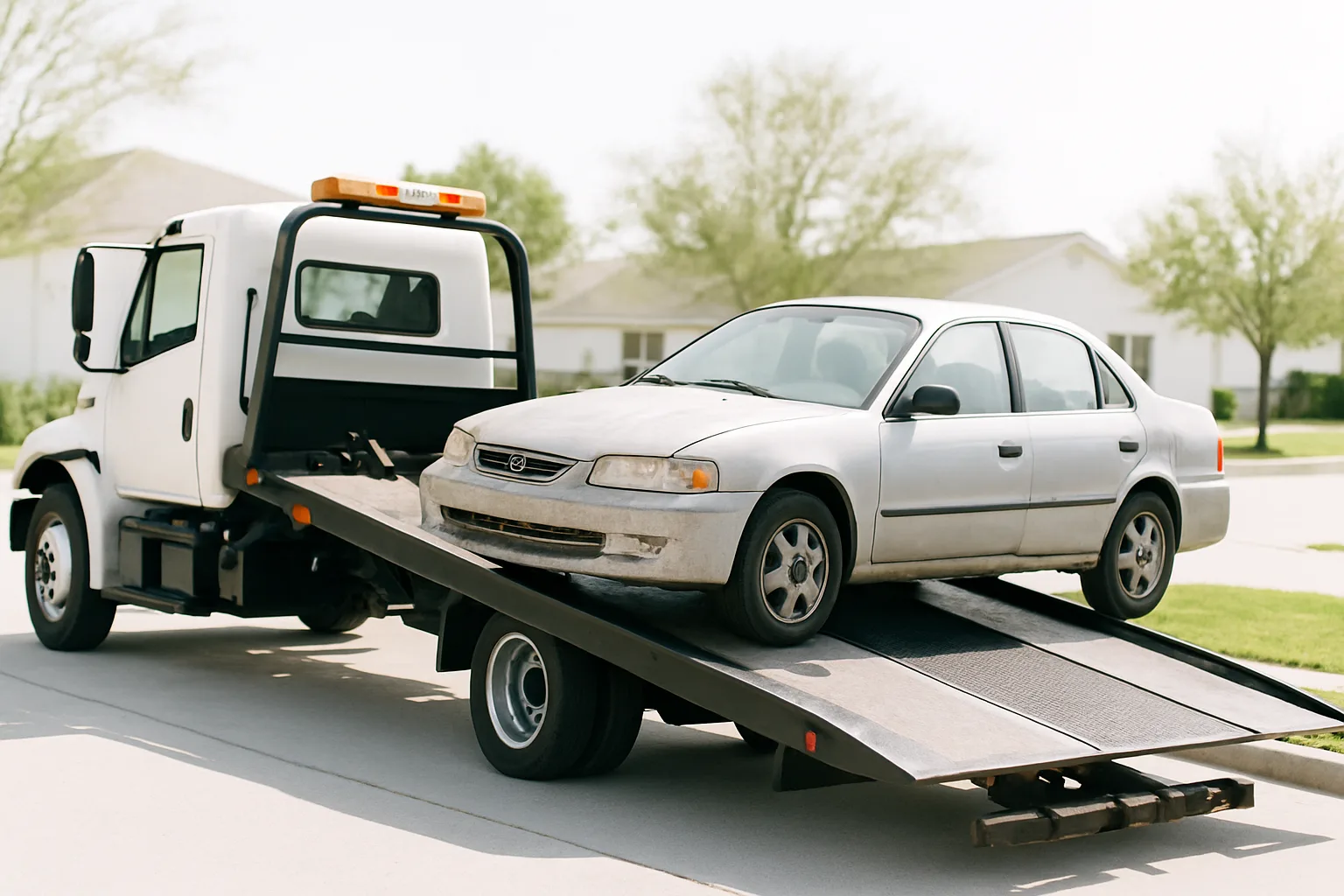
Most people don't know what actually happens once they decide to scrap a car. The process is simpler than you think, and you don't need to haul it anywhere yourself. Here's how it typically works when you use a reputable service:
- Get a quote. Provide your vehicle's year, make, model, approximate weight, and condition. A good service gives you a real number — not a vague range.
- Schedule pickup. Free towing is standard with most scrap car services. You shouldn't be paying to have a car removed. To schedule a free scrap car pickup, you typically just need to confirm your location and availability.
- Sign over the title. You'll need a clear title in most states. Florida requires a title transfer for scrapping a vehicle. Have it ready at pickup.
- Get paid. Payment at pickup is standard. Cash, check, or digital transfer — confirm in advance what the service offers.
- The yard processes the vehicle. Fluids are drained and disposed of properly. Usable parts are pulled and resold. The steel shell is crushed and shredded for recycling.
For Orlando residents looking to sell scrap car Orlando, the market is active. There are multiple buyers operating in the region, which is good news for competition. But not all buyers offer the same price — and the difference between a well-informed seller and an uninformed one can be real money. If you want to sell your scrap car for fair pricing, compare quotes before you commit. You can also check out getmyscrapcar.com for additional options and resources to help you get the best deal on your end-of-life vehicle.
The Environmental Side of Auto Recycling
Scrapping a car isn't just about the money. Auto recycling is one of the most environmentally significant industries in North America. Vehicles contain fluids — motor oil, transmission fluid, coolant, brake fluid — that are hazardous if they end up in soil or groundwater. Licensed recyclers handle these materials properly, which matters especially in Florida where the water table is shallow and environmental regulations are strict.
Steel recycling also reduces the need for virgin ore extraction. Recycling one ton of steel saves significant energy compared to producing new steel from raw materials. When your old Honda or Ford gets shredded and melted, it becomes rebar, appliance frames, or even new auto parts. The lifecycle closes. The material goes back into the supply chain. That's real circular economy work — not marketing language.
SMASH operates in this ecosystem by bringing transparency and competition to the B2B side of scrap transactions. Yards need competitive buyers. Buyers need reliable inventory. A B2B scrap metal marketplace that documents loads properly — with photos, weights, and serial tracking — builds the trust that makes transactions move faster and cleaner for everyone involved.
How to Get the Most Out of Your End-of-Life Vehicle in Orlando
If you're in the Orlando area and you've got a car that's reached the end of its road, here's what smart sellers do before they hand over the keys:
- Check if the catalytic converter is intact. Intact cats add value. If yours has already been stolen (a real problem in Florida), disclose that upfront so quotes are accurate.
- Pull personal items. Obvious — but you'd be surprised how many people leave important documents, phone chargers, or valuables in the car.
- Locate your title. No title, no sale in most cases. If you've lost it, Florida DHSMV can issue a replacement — give yourself a few days for that process.
- Get multiple quotes. The Orlando market is competitive. Use that to your advantage. A quick call or online form submission to two or three buyers takes fifteen minutes and could add real dollars to your payout.
- Confirm free towing. Reputable scrap car buyers include free pickup. Don't accept a quote that docks towing costs from your payment without clear disclosure upfront.
When you're ready, you can read scrap car selling guides to go deeper on topics like title requirements, what buyers look for, and how to evaluate competing offers. Knowledge is your best negotiating tool in any scrap transaction.
When it's time to move on from your vehicle, don't leave money on the table. Whether you're in Orlando, across Florida, or anywhere in the US, the process should be straightforward — a fair quote, free towing, and payment when they pick it up. That's what a good scrap car service delivers. Get your free quote at sell-myscrapcar.com and close the chapter on that old car the right way.
Disclaimer: Scrap metal and vehicle prices fluctuate based on commodity markets and regional demand. Always verify current rates before accepting a quote. Prices referenced in this article reflect general market conditions as of August 2026 and are subject to change.
Frequently Asked Questions
Q: What is my scrap car value today in Orlando, Florida?
Your scrap car value today depends on the weight of the vehicle, current steel and non-ferrous metal prices, and the condition of high-value components like the catalytic converter and battery. Orlando has an active scrap market, so getting two or three quotes is the best way to find your vehicle's current value. Prices shift with commodity markets, so always check current rates rather than relying on older quotes.
Q: Do I need a title to sell my scrap car in Florida?
Yes. Florida requires a valid title to transfer ownership of a vehicle for scrapping. If you've lost your title, you can apply for a replacement through the Florida Department of Highway Safety and Motor Vehicles (DHSMV). Plan for a few business days to receive the replacement before scheduling pickup.
Q: Is free towing actually included, or is it deducted from my payment?
Reputable scrap car buyers include free towing at no cost to you — it should not be deducted from your payout. Always confirm this before accepting a quote. If a buyer tries to subtract towing fees from the offered price without prior disclosure, that's a red flag worth walking away from.
Q: How long does the scrap car pickup process take in Orlando?
Most scrap car pickups in the Orlando area can be scheduled within one to three business days. Same-day or next-day service is sometimes available depending on the buyer and your location. The actual pickup typically takes under thirty minutes once the driver arrives.
Q: What happens to my car after it's scrapped?
After pickup, the vehicle goes to a licensed recycling facility. Fluids are drained and disposed of safely. Valuable parts — catalytic converters, engines, transmissions — may be pulled for resale. The remaining steel body is crushed, shredded, and sold as scrap metal to steel mills, where it's melted down and recycled into new products.
Follow SMASH on LinkedIn for scrap metal market updates, industry news, and insights to help you stay ahead of price movements in the recycling market.