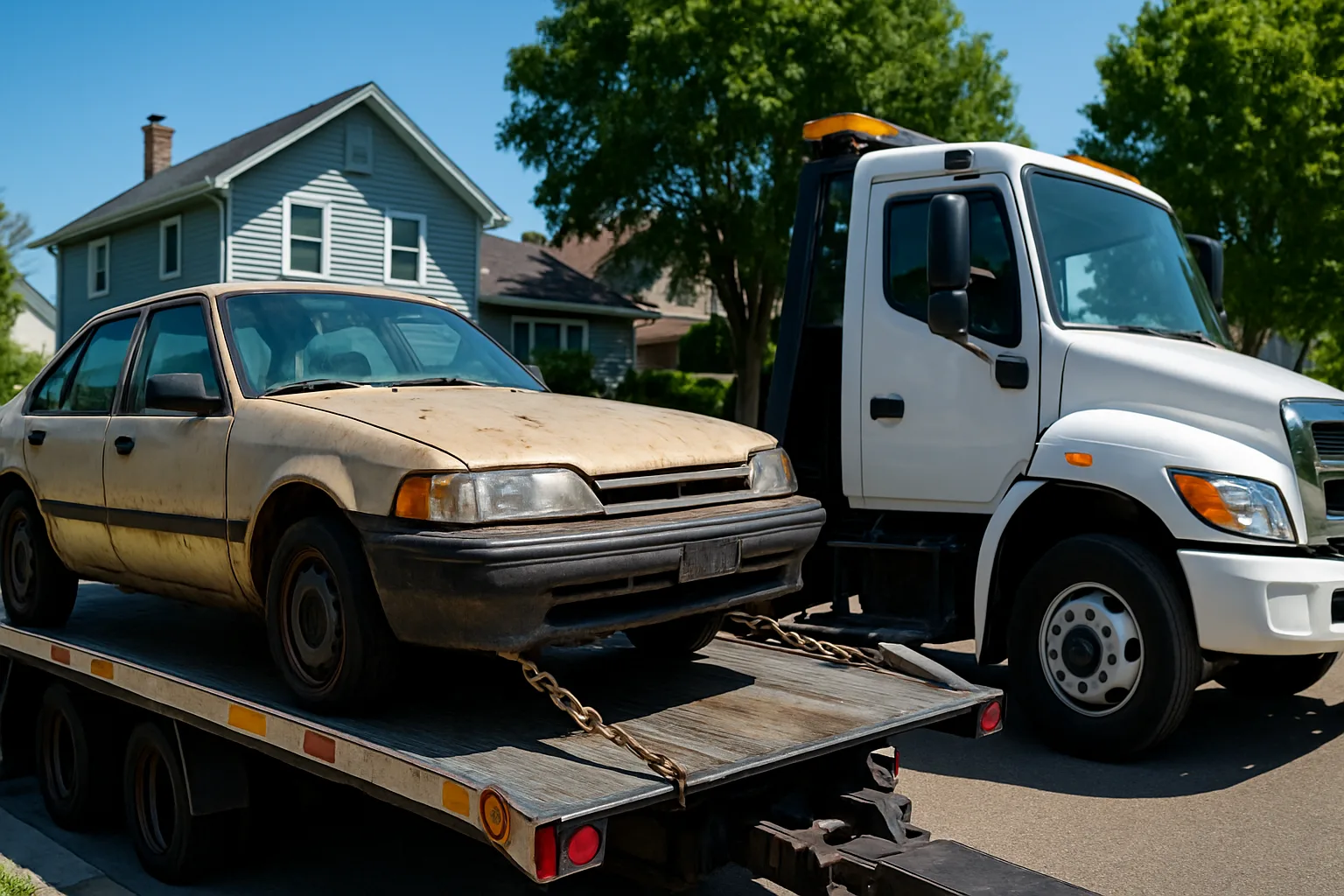
Most people wait until a car is completely undriveable before they think about scrapping it. By then, they're scrambling — and they leave money on the table. If you've got a junk vehicle sitting in your driveway in Boston or anywhere across Massachusetts, a little preparation goes a long way. The difference between a rushed scrap job and a smart one can mean hundreds of dollars and zero headaches.
This guide walks you through exactly what to do before scrap car removal Boston comes to your door. Step by step. No guesswork.
Why Preparation Matters Before Your Scrap Car Gets Picked Up
Scrapping a vehicle isn't just about getting rid of a hunk of metal. It's a transaction. And like any transaction, the more prepared you are, the better you do. Buyers — whether they're local junk car buyers near me Boston or large auto recyclers — pay more attention to well-documented, clearly described vehicles. That means better offers, faster pickups, and fewer last-minute disputes.
There's also the legal side. Massachusetts has specific requirements around title transfer and vehicle deregistration. Skip those steps and you could end up on the hook for parking tickets, tolls, or worse — liability if the vehicle gets used after you've handed it over. A few minutes of prep prevents that entirely.
- Gather your paperwork before anything else
- Remove personal belongings and valuables
- Cancel your insurance and plates properly
- Know what your car is actually worth in scrap
- Choose a buyer who offers free towing — not one who charges fees
Step One: Track Down Your Title and Key Documents
No title, no deal — at least not a clean one. Your vehicle title is the most important document in the entire process. It proves you own the car and authorizes the transfer to a buyer or recycler. In Massachusetts, you'll need to sign the title over to the buyer at the time of pickup. If you've lost your title, you can apply for a duplicate through the Massachusetts Registry of Motor Vehicles before you schedule anything.
Beyond the title, gather anything else that's relevant:
- Vehicle registration — confirms current ownership details
- Bill of sale (if you bought it used) — helps establish the ownership chain
- Any outstanding loan documentation — you'll need to confirm the lien is satisfied before you can legally transfer the title
- Keys — even non-working keys can affect your offer
If there's a lien on the vehicle, contact your lender first. Some scrap buyers in Boston will still work with you, but you need to be upfront. Hiding a lien slows everything down and can kill the deal entirely.
Step Two: Remove Personal Items and Salvageable Parts
You'd be surprised what people leave behind. Garage door openers. Insurance cards. Registration documents in the glove box. Chargers, tools, even cash. Before that truck rolls up for your scrap car removal Boston appointment, do a full sweep of the interior — under seats, in the trunk, in every compartment.
Then think about what else has value. Some parts on a junk car are worth real money before the whole thing gets crushed:
- Catalytic converters — contain platinum, palladium, and rhodium; one of the highest-value components on any vehicle
- Batteries — lead-acid batteries have consistent scrap value
- Rims and tires — aftermarket or low-mileage sets can sell separately
- Audio or electronic systems — if they're aftermarket and in good shape
- Fluids — drained properly, some have resale or recycling value
Whether you sell those parts separately or let the buyer handle everything as a complete vehicle depends on your time and knowledge. If you're not mechanically inclined, selling the whole car as-is is usually the most efficient path. But knowing what's on the vehicle helps you understand the offer you get — and platforms like SMASH are built exactly for that kind of transparency.
Step Three: Cancel Insurance, Return Plates, and Deregister
This step trips up more people than it should. Once your vehicle is gone, you do not want to keep paying insurance on it. But you also don't want to cancel too early and create a gap that causes problems with the Registry. In Massachusetts, the standard process is:
- Remove your license plates before the car leaves your property — plates belong to the owner, not the vehicle, in Massachusetts
- Return the plates to your local RMV branch or submit a plate cancellation
- Notify your insurance company of the cancellation — do this the same day as pickup if possible
- Submit a notice of sale or transfer to the Massachusetts RMV to remove the vehicle from your name officially
Skipping the plate return is a common mistake. If you leave your plates on the car and someone drives it — or it gets towed to another location — any violations that occur could come back to you. It takes five minutes. Do it.
Step Four: Know What Your Scrap Car Is Actually Worth
Scrap metal pricing is driven by market conditions — primarily the price of steel, aluminum, and non-ferrous metals like copper. Those prices move. What your car was worth six months ago may not be what it's worth today in August 2026. A mid-size sedan typically runs between 3,000 and 4,500 pounds. At current market rates, the raw metal value alone can vary significantly depending on composition, condition, and what's on the vehicle.
The problem with the old way — calling one local buyer and taking whatever they offer — is that you have no reference point. You don't know if that's a fair number or if you just left $200 on the table. That's exactly why services like SMASH exist. Competition creates price discovery. When multiple vetted buyers see your vehicle and its documented specs, you get a real market rate — not a lowball from the one guy who answered the phone.
If you want to sell your scrap car for fair pricing, the first thing to understand is that "fair" requires comparison. One offer isn't a market. Multiple offers are.
Good documentation also matters here. When buyers can see photos, condition details, VIN information, and what parts are present, they bid with confidence. That confidence shows up in the offer. Platforms that support scrap metal inventory management — photo documentation, serial tracking, condition notes — make that possible.
Step Five: Choose the Right Buyer for Scrap Car Collection
Not every junk car buyer operates the same way. Some charge towing fees that eat into your payout. Some make verbal offers that change when they arrive. Some operate on cash only with no paper trail. In a city like Boston, where there's real competition among auto recyclers and salvage yards, you have options — use them.
Here's what to look for when you're ready to sell car for scrap collection:
- Free towing included — any legitimate buyer covers pickup costs; if they don't, that's a red flag
- Written or confirmed offer — not a verbal number that shifts when the driver shows up
- Vetted, licensed buyers — especially important if you're dealing with non-ferrous metals or high-value components
- Clear documentation — BOL, auto-invoicing, payment confirmation
- No subscription fees on your end — you shouldn't pay to access a better market
You can schedule a free scrap car pickup directly through sell-myscrapcar.com. The process is straightforward, and free towing is included — no hidden deductions at pickup.
For additional guidance on navigating the scrap process, read scrap car selling guides that cover pricing, paperwork, and what to expect on pickup day.
If you're looking for another trusted option in the area, free junk car removal from GetMyScrapCar is worth checking out as well — especially for quick, no-hassle pickups across the region.
Boston-area vehicle owners can also explore Boston scrap metal services for location-specific pickup details and local pricing context.
What the Weekly Scrap Market Looks Like Right Now
As of mid-August 2026, steel and ferrous scrap markets across the Northeast have seen moderate activity. Demand from domestic mills continues to drive regional pricing, and non-ferrous metals — particularly aluminum and copper — remain strong contributors to overall vehicle value. Catalytic converter pricing has stabilized after significant volatility in prior years, but the precious metal content in cats still makes them one of the most valuable components on any end-of-life vehicle.
For Boston and the broader Massachusetts market, proximity to major northeastern recycling infrastructure keeps processing costs lower than in more rural regions. That's generally good news for sellers — more active buyers, more competition, better price discovery. But prices still fluctuate week to week, and the only way to know where your vehicle lands is to get multiple offers based on real documentation.
Disclaimer: Scrap metal prices fluctuate based on market conditions, metal composition, and regional demand. Always check current rates at the time of sale for the most accurate pricing.
When you're ready, the process doesn't have to be complicated. Prepare your paperwork, clear out the car, handle your plates and insurance, understand what you've got, and choose a buyer who competes for your vehicle — not one who assumes you have no other options. That's how you sell smart.
Ready to move forward? Sell your scrap car today — get a free quote at sell-myscrapcar.com and find out what your vehicle is worth in today's market.
Frequently Asked Questions
Q: Do I need a title to get scrap car removal in Boston?
In most cases, yes. Massachusetts requires a signed title for a clean vehicle transfer. If you've lost your title, you can apply for a duplicate through the Massachusetts RMV before scheduling pickup. Some buyers will work with you on a case-by-case basis, but having your title ready speeds up the entire process.
Q: How long does scrap car removal in Boston typically take?
Once you've accepted an offer and confirmed your documentation, most pickups can be scheduled within one to three business days. Free towing is included, so there's no delay waiting to arrange transport. The actual pickup itself usually takes under 30 minutes.
Q: What happens to my license plates when I scrap my car in Massachusetts?
In Massachusetts, plates belong to the owner — not the vehicle. Remove your plates before pickup and return them to your local RMV branch or process a cancellation through the Registry. This protects you from any future liability tied to that vehicle after it leaves your property.
Q: How do junk car buyers near me in Boston determine what my car is worth?
Most buyers calculate scrap value based on the vehicle's weight, metal composition, current market prices for steel and non-ferrous metals, and the condition of high-value components like catalytic converters and batteries. Documented vehicles with clear photos and VIN details typically attract stronger offers because buyers can bid with confidence.
Q: Can I scrap a car that doesn't run in Boston?
Yes. Non-running vehicles are scrapped every day. As long as you have your title and the vehicle is accessible for towing, condition doesn't prevent a sale. Free towing is standard — the buyer brings the equipment to load and haul it regardless of whether it drives.
Follow SMASH on LinkedIn for weekly scrap metal market updates, industry insights, and platform news.