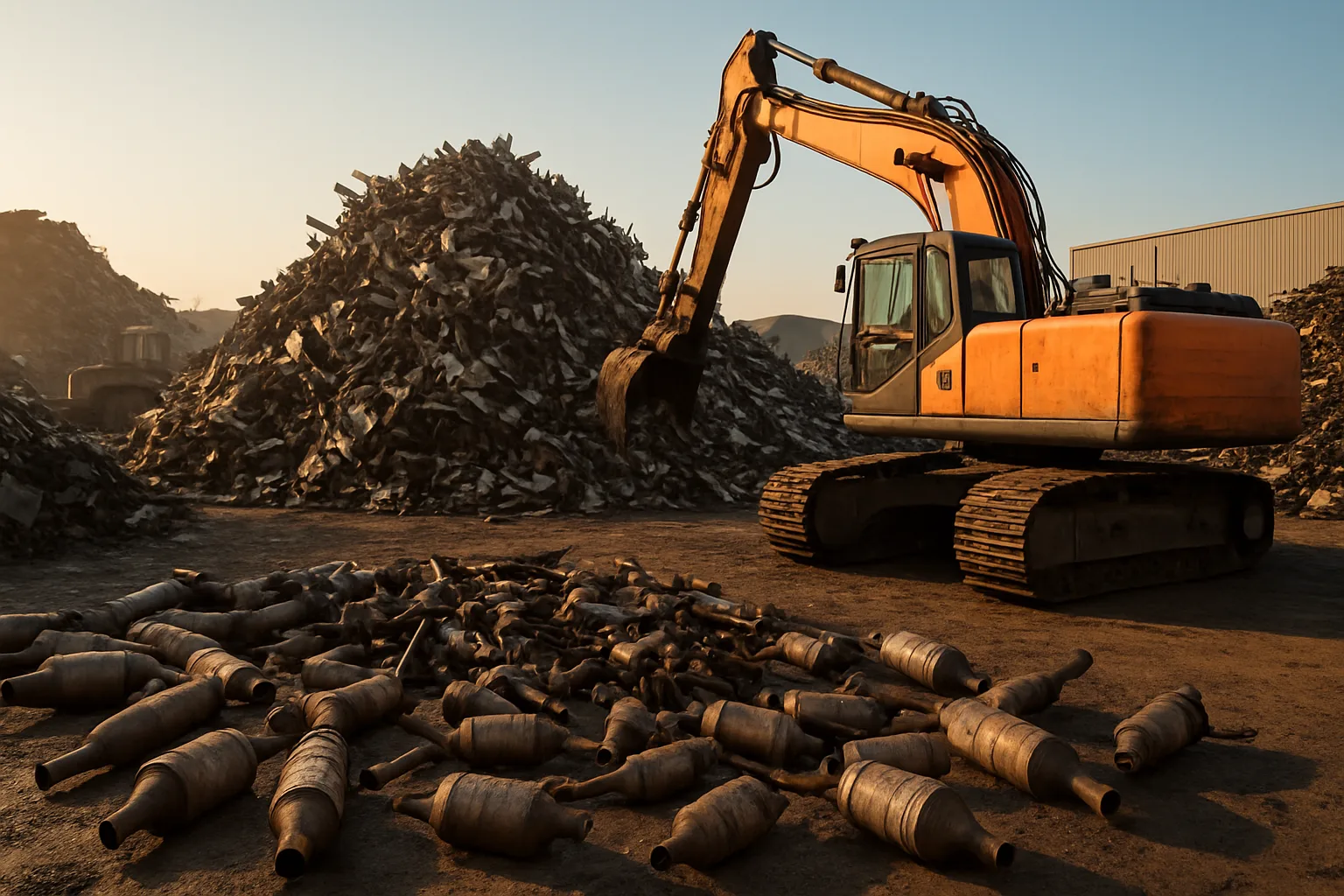
Catalytic Converter Theft Is Reshaping What Your Scrap Car Is Worth in 2026
Catalytic converter theft hit record levels in recent years — and the ripple effects are still moving through the scrap car market in 2026. If you're trying to understand scrap car value today, you can't ignore what's happening under the hood. The cat is one of the most valuable components in any end-of-life vehicle. When it's gone, your payout changes. When it's present and documented, it can meaningfully shift what a buyer will offer.
This isn't a story about crime statistics. It's a story about how theft trends, metal markets, and buyer behavior interact — and what that means for vehicle owners in Minneapolis trying to get a fair price for a junk car right now.
What a Catalytic Converter Actually Contains — And Why Buyers Care
The catalytic converter is a small, cylindrical component in your vehicle's exhaust system. Inside it are platinum group metals (PGMs): platinum, palladium, and rhodium. These metals are genuinely rare, and they don't lose value just because the vehicle around them is worthless. A single cat from a popular truck or SUV can contain fractions of a gram of each PGM — but at current market rates, those fractions add up fast.
Auto recyclers and scrap buyers pay attention to which make, model, and year produced the cat being offered. Not all converters are equal. A Toyota Prius cat is worth significantly more than the unit off a compact sedan. A full-size pickup cat sits somewhere in between. When you sell your scrap car for fair pricing, buyers are quietly doing this math before they quote you a number.
- Platinum: Used in diesel-engine converters primarily
- Palladium: Common in gasoline-engine cats, prices have stayed elevated
- Rhodium: Rarest of the three, highest per-gram value, extremely volatile pricing
The presence or absence of the converter — and whether it's intact or partially stripped — directly affects what a buyer will bid on your vehicle. Platforms like SMASH factor this into how inventory is documented before a load goes to auction. Serial tracking and photo documentation give buyers the confidence to bid competitively, rather than discounting for uncertainty.
How the Theft Wave Changed Scrap Car Pricing in Minnesota and Beyond
Between 2020 and 2024, catalytic converter theft became one of the most reported auto-related crimes across North America. Minnesota was not immune. The Twin Cities metro area saw consistent theft activity targeting Priuses, Hondas, and full-size GM trucks — vehicles whose converters carry higher PGM concentrations.
This created a direct problem for scrap car sellers: a portion of vehicles coming to market were arriving without their converters. Thieves had already stripped them, sometimes hours before the owner even noticed. When a junk car buyer gets a vehicle without a cat, they're pricing accordingly — and that discount can be significant. The vehicle still has value in its steel body, aluminum components, copper wiring, and other non-ferrous metals, but a missing cat represents a real gap in what the load could have fetched.
In response, many serious buyers started asking directly: Is the converter still on the vehicle? Some buyers now require photos before they quote. Others cross-reference the VIN against known high-theft models to understand what the cat should be worth before making an offer. If you're selling a vehicle in Minneapolis and you don't know whether your car's converter is intact, that's worth checking before you call anyone. A quick look under the vehicle tells you a lot.
Selling a Car With a Missing Converter — What to Expect
Here's the honest truth: you can still sell a scrap car without a catalytic converter. The rest of the vehicle still has value. A typical passenger car without a cat can still yield value from its steel body weight, aluminum wheels, and other components. But you should expect the offer to reflect that absence — and you should be skeptical of any buyer who doesn't ask about it at all.
Buyers who don't ask about the converter are either assuming it's gone and pricing accordingly, or they're not sophisticated enough to factor it in. Neither situation is ideal for you. What you want is a buyer who understands the full composition of the vehicle, quotes it transparently, and adjusts for what's actually there. That's the difference between guessing and knowing your scrap car value today.
A few things to document before you call for junk car removal:
- Check whether the catalytic converter is still present (look for a cylindrical component mid-exhaust)
- Note the year, make, and model — this determines the cat's baseline value
- Take a photo of the undercarriage if possible
- Note any other missing components: wheels, battery, engine parts
- Have the VIN ready — it helps buyers price more accurately, even if you have cash for cars no title no keys situations
Being upfront about vehicle condition doesn't hurt you. It actually builds credibility with serious buyers and speeds up the process. You won't get rich hiding a missing cat — buyers figure it out fast when the vehicle arrives.
How SMASH Brings Transparency to Converter-Sensitive Loads
The old way of selling a scrap car meant calling one buyer, taking their word on value, and hoping the number was fair. Nobody told you what the cat was worth. Nobody showed you what other buyers would have paid. You got a number, you took it or left it, and that was that.
That model breaks down completely when a single component — the catalytic converter — can represent a meaningful share of the total vehicle value. If your buyer knows the cat is worth a significant amount and you don't, that information gap costs you money.
SMASH, a B2B scrap metal auction platform, approaches this differently. Loads are documented with photo evidence, serial tracking where applicable, and VIN lookup tools that give buyers real data on what they're bidding on. When inventory is accurate and visible, buyers compete more aggressively. More competition means better price discovery — not a guaranteed outcome, but a structurally fairer process. You can read scrap car selling guides that walk through how documented inventory affects your final offer.
For yards and auto recyclers handling converter-sensitive vehicles, the SMASH scrap metal auction format removes the guesswork on both sides. Sellers document what they have. Buyers bid on what they see. Auto-invoicing and packing list generation handle the paperwork. No subscription fees — SMASH only wins when the seller does.
If you're in the Minneapolis area and want to connect with vetted buyers through a transparent process, Minneapolis scrap metal services can help you get started.
What Scrap Car Sellers Should Watch in the Second Half of 2026
PGM prices in 2026 have remained sensitive to global supply chain conditions, electric vehicle adoption rates, and mining output from South Africa and Russia — the two dominant sources of platinum and palladium. Rhodium continues to be the most volatile of the three. None of this means you should wait or try to time the market on your junk car. It does mean you should sell smart.
Here's what smart selling looks like right now:
- Document your vehicle fully — photos, VIN, condition notes, converter status
- Get multiple quotes — one buyer's number is never the market
- Ask about free towing — reputable buyers offering free towing don't charge pickup fees on top
- Understand your metal mix — steel, aluminum, copper, and cats each have different values
- Use platforms that create competition — that's where price discovery actually happens
The sell scrap car market in Minnesota is active. Auto recyclers need supply. Buyers need inventory. Your end-of-life vehicle has real value — as long as you approach the sale with the right information and the right process.
Disclaimer: Scrap metal and PGM prices fluctuate based on global market conditions. Always check current rates before finalizing any sale. The values discussed here reflect general market context as of June 2026 and are not guarantees of any specific offer.
If you're ready to move forward, schedule a free scrap car pickup and get a real number based on what your vehicle actually contains. No guesswork. No pressure. Just a fair process backed by competitive buyers. Also, explore getmyscrapcar.com for additional resources on maximizing your vehicle's value before the sale.
You've held onto that car long enough. The market is moving — and so should you. Get a free quote at sell-myscrapcar.com and find out what your scrap car is actually worth today.
Frequently Asked Questions
Q: Does a missing catalytic converter significantly lower my scrap car value today?
Yes, it can. The catalytic converter contains platinum group metals that contribute real value to the total vehicle offer. A missing converter will typically result in a lower quote, though the rest of the vehicle — its steel body, aluminum, and other components — still holds value. Being upfront about it gets you a more accurate quote faster.
Q: Can I sell my scrap car in Minneapolis without a title or keys?
Many buyers will work with you on cash for cars no title no keys situations, though requirements vary by state. In Minnesota, you'll generally need some form of proof of ownership. Contact a buyer directly and explain your situation — reputable services deal with this regularly and can guide you through the documentation needed.
Q: How do I know if my car's catalytic converter has been stolen?
The most obvious sign is a dramatically louder exhaust note — your vehicle will sound like it has no muffler. You may also see a gap in the exhaust pipe under the vehicle. If your car was parked outside in a high-traffic area overnight, it's worth checking before you call for junk car removal.
Q: How does free towing work when I sell my scrap car?
Reputable scrap car buyers include towing at no charge as part of the transaction — they pick up the vehicle and the towing cost comes out of their logistics, not your pocket. Always confirm that towing is truly free before you accept a quote. Any service charging a separate pickup fee is reducing your actual payout.
Q: Why should I use a B2B scrap metal marketplace like SMASH instead of calling one buyer?
Calling one buyer gives you one data point. A B2B scrap metal marketplace like SMASH puts your inventory in front of vetted, competing buyers — which creates real price discovery rather than a take-it-or-leave-it number. Documented inventory, VIN lookup, and auction-format bidding give buyers confidence to offer more aggressively. More competition generally means better outcomes for sellers.
Stay sharp on scrap metal market trends and industry insights — follow SMASH on LinkedIn for regular updates from the B2B recycling world.