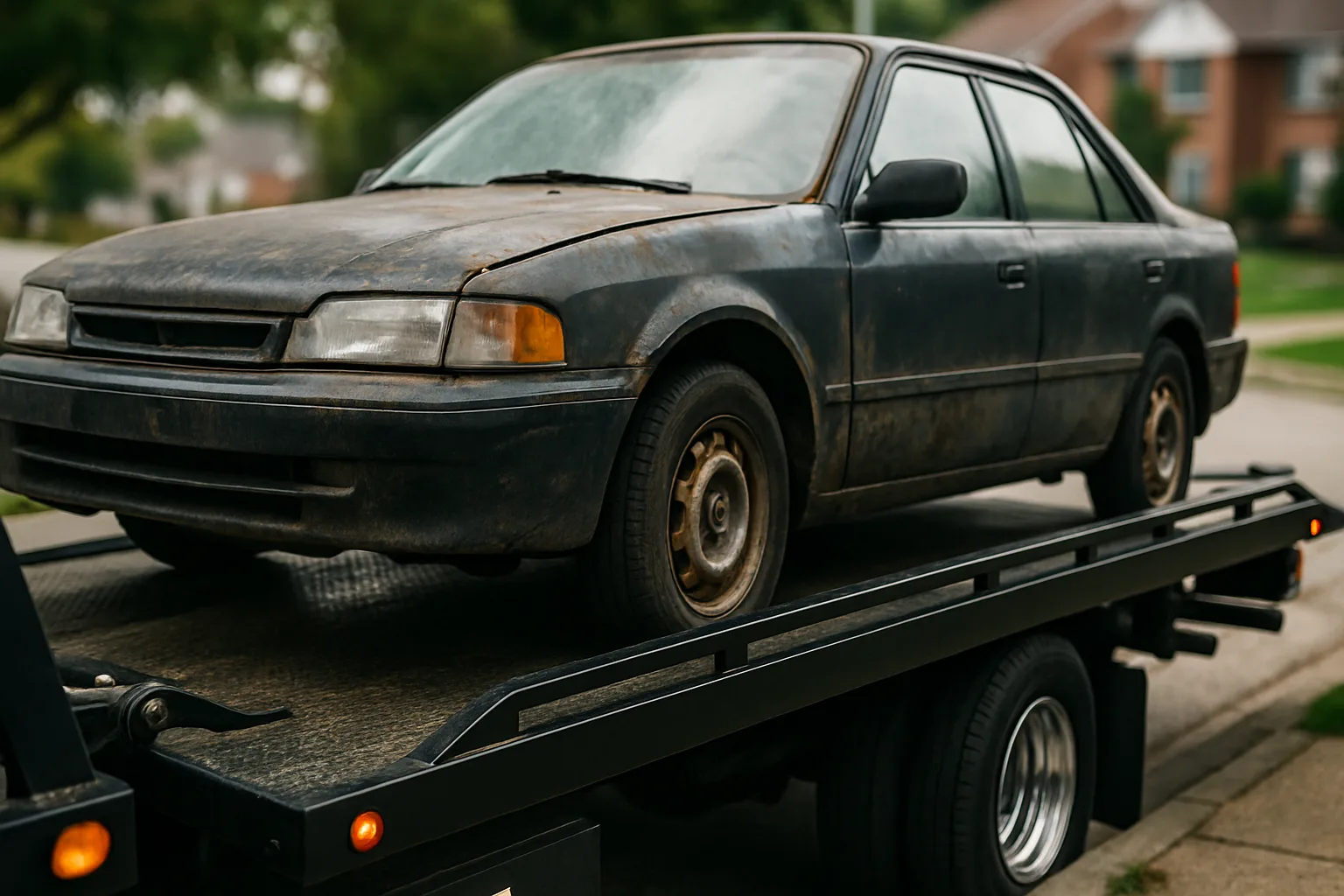
Why the Time of Year Changes What You Get Paid for a Junk Car
Most people think scrap car prices come down to weight and metal type. That's true — but it's not the whole story. The season you sell in, the weather patterns in your region, and even what's happening in local scrap yards right now can shift what you get paid by hundreds of dollars. If you're sitting on a dead Chevy Tahoe or a rusted-out Civic in your driveway, timing your sale isn't just smart — it's money in your pocket.
In Pittsburgh, where winters are brutal and summers bring their own set of challenges, seasonal timing matters more than most sellers realize. Before you sell your scrap car for fair pricing, understanding how weather and market cycles work will help you make a smarter call on when — and how — to sell.
How Scrap Metal Markets Move With the Seasons
Steel and scrap metal prices aren't static. They move based on demand from steel mills, global commodity markets, and how much raw material is flowing through the supply chain. That supply and demand cycle has a seasonal rhythm that directly affects what you'll get for a junk car.
Here's the general pattern most scrap markets follow:
- Spring and early summer: Construction and manufacturing ramp up. Steel demand rises. Scrap prices often tick upward as mills need more raw feed stock.
- Late summer: Market can flatten or soften as mills restock and slow production ahead of fall shutdowns for maintenance.
- Fall: A second wave of demand sometimes hits as construction tries to finish projects before winter. Prices can stabilize or recover.
- Winter: Scrap volume slows. Yards see fewer sellers. Prices often soften — but not always. Low supply can occasionally push prices up if mill demand stays steady.
None of this is guaranteed. Markets shift fast. But knowing the general rhythm gives you a baseline for evaluating whether right now is a good time to sell or whether waiting a few weeks makes sense. Platforms like SMASH — which connect sellers to multiple vetted buyers through a competitive auction format — help expose you to real market pricing instead of one buyer's guess.
Winter Weather in Pittsburgh Makes Junk Car Removal More Complicated
Pittsburgh winters are no joke. Heavy snow, black ice, and sub-zero wind chills make moving vehicles harder for tow operators and scrap yards alike. That friction affects sellers in a few concrete ways.
First, towing capacity gets stretched thin when roads are bad. Some tow companies limit service or add surcharges during heavy weather events. If your car has been sitting in a snowbank for three months, it may need extra work to extract — which some buyers will factor into their offer. Second, frozen components and corrosion can make it harder to accurately assess what's salvageable. A buyer who can't easily inspect the catalytic converter, the engine block, or major non-ferrous components may lowball their quote just to cover risk.
The practical move: don't wait until January to finally deal with that car. If you know you want to sell, getting it done before the first hard freeze saves you headaches. If winter has already hit, schedule a free scrap car pickup as soon as roads clear — yards often see a surge of sellers in early spring, and getting ahead of that wave can mean faster service.
Spring Is Often the Best Season to Sell a Junk Car — Here's Why
Early spring is arguably the sweet spot for selling a scrap car in Pennsylvania. Several factors converge:
- Scrap metal demand rises. Construction season starts. Mills need raw material. Buyers are more willing to compete for loads.
- Towing is easier. Roads are clear. Tow operators are fully available. Yards are processing more volume, which keeps things moving.
- Sellers are motivated. People clean out their properties after winter. That means more cars on the market — but also more buyer activity to match it.
- Catalytic converter values can be stronger. Platinum group metals (PGMs) that make up cats fluctuate independently from steel, but spring market activity tends to bring stronger participation from specialty buyers who want cores and cats.
If you're sitting on a car with a valuable catalytic converter — and many vehicles built before 2020 still have decent cats — spring is a particularly good time to explore options. Buyers competing for the whole vehicle are more likely to offer competitive pricing on the full package when the broader scrap market is active. And if you want to sell catalytic converters online separately, more buyers are in the market in spring, which means better price discovery.
For Pittsburgh sellers, the window between late March and early June is historically the most active period for junk car removal. That doesn't mean you should wait if your situation is urgent — but if you have flexibility, timing toward spring can pay off.
What Happens to Junk Car Prices During Economic Slowdowns and Supply Disruptions
Weather isn't the only external force. Economic conditions — steel tariffs, energy costs, overseas demand — hit scrap prices year-round and can override seasonal patterns entirely. In 2026, global steel production and energy transition pressures continue to create volatility. EV adoption is changing the mix of metals that matter in end-of-life vehicles, with copper, aluminum, and certain battery metals gaining attention alongside traditional steel.
What does this mean for the average seller in Pennsylvania trying to get cash for cars Pennsylvania? It means the old approach of calling one buyer and taking whatever they say is even more costly than it used to be. When prices are volatile, individual buyers price conservatively to protect their margin. The seller absorbs that uncertainty — unless there's real competition in the mix.
SMASH changes that equation by bringing multiple vetted buyers to the table through an auction format. More buyers means better price discovery. One buyer's cautious offer becomes a floor, not a ceiling. That's not a guarantee of higher prices — markets are markets — but competition consistently produces more accurate pricing than a single call to a single yard.
You can read scrap car selling guides that break down how the process works step by step, including what documentation you need and how to prepare your vehicle for pickup.
Regional Factors: Why Pittsburgh Sellers Face Unique Market Conditions
Pittsburgh's industrial history means the region has a dense network of scrap yards, auto recyclers, and buyers. That's good news for sellers — more local buyers means more competition. But it also means local pricing is sensitive to what the regional mills are paying and how full nearby yards are sitting.
When a major regional buyer is at capacity — holding too much inventory — they offer lower prices or stop taking new loads entirely. That can temporarily suppress what sellers receive, regardless of national market trends. Knowing when to sell locally versus when to reach outside your immediate area for better offers is where platforms that aggregate buyer demand earn their keep.
For sellers near Pittsburgh, connecting to Pittsburgh scrap metal services that have buyer networks beyond the immediate metro gives you more options when local yards are sluggish. Junk car prices in WV and surrounding Appalachian markets sometimes diverge from Pittsburgh pricing based on local mill activity — which is another reason having multiple buyers in play beats relying on whoever answers the phone first.
If you're looking to reach buyers beyond your immediate market, getmyscrapcar.com is another resource worth exploring for connecting with scrap car buyers across the region.
Practical Tips for Getting the Best Price Regardless of Season
You can't always control when you need to sell. But you can control how you prepare. These steps help you get the most competitive offer whatever time of year it is:
- Document your vehicle thoroughly. Photos of the body, engine bay, interior, and undercarriage give buyers more confidence and reduce the lowball risk that comes from uncertainty.
- Know what's in your car. Note the year, make, model, trim level, and condition of major components. If you have the catalytic converter still intact, mention it. If you have the title, that matters too.
- Don't drain all the fluids. Some buyers want to assess what's salvageable in the drivetrain. A completely stripped car is sometimes worth less than one that still has usable parts.
- Get multiple quotes. One offer is not a market. Two is better. Three or more with real competition behind them — that's actual price discovery.
- Check timing relative to local yard capacity. If a big local yard just posted a "no intake" sign, expand your search. Don't accept a below-market offer just because it's convenient.
The goal isn't to become a scrap market analyst. It's to make sure you're not leaving money on the table because you called one number and took the first answer you got.
When you're ready, sell car for scrap near me searches are a starting point — but make sure what you find includes free towing, transparent pricing, and actual buyer competition. That's the difference between a fair deal and a fast one that only felt convenient.
Sell your scrap car today and find out what the market will actually pay — get a free quote at sell-myscrapcar.com and let competition do the work for you.
Frequently Asked Questions
Q: Does the time of year really affect how much I get for a junk car in Pittsburgh?
Yes — seasonal scrap metal demand, local yard capacity, and weather all influence offers. Spring and early summer tend to be the most active periods for buyer competition. That said, prices fluctuate year-round based on broader market conditions, so it's always worth getting multiple quotes rather than assuming any one season is always best.
Q: How does cold weather affect junk car removal and pricing in Pennsylvania?
Winter weather in Pennsylvania can limit towing availability and make it harder for buyers to fully assess a vehicle's salvageable components. This can lead to more conservative offers. Getting your car removed before the first hard freeze — or waiting until early spring — generally results in a smoother process and more competitive pricing.
Q: What's the best way to get cash for junk cars in Pittsburgh?
The best approach is to get multiple offers rather than accepting the first one. Use services that connect you to vetted buyers with free towing included — that removes the cost and logistics barriers so you can focus on the offer itself. Platforms like SMASH use a competitive auction format that helps reveal what the market will actually pay.
Q: Does my catalytic converter affect the total offer I get for a junk car?
Absolutely. Catalytic converters contain platinum group metals and can add meaningful value to an end-of-life vehicle offer. If your cat is intact and you know the vehicle's year, make, and model, make sure that's clearly communicated when you request quotes. Some buyers specialize in purchasing cats separately — options like sell catalytic converters online can be worth exploring if you want to maximize returns from that component.
Q: Is free towing actually included, or are there hidden fees?
Reputable scrap car buyers include free towing as part of the offer — it's a standard part of the service, not an add-on. Always confirm upfront that the quote you receive is the amount you'll be paid after towing. If a buyer tries to deduct towing costs at pickup, that's a red flag worth walking away from.
Prices fluctuate based on market conditions, metal commodity rates, and regional buyer demand. Always check current rates before finalizing any sale.
Follow SMASH on LinkedIn for scrap metal market updates, industry insights, and tips on getting the most from your next sale.
```