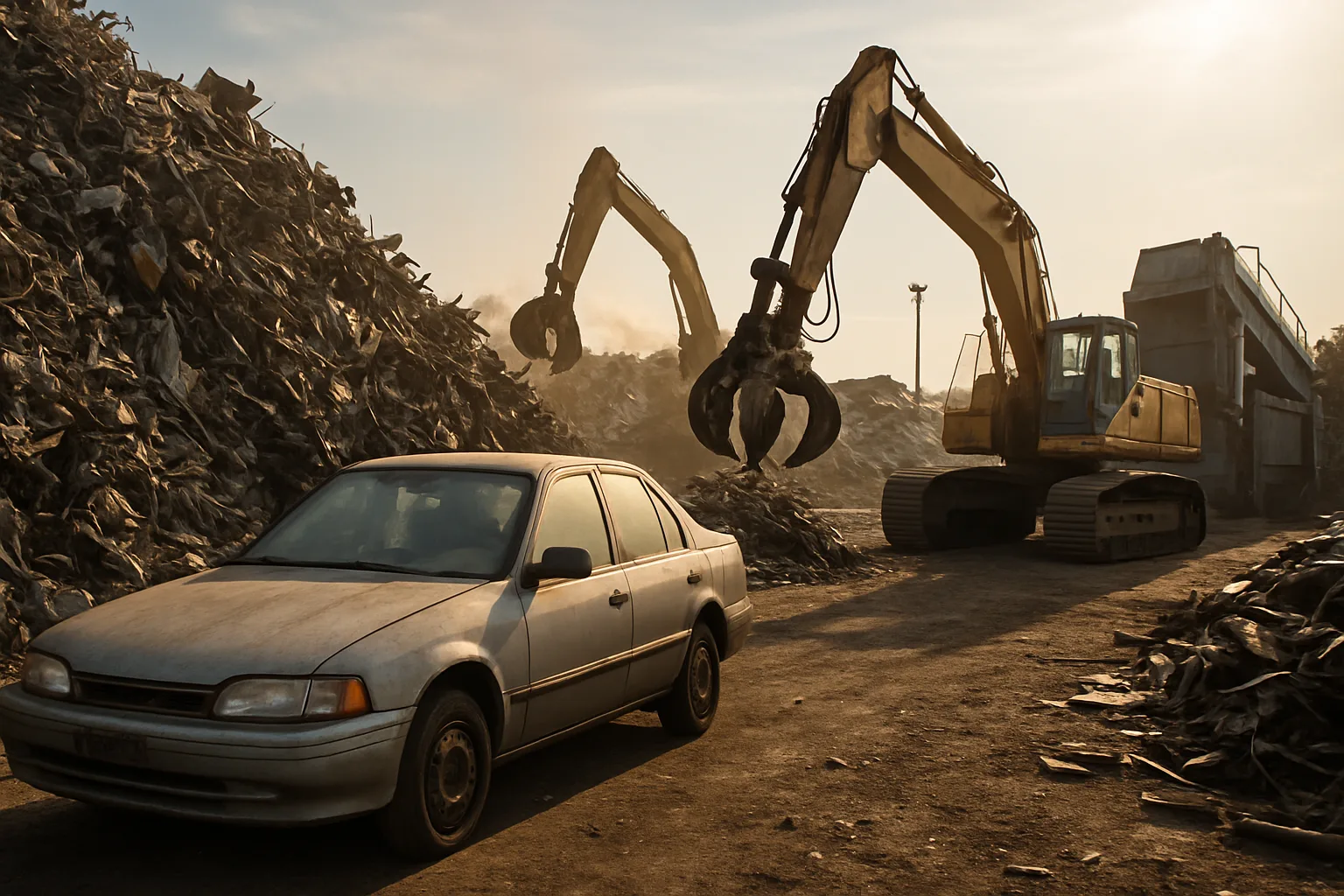
Why Your Scrap Car Value Today Isn't the Same as Your Neighbor's
Two cars. Same year. Parked on the same street in Los Angeles. One gets quoted $400. The other gets $850. Sound unfair? It's not — it's just how scrap car pricing actually works. And once you understand the variables, you stop guessing and start getting paid what your vehicle is actually worth.
If you've been searching for junk car buyers near me or trying to figure out what your old truck is really worth, this guide breaks down exactly what drives scrap car value today — and why your make, model, and condition matter more than most sellers realize.
The Weight Factor: Why Heavier Vehicles Command Higher Scrap Car Value Today
At its core, scrap pricing starts with weight. When a vehicle goes to a recycling yard, the body metal — primarily steel — gets crushed, shredded, and sold by the ton. Heavier vehicles simply yield more raw material. That's why a full-size F-250 pickup almost always fetches more than a compact sedan, even in similar condition.
In California, most yards quote ferrous scrap (the bulk steel in a vehicle's body) by the gross ton. A typical passenger car weighs between 2,800 and 4,000 pounds. A heavy-duty truck or SUV can push 5,500 to 7,000 pounds. That weight difference translates directly into dollars. Here's how vehicle class tends to stack up at the yard:
- Compact cars (Honda Civic, Toyota Corolla): Lower steel yield, often the base tier for scrap quotes
- Mid-size sedans and crossovers: Mid-range quotes based on body weight and recoverable components
- Full-size trucks and SUVs (F-150, Silverado, Suburban): Higher gross weight means stronger baseline offers
- Vans and commercial vehicles: Often the highest raw metal yield in the passenger vehicle category
Weight is just the starting point, though. A heavy vehicle in terrible condition can still lose value fast — which is where the next variables come in.
Make and Model: Why Some Vehicles Are Worth More Dead Than Others
Your vehicle's make and model affect scrap value in two ways: parts recovery and commodity content. Some vehicles have parts that hold strong resale demand in the used auto parts market. Others carry valuable non-ferrous metals that significantly boost the payout.
Catalytic converters are the biggest wildcard here. Vehicles with high-palladium or high-rhodium cats — many Honda and Toyota models, certain Ford trucks, and hybrid platforms — carry meaningful precious metal value separate from the steel scrap price. A hybrid SUV's catalytic converter alone can be worth several hundred dollars depending on current commodity markets. That value gets factored into your quote whether you know it or not.
Beyond cats, consider:
- Aluminum-intensive vehicles: Newer trucks and EVs use more aluminum in body panels and frames. Aluminum scrap prices run significantly higher per pound than steel.
- High-demand parts vehicles: Popular models with strong used parts demand (late-model imports, common domestic platforms) give recyclers more recovery options — and sometimes a higher offer as a result.
- Low-demand or rare models: Orphan vehicles or unusual platforms can be harder to part out, which may reduce what a buyer will pay above straight scrap weight.
This is exactly the kind of nuance that gets missed when you call one buyer and take their first number. Platforms like SMASH — a B2B scrap metal marketplace built for competitive price discovery — help ensure that the value of your vehicle's specific metal composition actually reaches the seller, not just the first buyer who picks up the phone. When you sell your scrap car for fair pricing, competition between buyers is what closes the gap between a lowball offer and a real market rate.
Condition: The Variable That Swings Scrap Car Pricing the Most
Condition affects scrap value in ways most sellers don't fully anticipate. We're not just talking about body damage — though that matters. We're talking about whether the vehicle is complete, running, stripped, or sitting in pieces.
Here's how condition categories typically affect your scrap car value today:
- Running and driveable: A car that runs gets more interest from buyers. It opens up options beyond straight scrap — private sale, wholesale, parts recovery — all of which increase competition for your vehicle.
- Non-running but complete: Still a solid scrap candidate. All the weight is there. The catalytic converter, battery, alternator, and other recoverable components are intact.
- Non-running and partially stripped: If the catalytic converter is gone, the copper wiring is pulled, or major drivetrain components are missing, expect a lower quote. You're selling less weight and fewer recoverable assets.
- Fire or flood damage: Burned vehicles lose significant metal value due to contamination. Flood-damaged vehicles may still have salvageable parts, but buyers factor in the risk and handling costs.
- Missing title: This is a common sticking point. If you're searching for cash for junk cars no title, you're not alone — many sellers in Los Angeles deal with missing paperwork on older vehicles. Some buyers handle title-less vehicles using a bill of sale and affidavit process. Know your state's rules before you commit to a buyer.
Documentation matters too. A vehicle with a clear VIN, matching serial numbers on major components, and photo documentation of its condition gives buyers more confidence — and confidence often translates into stronger offers. When inventory is well-documented, there's less room for buyers to discount for unknown risk.
Why Los Angeles Sellers Face Unique Pricing Conditions
Los Angeles is one of the largest auto recycling markets in North America. That's good news for sellers in one respect — there are more buyers operating in this market than in most regions. More buyers means more potential competition for your vehicle, which is the single biggest lever you have as a seller.
But the Los Angeles market also has specific dynamics that affect pricing. California's strict environmental regulations mean that recyclers here face higher compliance costs than yards in other states. DEQ requirements, dismantling licenses, and fluid disposal standards all add to a yard's operating overhead. That can compress margins — and sometimes compress offers.
Local infrastructure also matters. Los Angeles scrap metal services operate across a wide geography, from the South Bay to the San Fernando Valley to the Inland Empire. Towing distance affects net value, which is why free pickup matters. If a buyer charges a tow fee, they're effectively deducting that cost from your payout. Always confirm whether free towing is included before agreeing to a price.
The best way to cut through all of this? Don't call one yard and accept the first number. Schedule a free scrap car pickup with a service that brings multiple buyers to the table rather than leaving you to make cold calls on your own.
How SMASH Helps Sellers Get Better Price Discovery on Scrap Vehicles
The old way of selling a scrap car in Los Angeles: call a junkyard, get a number, take it or leave it. No visibility into whether that number is fair. No way to know if the yard across town would have paid 30% more. Just one offer, take it or leave it.
SMASH is a SMASH scrap metal auction platform built to fix exactly that problem. By connecting vetted buyers to documented inventory through a competitive auction format, SMASH creates real price discovery instead of guessing. Sellers get visibility. Buyers compete. The market sets the price — not a single buyer's margin target.
For sell scrap car Los Angeles searches, that kind of transparency is rare. Most sellers still get one offer from one buyer and never know if they left money behind. SMASH changes that dynamic by putting your vehicle's specs — weight, VIN, condition photos, component documentation — in front of multiple qualified buyers at once.
No subscription fees. No guessing. Just competition driving fair market value. If you want to read scrap car selling guides that break down how auctions and competitive pricing work for end-of-life vehicles, the process is simpler than most sellers expect.
You can also explore scrap car removal services at GetMyScrapCar to find local options and get a clear picture of what's available in your area before you commit.
What You Can Do Right Now to Maximize Your Scrap Car Payout
Before you call anyone, do a quick inventory of what you have. The more you know about your vehicle, the less leverage a buyer has to talk the price down.
- Know your curb weight: Look it up by year, make, and model. This tells you roughly how much steel you're selling.
- Check the catalytic converter: Is it still on the vehicle? If you have a hybrid or a high-demand make, it may be worth more than you think.
- Document the condition honestly: Take photos. Note what's missing, what's damaged, and what's intact. Documented inventory gives buyers confidence and limits lowball room.
- Confirm free towing upfront: Any net quote that includes a tow fee is lower than it looks. Confirm this before agreeing.
- Don't accept the first offer without comparison: One offer is not a market. Two or three offers — or a competitive auction — actually is.
Scrap car value today is a moving target. Steel prices shift. Precious metal markets move. Regional demand fluctuates. The sellers who do best aren't the ones who happened to call on a good day — they're the ones who created competition for their vehicle instead of handing one buyer a take-it-or-leave-it moment.
If your car is sitting in a driveway in California and you're done waiting, now is a good time to act. Get a real quote, confirm free pickup, and let the market — not a single buyer's margin — tell you what your vehicle is actually worth. Prices fluctuate based on commodity markets and local demand — always check current rates before finalizing any sale.
Frequently Asked Questions
Q: What determines scrap car value today in Los Angeles?
Scrap car value today is driven by four main factors: the vehicle's gross weight (steel yield), its make and model (which affects catalytic converter value and parts demand), its condition (complete vs. stripped), and current commodity prices for steel, aluminum, and precious metals. Los Angeles sellers should also factor in towing costs — always confirm free pickup is included in your quoted price.
Q: Can I sell a junk car in California without a title?
Many buyers in California will purchase a vehicle without a title, particularly for older cars, using a bill of sale and a DMV-issued replacement title affidavit. If you're searching for cash for junk cars no title, be upfront with the buyer about your situation before agreeing to a pickup. Requirements vary by buyer, so confirm the process before scheduling removal.
Q: Why is my scrap car worth less than I expected?
The most common reasons are a missing catalytic converter, stripped components, fire or flood damage, or low steel prices at the time of sale. If your vehicle has been sitting and parts have been removed — even the battery or alternator — that reduces both weight and recoverable value. Getting multiple offers helps you confirm whether a low quote reflects the vehicle's actual condition or just one buyer's pricing.
Q: How does a competitive auction improve my scrap car payout?
When only one buyer sees your vehicle, their offer reflects their margin target — not the real market. Platforms like SMASH put your documented vehicle in front of multiple vetted buyers simultaneously, creating real competition. More buyers bidding on the same load means better price discovery, which often closes the gap between what one buyer offers and what the market will actually pay.
Q: How quickly can I get a scrap car picked up in Los Angeles?
Most reputable junk car removal services in Los Angeles offer same-day or next-day pickup, depending on your location and scheduling availability. Free towing should be included — confirm this before you book. Have your vehicle's year, make, model, and VIN ready when you request a quote to speed up the process.
Your scrap car is sitting there every day — and every day the market is moving without you. If you're ready to stop guessing and start getting real offers, sell your scrap car for fair pricing today and find out what your vehicle is actually worth in today's market. No subscription, no cold calls, no single-buyer guessing games.
Follow SMASH on LinkedIn for ongoing scrap metal market insights, pricing updates, and industry news that actually applies to what you do.