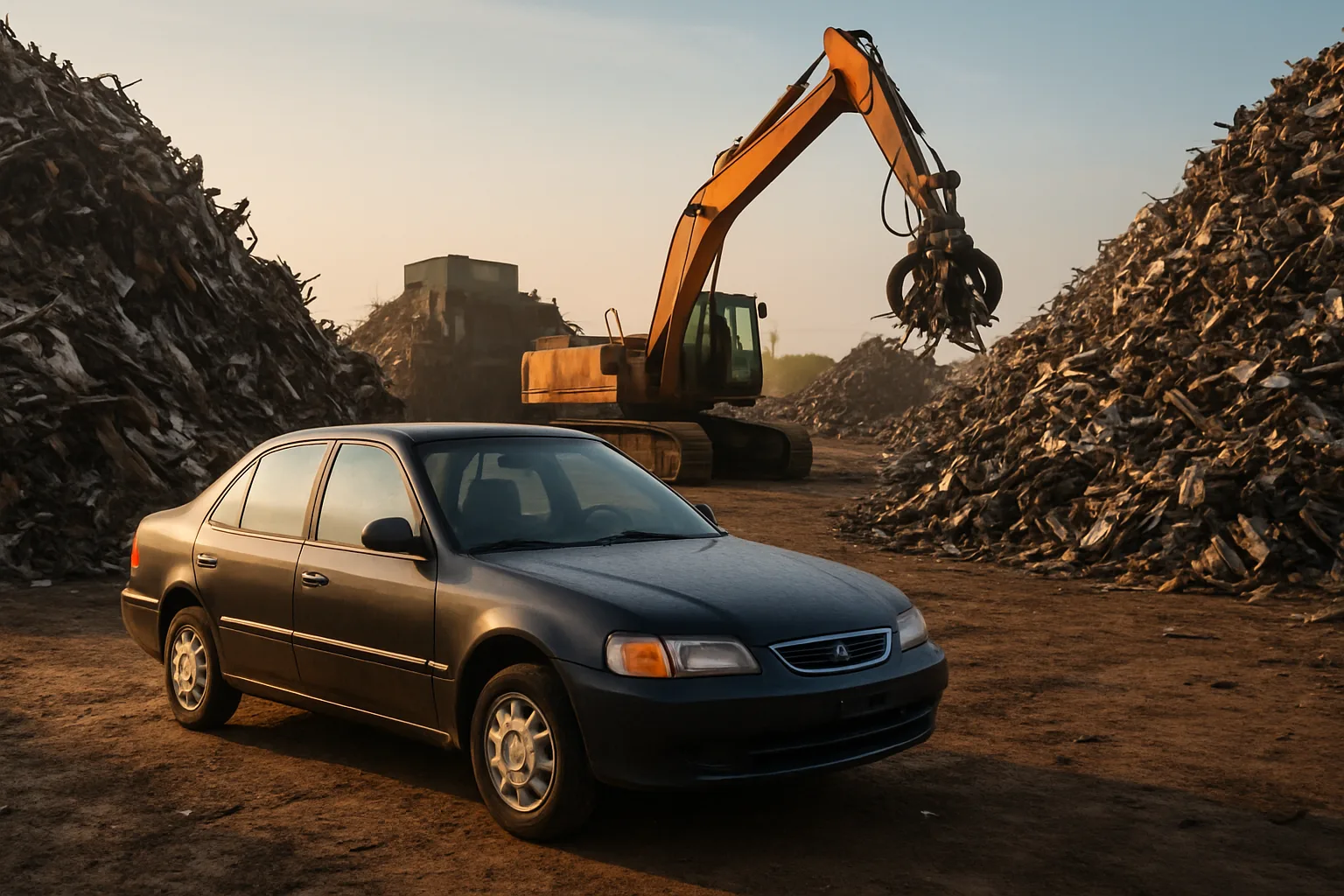
From Your Driveway to the Shredder: What Really Happens After Your Car Gets Picked Up
Most people hand over their keys, watch the tow truck pull away, and never think about it again. But if you've ever wondered what actually happens to your car after you sell your scrap car for fair pricing, the answer is more systematic — and more valuable — than you might expect. Understanding the process helps you see why pricing works the way it does, and why working with the right buyers matters.
In markets like Atlanta, Georgia, where construction activity, commuter traffic, and a dense concentration of auto recyclers create strong demand for end-of-life vehicles, knowing what goes on behind the gate puts you in a better position when it's time to negotiate. Let's walk through the full lifecycle — from the moment your car leaves your driveway to the moment it becomes raw material.
Step One: Intake, Inspection, and Initial Assessment at the Recycling Yard
When your vehicle arrives at an auto recycler, it doesn't just get dumped in a lot. The intake process is structured. Yard staff check the VIN against databases to confirm ownership history, verify the paperwork matches the vehicle, and document the condition — dents, missing parts, fluid levels, and anything that affects value. This is where serial tracking and photo documentation become critical. Reputable yards photograph vehicles at intake to protect both themselves and the seller.
The initial assessment also determines whether a vehicle goes to dismantling first or directly to crushing. A 2014 Honda Civic with a seized engine might have a transmission worth pulling. A 2003 Ford F-150 with 280,000 miles and a cracked frame probably goes straight to the shredder. That triage decision drives everything downstream — including how much the yard paid you for it in the first place.
- VIN lookup: Confirms title history and flags any liens or theft records
- Condition grading: Determines dismantling priority versus direct scrap
- Photo documentation: Protects the yard and creates a verifiable record
- Fluid check: Coolant, oil, brake fluid, and refrigerant all require regulated handling
If you're using a platform like SMASH to connect with vetted buyers, that documentation process starts earlier — before the car even leaves your property. That transparency is exactly why competitive marketplaces produce better price discovery than a single cold call to a local yard.
Depollution: The Regulated Step Most Sellers Never See
Before any metal gets touched, a certified auto recycler must depollute the vehicle. This isn't optional. Environmental regulations — enforced at both the federal and state level, including here in Georgia — require the safe removal of hazardous materials before crushing or shredding. This step is where the industry earns its environmental credibility, and where corner-cutting yards create real liability.
Depollution typically covers:
- Engine oil and transmission fluid — drained and collected for recycling or disposal
- Coolant (antifreeze) — recovered, as it's toxic to soil and groundwater
- Brake fluid and power steering fluid — hazardous waste streams
- Refrigerant (R-134a or R-1234yf) — must be recovered by certified technicians under EPA Section 609 rules
- Gasoline — remaining fuel is drained or siphoned
- Mercury switches — found in older vehicles, particularly pre-2003 models with convenience lighting or ABS systems
- Airbag inflators — pyrotechnic devices that require careful handling
- Lead-acid batteries — removed separately for battery recycling programs
Skipping or rushing depollution is how rogue yards end up with environmental enforcement actions. When you schedule a free scrap car pickup through a verified buyer network, you're more likely to be dealing with facilities that follow the full protocol — because vetted buyers have accountability that anonymous Craigslist buyers simply don't.
Dismantling: Where the Real Value Gets Extracted
After depollution, vehicles with salvageable parts go to the dismantling bay. This is where auto recyclers make a significant portion of their margin. A single late-model SUV can yield thousands of dollars in reusable components — and that's before the steel hull hits the scale.
Parts with consistent resale demand include:
- Engines and transmissions (especially from popular platforms like GM's LS family or Toyota's 2GR)
- Catalytic converters — containing platinum, palladium, and rhodium, cats can be worth hundreds individually depending on the vehicle
- Alternators, starters, and power steering pumps
- Doors, hoods, and fenders in usable condition
- Instrument clusters and infotainment systems from newer vehicles
- Alloy wheels and tires with remaining tread
- Airbag modules (if undeployed)
This is also where understanding your vehicle's residual value becomes important before you sell. If you're trying to figure out how much is my junk car worth, a basic calculator gives you a starting point — but it won't account for the specific parts demand in your local market. In a city like Atlanta, where a large urban population drives high demand for used domestic truck and SUV parts, certain vehicles fetch more than national averages suggest.
Platforms like SMASH bring structure to this dynamic. When buyers compete on inventory that's documented with photos, VINs, and part-level notes, they're bidding on real information — not a phone description. That's the difference between guessing and price discovery.
The Shredder: Turning Steel Into Commodity
Once dismantling is complete, what's left is called the hulk — the bare body shell, frame, and remaining attached metal. This goes to the shredder. Industrial auto shredders are massive machines that can reduce an entire vehicle hulk to fist-sized pieces of mixed metal in under a minute.
After shredding, the output goes through separation systems:
- Magnetic separation — pulls ferrous metals (iron and steel) from the shredder stream
- Eddy current separation — recovers non-ferrous metals like aluminum and copper
- Sensor-based sorting — newer facilities use X-ray fluorescence (XRF) or optical sensors to further grade metals by alloy type
- Shredder residue (fluff) processing — plastics, rubber, foam, and glass go to specialized downstream processors
The ferrous steel bales or shreds that come out of this process are sold to steel mills as scrap feed. The aluminum, copper, and other non-ferrous streams go through secondary processors — or directly to smelters. This is where a vehicle's metal content becomes a raw material again, entering the B2B supply chain that feeds manufacturing across North America.
For sellers, this downstream commodity value is exactly what sets the floor on what your car is worth. Steel prices fluctuate weekly. Non-ferrous prices move even faster. If you're working with a single buyer who calls you once, you have no visibility into whether that offer reflects the current market — or last quarter's. A B2B scrap metal marketplace like SMASH solves that by putting your inventory in front of multiple vetted buyers simultaneously, so competition does the pricing work for you.
How Atlanta's Auto Recycling Market Affects What You Get Paid
Atlanta sits at the intersection of several factors that matter for scrap car sellers in Georgia. It's a major transportation hub, which keeps logistics costs low for buyers moving material. It has a high density of auto recyclers and dismantlers within a relatively compact metro area. And it has consistent demand from regional steel consumers and non-ferrous processors.
That concentration of buyers is an asset — if you know how to use it. Calling one junk car buyer near me means you get one offer. Listing your vehicle through a platform that reaches multiple buyers across the region means the market tells you what the car is worth, not just one buyer's margin calculation.
Local sellers working with Atlanta scrap metal services through verified buyer networks consistently have more information going into the transaction. They know the car has been documented. They know the buyer is vetted. They know the offer reflects competitive pricing, not a take-it-or-leave-it guess.
If you want to read scrap car selling guides that break down local market dynamics, pricing factors, and what to expect at each step of the process, that's the fastest way to stop leaving money on the table.
Scrap car pricing changes constantly — steel markets shift, non-ferrous prices swing, and local demand fluctuates. Always check current rates before you commit to an offer. What a car was worth six months ago may not reflect today's market.
The recycling process is thorough, regulated, and surprisingly efficient. Your old car doesn't disappear — it becomes something else. And how much value you capture from that transformation depends on who you sell it to, and whether they're actually competing for your business. If you're ready to stop guessing, free junk car removal from GetMyScrapCar is a straightforward place to start — no subscription required, no games.
When you're ready to move forward, sell your scrap car today and get a free quote at sell-myscrapcar.com. The process is simple, the towing is free, and the pricing reflects what your car is actually worth in the current market.
Frequently Asked Questions
Q: How long does it take to get paid after I sell my car for cash in Atlanta?
Most buyers pay at the time of pickup — either cash, check, or electronic transfer. If you're selling through a verified buyer platform, payment terms are confirmed before the tow truck shows up. Same-day payment is standard for straightforward transactions in the Atlanta area.
Q: How do I know if my junk car is worth selling or scrapping in Atlanta, Georgia?
If the car runs, it may have private sale value beyond scrap weight. If it doesn't run, is missing major components, or has structural damage, scrap value is typically the realistic ceiling. A junk car worth calculator gives you a ballpark — but local buyers competing for your vehicle will tell you the real number.
Q: Do I need to be home when my junk car gets picked up in Atlanta?
Most reputable services require someone present to sign over the title and receive payment. You don't need to own the property — just have legal authority over the vehicle and valid ID. Confirm the requirements with your buyer before scheduling.
Q: What paperwork do I need to sell my junk car in Georgia?
Georgia requires a valid title to transfer ownership of a vehicle, even for scrap. If your title is lost, the Georgia Department of Revenue can issue a replacement. Some buyers work with a bonded title process for older vehicles — ask your buyer what they accept before you commit.
Q: What happens to the catalytic converter after I sell my car?
The converter gets removed during the dismantling stage and assayed for platinum group metals (PGMs) — platinum, palladium, and rhodium. Depending on the vehicle and current PGM prices, cats can represent a meaningful portion of the vehicle's total scrap value. Platforms like SMASH use serial tracking to document converters properly throughout the transaction chain.
Follow SMASH on LinkedIn for industry updates, scrap metal market insights, and news from the B2B recycling world.