Junkyard, Salvage Yard, or Auto Recycler — What's the Difference and Why It Matters for Your Wallet
Most vehicle owners use these three terms interchangeably. That's a mistake — and it could cost you money. If you're sitting on an end-of-life vehicle in Allentown and want the best return, knowing what type of facility you're dealing with changes everything about how you negotiate, what documentation you need, and what you'll actually get paid.
The distinction isn't just industry jargon. It affects your cash for junk cars Allentown payout, your liability after the vehicle leaves your driveway, and whether you're dealing with a buyer who's equipped to handle your specific situation. Let's break it down clearly.
Junkyard: The Original End-of-Life Vehicle Destination
A junkyard is exactly what it sounds like — a facility that accepts vehicles (and often other scrap) primarily for their raw material value. The goal is weight. They're buying steel, aluminum, copper, and other metals. The car as a functioning machine is irrelevant. What matters is what it yields at the shredder or the scrap processor downstream.
Junkyards typically pay by the ton or by vehicle weight. A standard sedan might weigh between 3,000 and 4,000 pounds. A full-size truck or SUV can push 5,000 to 6,000 pounds or more. The payout you receive is driven by current ferrous and non-ferrous metal market rates, which shift constantly based on mill demand, export activity, and regional supply.
Key things to know about junkyards:
- They focus on bulk scrap weight, not usable parts
- Payout is tied directly to commodity prices — it fluctuates
- Many require a title to accept a vehicle; requirements vary by state
- Pennsylvania law requires licensed vehicle recyclers to maintain records — legitimate facilities follow this
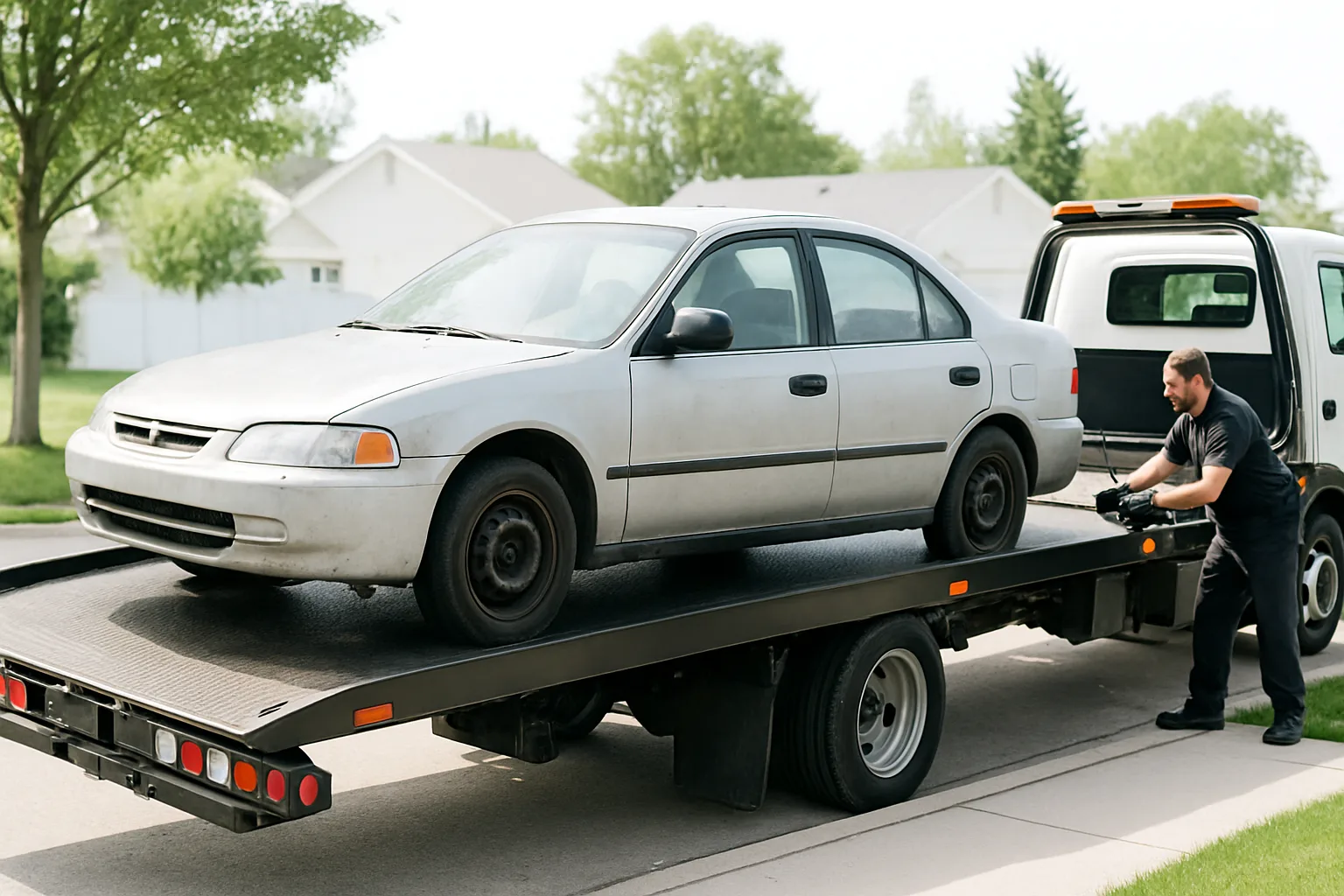
- Some offer free towing; others charge a pickup fee that comes off your payout
If your car is truly a total wreck — flood-damaged, fire-damaged, or structurally compromised — a junkyard is likely your destination. The vehicle has no value beyond its metal weight, and that's fine. Just make sure you understand the rate you're getting and whether towing is included in the offer.
Salvage Yard: Where Usable Parts Have Real Value
A salvage yard operates differently. Yes, they buy end-of-life vehicles — but they're not just looking at metal weight. They're evaluating what's still usable. Engines, transmissions, doors, hoods, axles, catalytic converters (cats), electronics modules, wheels, and hundreds of other components all have resale value on the used parts market.
This distinction matters for your payout. A 2018 pickup with a working transmission is worth more to a salvage yard than to a straight scrap buyer, because that transmission can be pulled, tested, and resold for several hundred dollars to a repair shop or DIY mechanic. The salvage yard pays more upfront because they're betting on parts revenue, not just scrap weight.
Here's how salvage yards typically operate:
- Vehicle assessment: They evaluate the car's year, make, model, mileage, and condition to determine which parts have resale value
- Offer calculation: Payout is a blend of estimated parts value plus residual scrap weight
- Part extraction: Usable components are pulled and inventoried for resale
- Remainder scrapped: What's left — the hulk — goes to the shredder
If your vehicle is relatively recent, has low mileage, or has specific components in good condition (running engine, intact cats, clean interior), a salvage yard may offer you more than a straight junkyard. It pays to get multiple quotes. Platforms like SMASH bring competitive pressure to this process — instead of calling one buyer and accepting whatever they offer, you're putting your vehicle in front of multiple vetted buyers who have to compete for it.
Auto Recycler: The Full-Service, Regulated Option
Auto recyclers are the most comprehensive tier of this industry. They handle the entire end-of-life vehicle process — from fluid removal and hazardous material handling to parts salvage, metal processing, and documentation. In most states, including Pennsylvania, operating as an auto recycler requires licensing, environmental compliance, and proper record-keeping for title transfers and vehicle identification.
The term "auto recycler" is increasingly the industry-preferred label for facilities that operate with full regulatory compliance and environmental standards. The Pennsylvania Department of Transportation and the Department of Environmental Protection both have requirements that licensed recyclers must meet — covering everything from how fluids are drained to how titles are recorded and transferred.
Why does this matter to you as a seller?
- Liability protection: A licensed auto recycler properly transfers the title and records the vehicle, which removes your legal exposure after the sale
- Environmental compliance: Fluids like coolant, oil, brake fluid, and refrigerants are handled correctly — you're not passing liability onto yourself or your community
- Proper documentation: You get a receipt or bill of sale that protects you if questions arise later
- Fair valuation: Reputable recyclers assess value across parts, metals, and fluids — not just steel weight
For Allentown sellers, choosing a licensed, compliant auto recycler — or working through a platform that connects you to vetted buyers — is the smartest move. You protect yourself legally, you contribute to responsible recycling, and you're far more likely to get a fair market price.
What This Means for Cash for Junk Cars in Allentown
Here's the practical reality: if you're searching for cash for junk cars Allentown, you're going to encounter all three types of buyers — and you may not always know which you're dealing with. Some operations blend elements of all three. Others market themselves as one thing but operate as another.
The safest approach is to treat your vehicle like what it actually is: a commodity with multiple value streams. Metal weight is one stream. Usable parts are another. Cats and other high-value non-ferrous components are another. When you only call one buyer, you get their assessment of those value streams. It may be fair. It may not be. You have no way to know without comparison.
This is exactly where SMASH changes the equation. Instead of accepting a single offer from a single buyer with a single assessment, you get competitive bids from vetted buyers who understand the full value of your vehicle. More buyers means better price discovery — that's not a sales pitch, it's how markets work. To sell your scrap car for fair pricing, you need competition, not a single phone call to a yard that sets its own number.
A few things that affect your payout regardless of which type of buyer you use:
- Vehicle year, make, and model: Newer vehicles with popular platforms have higher parts demand
- Running vs. non-running: A running vehicle is worth more — but non-runners still have scrap and parts value
- Catalytic converter condition: Cats contain platinum, palladium, and rhodium — don't let a buyer lowball you by not accounting for this
- Current metal prices: Scrap steel and aluminum prices shift constantly — what you're offered today may differ from next month
- Title availability: Having a clear title typically opens you to more buyers and better offers
If you don't have a title, don't assume you're out of options. Some buyers handle junk car buyers near me for cash no title situations — requirements vary by state, but Pennsylvania has provisions for certain no-title transfers through the DMV. Ask upfront.
How to Get the Best Offer — Regardless of Who's Buying
Whether you end up selling to a junkyard, a salvage yard, or a licensed auto recycler, the process of getting a fair offer is the same. Document your vehicle. Know what you have. Get multiple quotes. And use a platform that brings buyers to you instead of forcing you to cold-call yards and hope for an honest number.
Here's a practical checklist before you sell:
- Locate your title — or contact PennDOT about your options if it's missing
- Note the VIN — buyers use this to assess parts demand and value
- Take photos of the vehicle, including the interior, engine bay, and any damage
- Remove personal belongings and any aftermarket parts you want to keep
- Check whether your catalytic converter is still present — it has significant value
- Get at least two or three quotes before accepting any offer
You can schedule a free scrap car pickup and get a quote without committing to a sale. There's no obligation in getting a number — and knowing the market protects you from leaving money on the table. If you want to go deeper on the process, read scrap car selling guides that walk through each step in plain language.
For sellers in the Lehigh Valley and across Pennsylvania, the market for end-of-life vehicles is active. Buyers want inventory. That's leverage — use it. And if you want to explore what competitive, transparent scrap car selling looks like at scale, schedule a free scrap car pickup and see what multiple buyers actually offer for your vehicle.
If your car has been sitting in the driveway long enough, the right move is a simple one: get a quote, compare your options, and sell it to someone who values it properly. Sell your scrap car today — get a free quote at sell-myscrapcar.com and find out what your vehicle is actually worth in today's market.
Disclaimer: Scrap metal and vehicle prices fluctuate based on commodity markets, regional demand, and vehicle condition. Always check current rates before accepting an offer.
Frequently Asked Questions
Q: What's the difference between a junkyard and a salvage yard in Pennsylvania?
A junkyard focuses on raw scrap metal weight — your vehicle is valued by the ton. A salvage yard evaluates usable parts and components, which often results in a higher payout for vehicles with working engines, transmissions, or intact catalytic converters. Pennsylvania requires both types of facilities to be licensed and maintain proper records.
Q: Can I get cash for junk cars in Allentown without a title?
In some cases, yes. Pennsylvania has provisions for no-title transfers in certain situations, and some buyers are equipped to handle these transactions. Requirements vary, so ask upfront. Having a title typically opens you to more buyers and stronger offers, so contact PennDOT about replacement title options if yours is missing.
Q: How do I know if a junk car buyer near me is legitimate?
A legitimate buyer will provide a written offer, proper documentation of the title transfer, and a receipt for the transaction. In Pennsylvania, licensed auto recyclers are required to maintain records of vehicle purchases. Working through a platform like SMASH connects you to vetted buyers who have already been screened — reducing your exposure to lowball or fly-by-night operations.
Q: Does free towing actually mean free, or does it come off my offer?
It depends on the buyer. Some buyers include towing as part of their offer with no deduction. Others quote you a gross number and then subtract a towing fee. Always ask before you confirm — a legitimate buyer will be upfront about whether towing is included or deducted. When you get multiple quotes through a competitive platform, this becomes easier to compare.
Q: How do current metal prices affect my cash for cars Pennsylvania payout?
Scrap metal prices — especially ferrous steel — fluctuate based on mill demand, export markets, and national supply. A vehicle that fetches one price today may yield a different amount in 60 days. This is why timing and getting multiple competitive bids matters. Check current market rates and don't accept a single offer without comparison.
---Stay current on scrap metal market trends and industry updates — follow SMASH on LinkedIn for regular insights from across the North American recycling industry.