Most people use "junkyard," "salvage yard," and "auto recycler" like they mean the same thing. They don't — and if you're trying to sell my car fast Kansas City, knowing the difference could mean more cash in your pocket and a lot less wasted time.
These three types of facilities operate differently, pay differently, and serve different purposes. Whether your car runs or not, understanding who you're dealing with changes everything about how the transaction goes.
Junkyard, Salvage Yard, or Auto Recycler: What's Actually Different?
The terminology gets blurry fast, but the operations are distinct. Each type of facility has a different business model — and that directly affects what they'll pay you for your vehicle.
Here's the breakdown:
- Junkyards are the oldest model. They take end-of-life vehicles, strip what's useful, and crush the rest for scrap metal. The focus is volume. They're buying cars to recover metal weight, not to preserve parts.
- Salvage yards (sometimes called "pull-a-part" lots or "you-pull" yards) keep vehicles mostly intact and let customers walk the lot, find the parts they need, and remove them manually. They generate revenue from parts sales, not scrap weight.
- Auto recyclers operate at a higher level. They systematically dismantle vehicles, catalog usable parts, resell those parts (often with warranties), and then process what's left as scrap metal. They're part parts business, part scrap operation.
All three end up with scrap metal eventually. But the path there — and what they pay along the way — varies significantly.
How Each Facility Prices Your Car Differently
If you've ever gotten wildly different quotes from different buyers, this is why. A junkyard is calculating your car's value almost entirely on scrap metal weight. A salvage yard is asking whether your vehicle has desirable parts still attached. An auto recycler might factor in both — the parts value and the residual scrap weight once everything useful is removed.
Scrap metal prices in 2026 fluctuate with global commodity markets. Steel, aluminum, and copper all move independently. A car with a blown engine still has a copper-heavy catalytic converter, an aluminum engine block, and hundreds of pounds of steel — all with real market value. But a salvage yard might pay you more if your transmission, doors, or infotainment system are still functional and sellable.
The honest truth: most vehicle owners in Missouri don't know which type of buyer to call first. That's where platforms like getmyscrapcar.com and services like SMASH simplify the process — by connecting you with buyers who are actually competing for your vehicle, not just giving you a take-it-or-leave-it number.
Disclaimer: Scrap car prices fluctuate based on current metal markets, vehicle condition, and buyer demand. Always check current rates before accepting any offer.
Why Kansas City Sellers Need to Know This Before They Call
Kansas City sits on a regional scrap metal corridor with active buyers across Missouri and into neighboring states. That's good for sellers — there's real competition in this market. But not every facility that says "we buy junk cars" is actually the right fit for your vehicle.
If your car is a late-model vehicle with low miles and minor damage, a salvage yard or auto recycler will likely pay more — because your parts have resale value. If you're sitting on a 2009 minivan with 240,000 miles, no catalytic converter, and a rusted-out frame, you're really looking at scrap weight value. Calling a salvage yard first wastes your time.
Kansas City's Kansas City scrap metal services market is active enough that you shouldn't have to settle for the first number you're offered. The goal is to get multiple eyes on your vehicle so you know what it's actually worth — not what one buyer feels like paying that morning.
Knowing the difference between these three facility types tells you who to call and in what order. That alone can change the outcome of the sale.
Free Towing: Who Offers It and Why It Matters
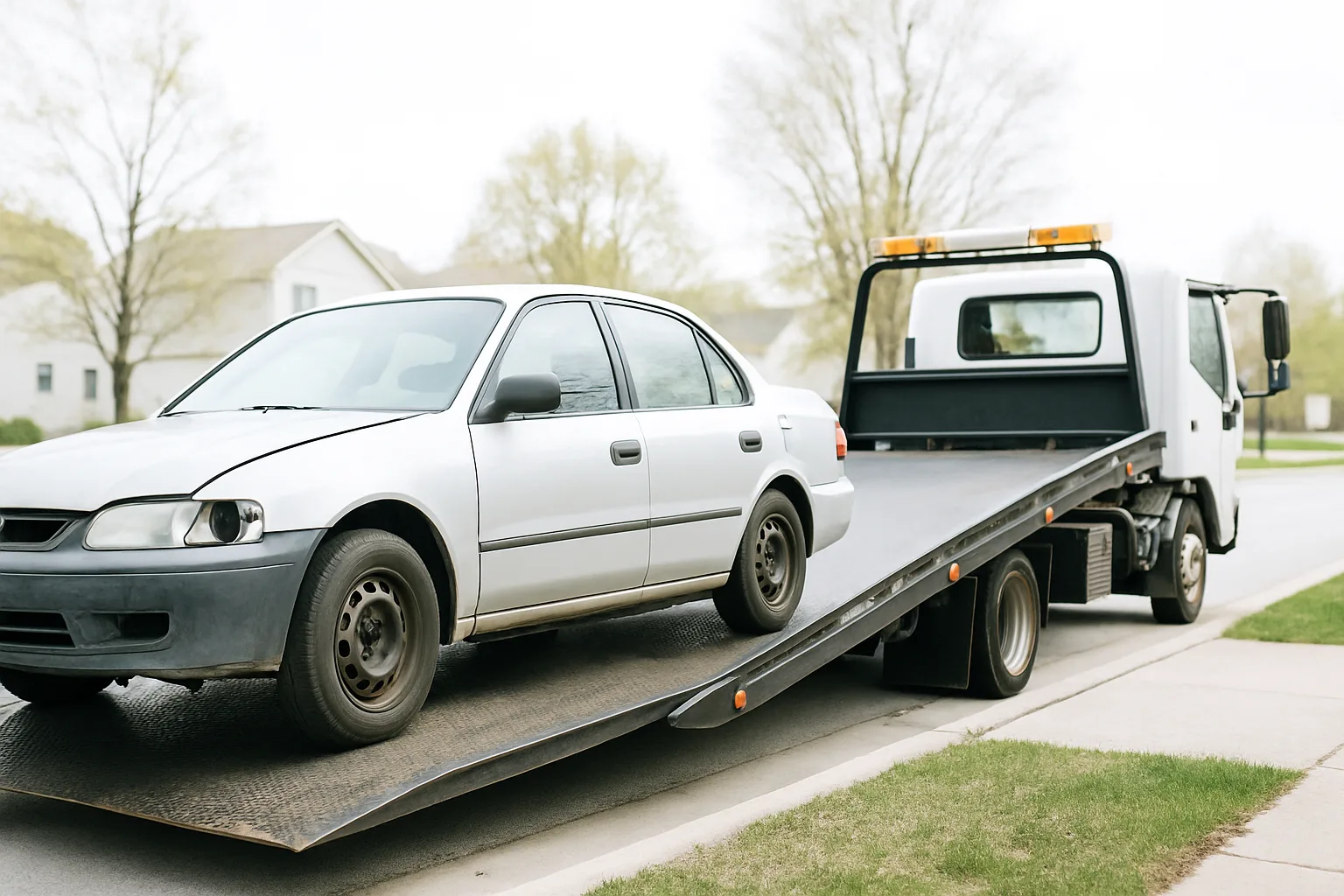
Here's something that catches people off guard: not all junk car buyers offer free towing. Salvage yards often expect you to deliver the vehicle. If your car doesn't run, that means a tow truck bill — which can easily run $100–$200 or more depending on distance, cutting directly into what you're getting paid.
When you sell your scrap car for fair pricing, free pickup should be part of the deal. It's a signal that the buyer has priced the transaction fully — they're not hiding costs that show up later. Reputable junk car removal services in Kansas City include pickup at no charge. If a buyer quotes you a price and then mentions a towing fee at the end, that's a red flag worth taking seriously.
Here's what to confirm before you agree to anything:
- Is the towing truly free, or is it deducted from your payment?
- Is the quote guaranteed, or can the buyer change it when they arrive?
- Do they handle the title paperwork, or is that on you?
- How quickly can they schedule pickup?
A legitimate cash for junk cars Kansas City buyer will answer all of these clearly before you commit. If the answers are vague, keep shopping.
How SMASH Fits Into the Auto Recycling Picture
SMASH operates in the scrap metal auction space — which means it connects sellers with vetted buyers who compete for loads. If you're a yard or recycler moving volume, that competitive auction model creates real price discovery instead of a single take-it-or-leave-it offer.
For individual vehicle owners, understanding the SMASH model matters because it reflects what's possible when buyers compete. The same logic applies when you're selling a single car: the more legitimate buyers who see your vehicle, the better your chance of landing a fair number. One call to one buyer is the old way. Getting your vehicle in front of multiple buyers — even informally — almost always produces a better result.
SMASH brings that auction-style competition to the scrap metal market at scale, and platforms built around that same idea are reshaping how individual sellers experience junk car removal in markets like Kansas City and across Missouri.
Want to understand how that process works and how it compares to traditional buyers? Read scrap car selling guides that break down each step — from getting your first quote to handing over the title.
What to Do Before You Sell: A Practical Checklist
Regardless of whether you go with a junkyard, salvage yard, or auto recycler, a few steps before the sale protect you and can increase what you receive.
- Locate your title. Most buyers require it. No title makes the transaction harder and can reduce your offer or disqualify you entirely.
- Remove personal belongings. Check under seats, in the trunk, and in the glovebox. Buyers won't hold vehicles while you retrieve forgotten items.
- Note any valuable components. Does your car still have a working catalytic converter? Intact airbags? A functional battery? These affect value. Know what you have before you get a quote.
- Cancel your insurance and plates. In Missouri, you should return your plates to the DMV after the sale to avoid being tied to the vehicle.
- Get at least two or three quotes. The spread between offers in an active market like Kansas City can be meaningful. Don't accept the first number without comparison.
- Confirm the pickup timeline. Some buyers can come same-day. Others schedule 3–5 days out. Know what you're agreeing to.
Once you've done that groundwork, you're in a much stronger position to schedule a free scrap car pickup and close the sale on your terms.
Frequently Asked Questions
Q: What's the fastest way to sell my car fast in Kansas City?
The fastest route is to contact a junk car removal service that offers same-day or next-day pickup and handles all paperwork. Have your title ready, know your VIN, and be clear about the vehicle's condition. Services that include free towing typically move faster because there's no third-party scheduling involved.
Q: How do I know if I'm getting a fair price for my junk car?
Get at least two to three quotes from different buyers. Scrap car value depends on vehicle weight, metal composition, current commodity prices, and whether any parts have resale value. A quote that seems significantly higher than others isn't always better — confirm it's guaranteed and that towing is included before you accept.
Q: Does a salvage yard pay more than a junkyard for my car?
It depends entirely on your vehicle. If your car has functional parts that are in demand — transmissions, doors, engines, electronics — a salvage yard may offer more because they generate value from parts sales. If the vehicle is heavily damaged, stripped, or very high mileage, a junkyard focused on scrap weight may be the more realistic option.
Q: Do I need a title to sell a junk car in Kansas City, Missouri?
Most legitimate buyers in Missouri require a title to legally transfer ownership. If you've lost your title, you can apply for a duplicate through the Missouri Department of Revenue before the sale. Some buyers will work with vehicles without titles under certain conditions, but it typically reduces your offer and limits your options.
Q: What happens to my car after it gets picked up?
Depending on the buyer type, your car will either go to a salvage lot where parts are pulled and resold, directly to a scrap facility where it's crushed and shredded into raw metal, or to an auto recycler that does both. In all cases, the remaining metal feeds into the scrap steel supply chain.
If you're done dealing with a car that isn't worth repairing, the process doesn't have to be complicated. Know who you're selling to, confirm the terms up front, and let a service with free towing handle the rest. Sell your scrap car today — get a free quote at sell-myscrapcar.com and find out what your vehicle is actually worth in today's Kansas City market.
Follow SMASH on LinkedIn for weekly scrap metal market updates and industry insights across North America.