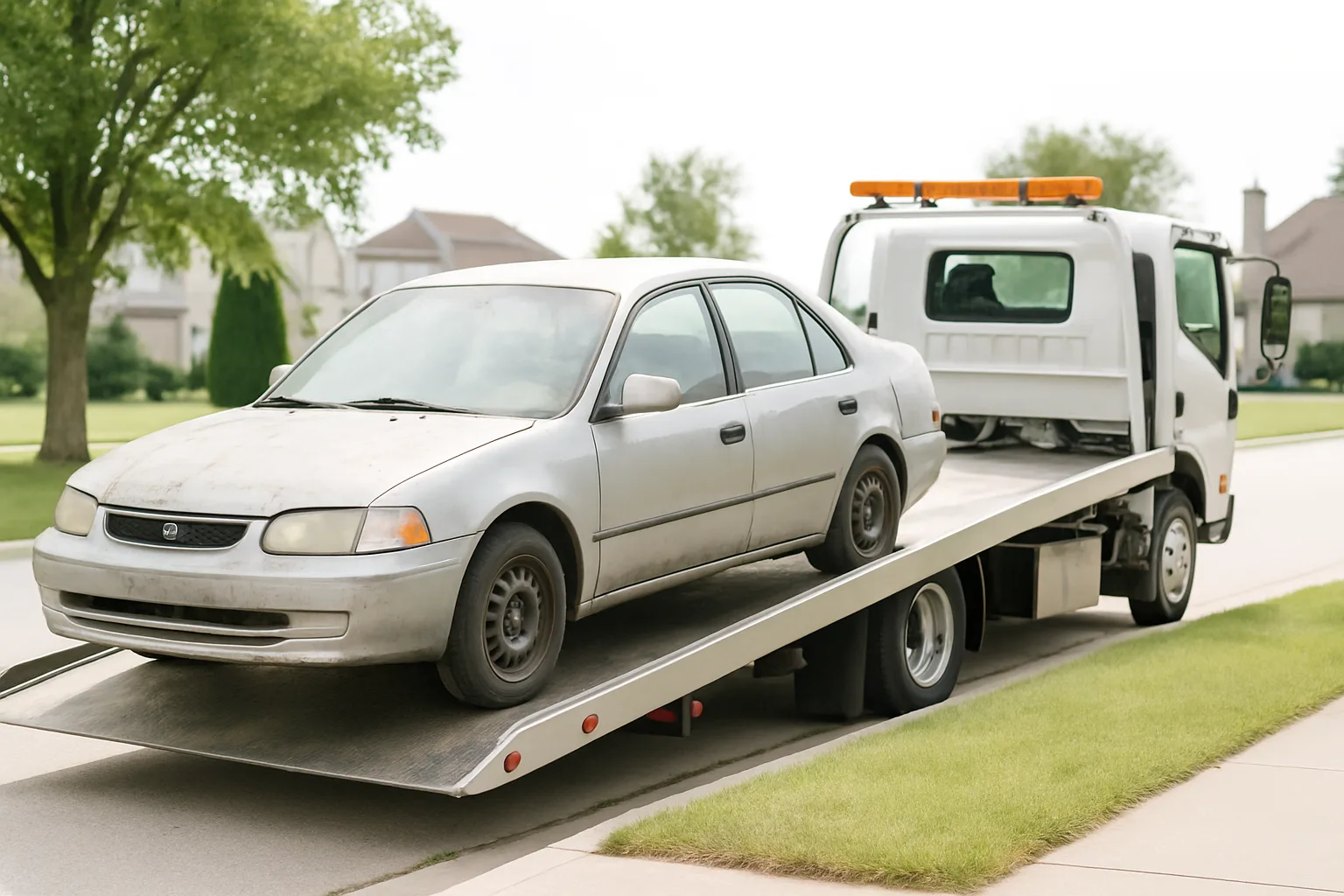
From Your Driveway to the Shredder: What Really Happens After Junk Car Pickup in Pittsburgh
Most people hand over their keys, watch the tow truck pull away, and never think about it again. But if you've ever wondered what actually happens to your old Chevy Silverado or beat-up Honda Accord after it leaves your Pittsburgh driveway — the answer is more organized, more profitable, and more environmentally significant than you'd expect. Understanding the process also helps you become a smarter seller.
If you're searching for junk car buyers near me Pittsburgh, knowing what happens downstream can help you ask better questions, understand your quote, and make sure you're getting fair value before you sign anything over.
Step One: Intake, Assessment, and Documentation at the Recycling Yard
The moment your vehicle rolls into an auto recycling facility, it gets logged. Yard staff record the VIN, year, make, model, mileage, and general condition. This isn't just administrative — it drives how much the car is worth and which parts get pulled first.
At a well-run yard, photo documentation is taken of the vehicle from multiple angles. Serial numbers on major components — engine, transmission, catalytic converter — get recorded too. This matters more than most sellers realize. Documented inventory builds buyer confidence, which is exactly why platforms like SMASH have built inventory tools and serial tracking into their workflow. When a buyer knows what they're getting, they bid with more certainty. That certainty can translate to better price discovery for the seller.
- VIN lookup confirms the vehicle's history and confirms it's not stolen or salvage-titled incorrectly
- Weight estimates are recorded — most passenger cars weigh between 2,800 and 4,500 lbs
- Condition grading determines whether it goes to parts, direct melt, or auction
- Fluid assessment flags whether hazardous materials need removal before processing
This intake process is fast — typically under an hour for a standard vehicle. But it sets the tone for everything that follows.
Depollution: The Step That Protects You, the Yard, and the Environment
Before anything is disassembled or crushed, every end-of-life vehicle goes through depollution. This is a non-negotiable step required by law across Pennsylvania and every other U.S. state. Skipping it isn't just illegal — it's a liability for the facility and a hazard for the community.
Here's what gets removed during depollution:
- Engine oil, transmission fluid, and coolant — drained and sent for recycling or disposal
- Gasoline — siphoned and stored separately
- Brake fluid and power steering fluid — both are hazardous if allowed to leach into soil
- Refrigerant (Freon) — captured with certified equipment to prevent atmospheric release
- Mercury switches — found in older vehicles, typically in hood or trunk lights
- Airbag inflators — deployed or removed before crushing to prevent explosive decompression
- Batteries — lead-acid batteries are one of the most recycled products in North America
This stage takes anywhere from 30 minutes to a couple of hours depending on vehicle complexity. Reputable Pittsburgh scrap metal services and auto recyclers in Pennsylvania take this step seriously — it protects their license and your peace of mind.
High-Value Parts Get Pulled First — Including Your Catalytic Converter
Once depolluted, the vehicle moves to the dismantling bay. Experienced dismantlers know exactly which parts have resale value and pull those before anything else goes near a crusher.
The catalytic converter is almost always the first thing off. Cats contain platinum group metals — platinum, palladium, and rhodium — that are worth real money even in a junk car. A single cat from a late-model truck can carry significant scrap value depending on the vehicle and current commodity prices. That's why cash for cars Pittsburgh quotes can vary so dramatically — buyers who understand cat value will account for it; buyers who don't may lowball you.
Other parts pulled for resale include:
- Engines and transmissions (if functional or rebuildable)
- Alternators, starters, and power steering pumps
- Doors, hoods, and body panels (if undamaged)
- Seats, dashboards, and interior trim
- Wheels and tires
- Radiators and condensers (aluminum content)
- Wiring harnesses and electronic modules
Parts with verified serial numbers and known provenance sell faster and at better prices. This is another reason why documentation matters at intake — a well-tracked core is easier to move than one with a questionable history.
Want to understand how buyers evaluate loads like yours before they bid? Read scrap car selling guides that break down how auto recyclers think about vehicle value.
What's Left Goes to the Shredder — and It's Almost All Recycled
After the valuable parts are pulled, what remains is the bare shell — the body-in-white, as it's sometimes called. That shell, along with the remaining steel structure, gets sent to a shredder. Industrial auto shredders process hundreds of vehicles per day. The output is shredded steel (called shred or prepared shred), which goes to steel mills as raw feedstock.
Modern shredder systems also separate out the non-ferrous metals — aluminum, copper, zinc — using magnets, eddy current separators, and air classifiers. These non-ferrous fractions are baled and sold separately, often at significantly higher per-ton values than ferrous scrap.
The remaining fluff — foam, glass, plastic, rubber — is handled according to local regulations. Some of it gets further processed; some ends up in controlled disposal. But the metal recovery rate from a modern auto shredder operation runs well above 80%. Your old car is almost entirely reborn as new steel and metal products.
That efficiency is exactly why the scrap metal supply chain matters. Platforms like getmyscrapcar.com and SMASH connect sellers to buyers who understand the full downstream value of a vehicle — not just the surface-level scrap weight. When more buyers compete for your load with accurate data in hand, price discovery improves. That's not a guarantee of any specific outcome, but more buyer competition tends to reveal the real market.
How Scrap Car Auctions Work — and Why It Matters for Pittsburgh Sellers
Most sellers in Pittsburgh hand their car to the first buyer who answers the phone. That's the old way. One buyer, one price, no competition, no transparency. You either take it or try your luck elsewhere.
The scrap metal auction platform model works differently. Instead of a single buyer setting the price, multiple vetted buyers see the same documented inventory and compete. The seller gets better price discovery because the load is exposed to the actual market — not just one buyer's margin calculations.
For a load with quality cats, non-ferrous components, and good documentation, the difference between a single-buyer quote and a competitive auction result can be meaningful. That's not a promise of any specific uplift — it depends on the load, the timing, and the buyers. But the principle holds: competition reveals value that a single phone call hides.
If you're ready to sell your scrap car for fair pricing, working with a service that connects you to multiple buyers — rather than locking you into one — is a smarter starting point.
Paperwork, Title Transfer, and What You Need to Know Before Pickup
Before your car leaves your property in Pittsburgh — or anywhere in Pennsylvania — you need to handle the title transfer correctly. This protects you from future liability, including parking tickets, tolls, or worse, if the vehicle is used illegally after it leaves your hands.
Here's what to have ready before your schedule a free scrap car pickup appointment:
- Clean title in your name — Pennsylvania requires a signed title for vehicle transfer
- Photo ID — to verify you're the registered owner
- Remove personal items — glove box, trunk, under seats
- Remove license plates — in Pennsylvania, plates stay with the owner, not the vehicle
- Cancel your insurance — do this after pickup is confirmed, not before
- Notify PennDOT if required — check current 2026 requirements for your county
Reputable junk car buyers near me Pittsburgh will walk you through this process — a trustworthy buyer doesn't rush you past the paperwork. If someone pressures you to skip the title transfer or offers to handle it themselves without your involvement, that's a red flag.
Frequently Asked Questions
Q: How long does it take to get picked up after I request a quote in Pittsburgh?
Most reputable junk car buyers near me Pittsburgh can schedule a pickup within 24 to 48 hours of quote acceptance. Same-day pickup is available in many cases depending on your location and the buyer's route. Have your title and ID ready to keep things moving.
Q: Do I need a title to sell my scrap car in Pennsylvania?
In most cases, yes. Pennsylvania requires a signed title to legally transfer a vehicle to a recycler or buyer. Some buyers may work with you on lost-title situations, but expect the process to take longer. Contact your local PennDOT office or check their 2026 guidelines for the fastest path to a replacement title.
Q: What affects my cash for cars Pittsburgh quote the most?
The three biggest factors are the vehicle's weight (steel content), the condition and presence of the catalytic converter, and current scrap metal commodity prices. A 4,500 lb truck with an intact cat will quote higher than a 2,800 lb sedan missing its catalytic converter. Prices fluctuate — always check current rates before committing.
Q: Is free towing actually free, or does it get deducted from my payout?
With a legitimate cash for junk cars service, free towing means zero deduction from your quoted price. The number quoted is what you receive. If a buyer quotes you $400 and then deducts $75 for towing at pickup, that's not free towing — that's a bait-and-switch. Get the full quote in writing before scheduling.
Q: What happens to my personal information once my car is scrapped?
Your vehicle's VIN is recorded and reported to state authorities to mark the car as transferred and destroyed. Your personal information — name, ID, title details — stays with the licensed buyer as required by law. Reputable auto recyclers in Pennsylvania follow strict data handling practices. Always choose a licensed, vetted buyer.
Your old car has more value than it looks. From the catalytic converter to the last pound of shredded steel, the recycling chain extracts nearly everything. Knowing that process helps you sell smarter — and makes sure you're working with buyers who actually understand what they're buying. If you're done letting a single buyer set the price on your terms, it's time to explore what competitive, transparent scrap car selling looks like. Get a free quote at sell-myscrapcar.com and see what your vehicle is actually worth in today's market.
Stay current on scrap metal market trends and industry insights by following SMASH on LinkedIn.
Disclaimer: Scrap metal and vehicle prices fluctuate based on commodity markets. All price references in this article are general in nature. Always check current rates with your buyer before finalizing a sale.