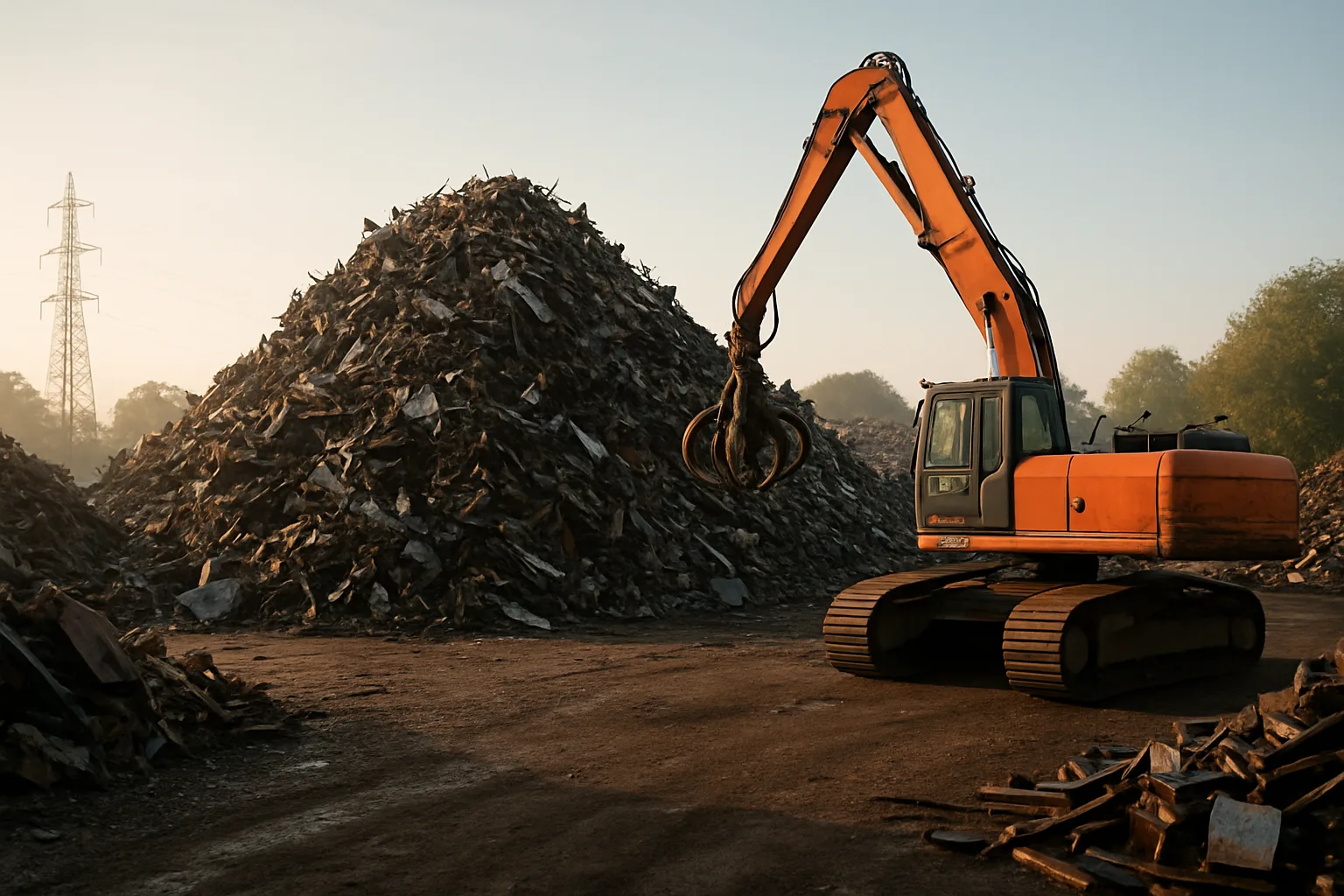
From Assembly Line to Auction Block: What Really Happens to Your Car
Most vehicles on American roads today will never see a second owner. They'll sit, rust, and slowly become someone else's problem — unless you know what to do when the time comes. If you're in Portland and asking yourself how to sell my junk car Portland, understanding the full lifecycle of your vehicle helps you make a smarter, faster decision. You're not just getting rid of a car. You're feeding a chain that starts at the factory and ends as raw material.
Here's how that chain actually works — and where you fit in it.
Stage 1: Manufacturing — Steel, Aluminum, and a Lot of Plastic
A new car rolls off the line weighing roughly 3,000 to 4,500 pounds depending on the model. About 65% of that weight is steel. Another 8–10% is aluminum. Add in copper wiring, rubber, glass, and various plastics, and you've got a machine built almost entirely from recyclable materials — whether the designers intended that or not.
Automakers source steel from mills, stamp it into body panels, weld frames, and install thousands of individual components. A mid-size sedan can have over 30,000 parts. What matters for recyclers — and for you, eventually — is that a large percentage of those parts hold real value long after the car stops running. The catalytic converter alone can contain platinum, palladium, and rhodium. The copper in the wiring harness has weight-based value at any scrap yard. Even the aluminum wheels have a market.
Stage 2: Active Life — Depreciation, Damage, and the Long Slide
The average vehicle in the U.S. lasts about 12–15 years before it's considered end-of-life. During that time, it loses value in stages. The first year hits hardest — new cars can drop 20% or more in value just by leaving the lot. After that, depreciation slows but never stops.
What pushes a car from "used" to "junk" is usually one of three things:
- Mechanical failure — Engine or transmission problems where repair costs exceed the vehicle's worth
- Collision damage — Frame damage, airbag deployment, or flood damage that makes the car unsafe or uninsurable
- Age and neglect — Rust, deferred maintenance, and missing parts that kill resale value entirely
Portland's wet winters accelerate rust more than most people expect. A car that looks solid in July can show serious undercarriage corrosion by the following spring. Oregon vehicle owners often find their cars cross the "junk threshold" faster than counterparts in drier climates. That's not a problem — it's just physics, and it means knowing your next step matters.
Stage 3: The End-of-Life Decision — What You Do Next Determines What You Get
Here's where most car owners make mistakes. They call one buyer — a local lot or a neighbor — accept the first number they hear, and walk away thinking that's the market. It usually isn't. Junk car prices near me vary widely depending on who's buying, what metals are trading at that week, and whether the buyer is trying to part out the vehicle or crush it for weight.
The smart move is to get your vehicle in front of multiple buyers simultaneously. That's exactly how platforms like SMASH approach commercial scrap — put documented inventory in front of vetted buyers and let competition do the work. More buyers means better price discovery. A single phone call is a guess. An auction is a market.
Before you decide anything, know what you have:
- Year, make, model, and mileage
- Whether it runs or not
- Location of the title (you'll need it)
- Any parts that have been removed
- Condition of the catalytic converter — this matters a lot on price
If you want to sell your scrap car for fair pricing, being prepared with this information gets you a faster, more accurate quote. Buyers who lowball you are often counting on you not knowing what you have.
Stage 4: The Scrap Yard — Dismantling, Draining, and Demolition
Once your car reaches a licensed auto recycler or scrap yard, it moves through a structured process. This isn't just crushing and calling it done. Modern recycling operations are organized and regulated.
Here's the typical sequence:
- Fluid removal — Engine oil, coolant, brake fluid, transmission fluid, and refrigerant are all drained and handled according to EPA standards. Oregon has strict environmental compliance requirements for auto recyclers, and licensed yards follow them.
- Hazardous material extraction — Mercury switches (in older vehicles), batteries, and airbag propellants are removed and disposed of separately.
- Part harvesting — High-value components are pulled before crushing. Catalytic converters, alternators, starters, usable tires, and functioning electronics all get catalogued and resold.
- Crushing and shredding — What remains goes through a car crusher, then a shredder. Shredders use powerful hammers to break vehicles into fist-sized pieces.
- Material separation — Magnets pull out ferrous metal (steel). Eddy current separators recover aluminum and copper. What's left — plastics and foam — is called auto shredder residue (ASR) and presents the industry's ongoing challenge for sustainability.
The steel and aluminum recovered from your car reenter the supply chain. They may end up in new vehicles, construction materials, or industrial products. The lifecycle closes. The Portland metro area has multiple active auto recyclers and scrap processors that participate in this chain every day.
What Your Junk Car Is Actually Worth — and How to Find Out
Scrap value isn't random. It tracks commodity markets. Steel, aluminum, copper, and platinum group metals all have live market prices that shift weekly. That's why there's no single answer to "what's my car worth?" — the honest answer is that it depends on what metals are doing right now.
That said, here are the factors that move the number:
- Vehicle weight — Heavier vehicles generally return more as scrap. A full-size pickup weighs two to three times what a compact sedan does.
- Catalytic converter presence — If your cat is intact, it can represent a meaningful portion of the vehicle's total value.
- Market timing — Steel and aluminum prices fluctuate. Selling when demand is high gets you more.
- Local buyer competition — More buyers bidding = better outcome for you. This is not a subtle effect.
Platforms like SMASH exist precisely because one-buyer pricing is broken. SMASH operates as a scrap metal auction platform that connects sellers with vetted buyers — giving documented loads real market exposure instead of a single take-it-or-leave-it offer. Competition can help reveal the market. If you're trying to sell my junk car online and want more than one opinion on value, that competitive dynamic matters.
Want to skip the guesswork entirely? You can schedule a free scrap car pickup and get a quote based on current market conditions — no subscription fees, no runaround.
Selling a Junk Car in Portland: What to Expect
If you want to sell scrap car in Oregon — specifically in Portland — the process is more straightforward than most people expect. Oregon title transfer requirements apply, so you'll need to have your title available or know how to request a replacement from the DMV. Licensed buyers in the state handle the paperwork once you've agreed on a price.
Free towing is standard on legitimate junk car offers. Any buyer asking you to pay for pickup on a scrap vehicle is not giving you a fair deal. Full stop. Reputable services come to your driveway, load the car, and handle the BOL and any transfer documents. You hand over the keys and the title, and you're done.
Portland's geography also works in your favor. The metro area has strong recycling infrastructure and multiple active buyers. That means Portland scrap metal services tend to be responsive — pickup windows are typically short, often same-day or next-day for standard vehicles. For buyers, access to Portland-area inventory is desirable. That demand works in your favor when you're the seller.
If you're looking to sell my car fast Portland, the combination of free towing, competitive pricing, and fast turnaround is all achievable — as long as you're working with the right service. Want to compare options across Canada instead? Get free scrap car pickup across Canada is available through a separate network for cross-border situations.
The lifecycle of your car doesn't have to end in a driveway. Whether it's been sitting for two years or two months, the materials inside still have value. The only question is whether you capture that value or let someone else take it. Ready to move? Read scrap car selling guides to make sure you know what to expect before you make the call.
When the car that served you well finally hits its last mile, send it off right — get a fair price, free towing, and a clean handoff. Visit sell-myscrapcar.com for a free quote today. It's the easiest part of a car's lifecycle.
Frequently Asked Questions
Q: How do I sell my junk car in Portland without getting lowballed?
Get multiple quotes before committing. Single-buyer offers are rarely the best number available. Knowing your vehicle's weight, whether the catalytic converter is intact, and current scrap metal prices gives you a baseline to evaluate any offer against. Reputable services in Portland are transparent about how they price — if a buyer won't explain their number, that's a red flag.
Q: Do I need a title to sell my junk car in Oregon?
In most cases, yes. Oregon requires a title transfer when selling a vehicle, including junk cars. If you've lost your title, you can apply for a replacement through the Oregon DMV — the process typically takes a few weeks. Some buyers work with bonded titles or alternative documentation in specific situations, so it's worth asking directly if your title situation is complicated.
Q: How fast can I get my junk car picked up in Portland?
Most legitimate services in the Portland area offer same-day or next-day pickup for standard vehicles, assuming you have your title ready and the vehicle is accessible. Scheduling is usually done by phone or online quote form. Free towing is included — you shouldn't pay anything out of pocket for removal.
Q: What affects junk car prices near me in Portland?
The biggest factors are vehicle weight, the condition of your catalytic converter, current commodity prices for steel and aluminum, and local buyer demand. Prices fluctuate week to week based on metal markets, so a quote from six months ago is not a reliable benchmark. Always get a current quote before you decide.
Q: Can I sell my junk car online without seeing a buyer in person?
Yes. Most of the process — getting a quote, confirming pickup details, and agreeing on price — happens remotely by phone or online form. The only in-person step is the actual pickup, when the tow driver arrives, inspects the vehicle, handles the paperwork, and takes possession. You don't need to go anywhere or negotiate face-to-face.
Follow SMASH on LinkedIn for scrap metal market updates, industry insights, and recycling news you can actually use.