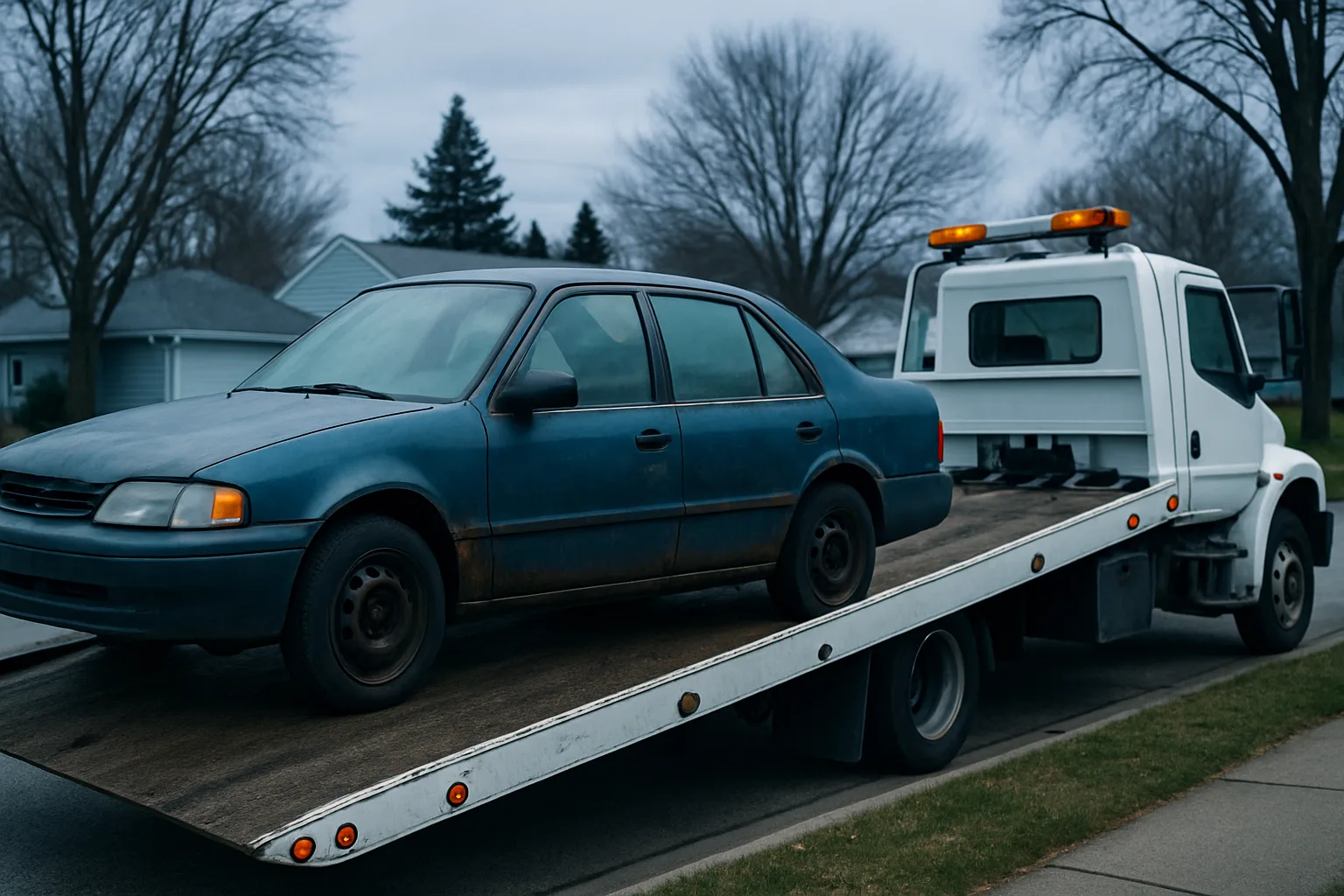
Two neighbors in Milwaukee both tried to sell their junk cars last spring. Same year, roughly the same mileage. One walked away with $400. The other got $1,100. What made the difference? It wasn't luck.
If you've ever wondered why sell my junk car Milwaukee searches return such a wide range of quotes, the answer comes down to make, model, and condition — three variables that scrap buyers weigh every single time. Understanding them puts money in your pocket. Ignoring them leaves it on the table.
This isn't a story about one lucky seller. It's a breakdown of exactly why scrap car values swing so dramatically, and how you can position your vehicle to get a fair number — not a lowball guess from a single buyer with zero competition keeping them honest.
Why Make and Model Matter More Than You Think
Not all scrap cars are created equal. A 2008 Ford F-150 and a 2008 Kia Spectra might weigh within a few hundred pounds of each other on a scale, but their scrap value can differ by hundreds of dollars. Why? Because weight is only part of the equation.
Auto recyclers look at two things: recoverable metal value and parts demand. A full-size truck or SUV carries more steel, more aluminum in the engine block, and more copper in the wiring harness. A vehicle with a catalytic converter that uses palladium or rhodium — like certain Toyota trucks and Honda SUVs — adds serious value before the car even hits the crusher. Those cats alone can swing a quote by $200 to $500 depending on current commodity prices.
Parts demand matters just as much. A make or model that's still on the road in large numbers means there's a ready market for salvageable components — door panels, transmissions, ECUs, axles. Buyers pay more for vehicles where they can recover value beyond raw scrap weight. When you sell your scrap car for fair pricing, that parts demand should be reflected in your quote. If it isn't, you're likely dealing with a single buyer who has no incentive to give you their best number.
How Vehicle Condition Changes the Calculation for Scrap Car Pricing
Condition is the variable most sellers underestimate — and most buyers exploit. There's a big difference between a car that's been sitting in a Wisconsin driveway for two winters versus one that was driven last month. Rust, missing components, fire damage, and stripped interiors all affect what a buyer will pay.
Here's what scrap buyers actually look at when they assess condition:
- Catalytic converter present or missing? A stolen or removed cat can reduce a quote by $150–$600 depending on the vehicle.
- Engine and transmission intact? Complete drivetrain components add recoverable parts value.
- Fluid leaks or fire damage? These create handling costs for the buyer — expect a lower offer.
- Tires and wheels? Four serviceable tires add value. Four flats don't.
- Body damage and rust? Surface rust is fine. Frame rot signals a vehicle heading straight to the shredder with minimal salvage opportunity.
- Interior stripped or intact? Seats, airbags, and electronics all have secondary market value.
A car sitting in a Milwaukee salvage yard for six months loses recoverable parts value every week. Rubber seals crack in the cold. Fluids degrade. Wiring gets chewed by rodents. If you're thinking about selling, sooner is almost always better than later when it comes to preserving your vehicle's scrap value.
The Old Way vs. The SMASH Way: Getting Real Competition on Your Scrap Car
Here's the part most sellers in Wisconsin never hear from the single buyer who calls them back within five minutes of a web form submission: that buyer already knows what your car is worth. You don't. And without competition, there's zero pressure on them to offer a fair number.
The old way goes like this. You call one yard or submit to one cash-for-cars aggregator. You get one number. You take it or you don't. There's no transparency, no market data, and no competing buyers fighting for your load. That's not price discovery — that's guessing in the dark.
Platforms like SMASH (Scrap Metal Auction Sales Hub) change the equation. SMASH puts your vehicle in front of vetted buyers and lets them compete. When multiple buyers are bidding on the same load, you find out what the market actually thinks your car is worth — not what one buyer wants to pay on a slow Tuesday. That's real price discovery. More buyers means better price discovery. Competition can help reveal the market.
SMASH also brings documentation tools to the table — photo documentation, VIN lookup, serial tracking — so buyers get full transparency on what they're bidding on. When buyers have confidence in the inventory details, they bid with more conviction. That confidence can show up in your final number. You can schedule a free scrap car pickup and let the process work for you, rather than hoping one buyer is having a generous day.
Real Scenarios: Why Two Similar Cars Fetch Different Prices in Milwaukee
Let's make this concrete. Consider two 2010 Honda CR-Vs, both sitting in the Milwaukee metro area. Same year, same model. Here's where it diverges:
Car A: Catalytic converter intact (Honda cats are known for containing rhodium), engine runs, tires hold air, interior is complete. Owner has the title and can provide a clean BOL. This car sells fast and generates competitive bids because buyers know exactly what they're getting.
Car B: Cat was cut off six months ago. Engine seized. Missing two wheels. Interior was stripped for parts by a previous owner. No title available. This car still has scrap metal value — the steel isn't worth zero — but it's going to the shredder as raw material. That dramatically narrows the pool of interested buyers and compresses the price range.
Neither outcome is wrong — both cars have real value. But the difference between a $350 quote and an $850 quote comes down to documented condition, recoverable components, and whether the seller puts themselves in front of enough buyers to find the best number. That's why Milwaukee scrap metal services backed by auction-style competition consistently outperform the single-call approach.
What the No-Title Situation Actually Means for Your Scrap Car Value
One of the most common questions from sellers across Wisconsin: does a missing title kill my sale? Short answer — no. But it does affect your options and sometimes your price.
Most legitimate scrap car buyers and auto recyclers will work with a missing title if you can provide photo ID proving ownership and the vehicle matches your registration. In Wisconsin, you can often obtain a replacement title through the DMV relatively quickly. If the car is older and low-value, many buyers will accept an affidavit of ownership instead.
Where it gets complicated is with higher-value vehicles or loads where buyers are purchasing for parts rather than pure scrap weight. Parts buyers need clean documentation to resell components legally. Without a title, some of those buyers step back — which reduces your competitive pool. This is another reason documentation matters when you're trying to sell my car fast Milwaukee: a complete paperwork package opens up more buyers, and more buyers means a better outcome.
If you want to go deeper on title requirements, salvage documentation, and how to prep your vehicle for sale, read scrap car selling guides that walk through the process step by step.
How to Position Your Vehicle Before You Sell
You don't need to do a full reconditioning job on a scrap car. But a few quick steps before you list or call for a quote can meaningfully improve your outcome:
- Gather your paperwork. Title, registration, photo ID. If the title is lost, start the replacement process now.
- Check the catalytic converter. Know if it's there. If it is, mention it explicitly when getting quotes — buyers will ask.
- Take honest photos. Document the actual condition. Buyers who can see the car clearly bid with more confidence.
- Note what's missing. Missing wheels, stripped interior, damaged engine — disclose it upfront. Surprises at pickup kill deals and waste everyone's time.
- Don't drain your own fluids. Let the buyer handle fluid recovery — it's actually a liability you don't want.
- Get more than one quote. One number is not a market. Use a platform that creates competition, not a single caller trying to flip your car for a profit.
SMASH exists precisely because the single-call model is broken. Vetted buyers, auction-format competition, and full inventory documentation — that's how you find out what your scrap car is actually worth in 2026, not what one yard wants to pay this week.
If you're in Milwaukee or anywhere across Wisconsin, the process should be simple: document your vehicle honestly, put it in front of real buyers, and let competition do the work. Sell your scrap car today — get a fair quote at schedule a free scrap car pickup and stop leaving money with the first buyer who calls.
Frequently Asked Questions
Q: How much is my junk car worth in Milwaukee right now?
Scrap car values in Milwaukee depend on the vehicle's make, model, weight, condition, and current commodity prices for steel, aluminum, and platinum group metals. A rough range for most passenger vehicles runs from a few hundred dollars to over a thousand for intact, complete vehicles with catalytic converters. The only way to know your actual number is to get competing quotes — a single offer tells you what one buyer wants to pay, not what your car is worth.
Q: Can I sell my junk car in Milwaukee without a title?
Yes, in many cases. Wisconsin buyers often accept a valid photo ID, current registration, and proof you're the legal owner in lieu of a title. For higher-value vehicles or parts-grade cars, a clean title opens up more buyers and potentially a better price. If your title is lost, contact the Wisconsin DMV to request a replacement before you sell.
Q: Does free towing actually come with scrap car pickup in Milwaukee?
Legitimate scrap car buyers include towing at no charge — the cost is factored into the buyer's margin, not passed to you. Be skeptical of any service that quotes a strong price and then deducts a towing fee at pickup. With sell-myscrapcar.com, free towing is part of the deal.
Q: How do I sell my car fast in Milwaukee if it doesn't run?
Non-running vehicles are routine for scrap buyers — most cars sold for scrap aren't drivable. Have your paperwork ready, know the vehicle's condition honestly, and use a service that connects you with multiple buyers. SMASH's vetted buyer network means you're not waiting on one slow buyer to call you back.
Q: Why do scrap car prices vary so much between quotes in Wisconsin?
Different buyers have different cost structures, resale markets, and appetite for certain vehicles. A buyer focused on parts pays differently than a yard buying by the ton for the shredder. The best way to cut through the variance is to get competitive bids through a platform that puts multiple vetted buyers on the same load — that's where SMASH adds real value for sellers across Wisconsin.
Disclaimer: Scrap car prices fluctuate based on commodity markets, local demand, and vehicle-specific factors. All price references in this article are general ranges for illustration only. Check current rates directly with buyers before making any selling decisions.
Follow SMASH on LinkedIn for scrap metal market updates, industry news, and insights for recyclers and sellers across North America.