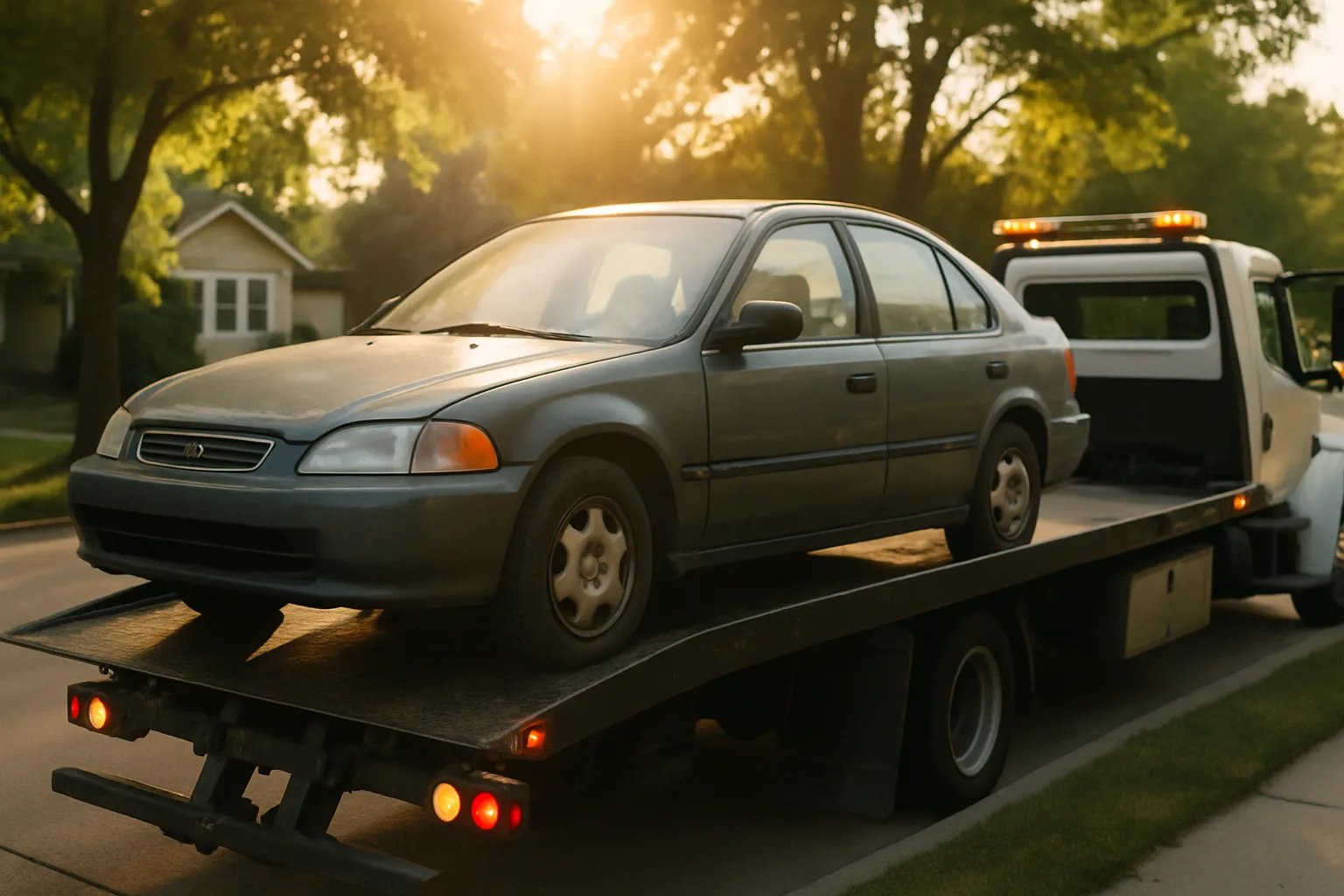
Nearly half of all car owners with a junk vehicle sitting in their driveway never act on it — not because they don't want to, but because they believe things that simply aren't true. If you've been putting off getting rid of that dead Chevy or rusted-out pickup, chances are a myth is standing in your way. Let's cut through the noise.
Whether you're in Milwaukee dealing with a car that won't survive another Wisconsin winter, or you've just inherited something that hasn't moved in three years, this guide is for you. We're going to tackle the most common myths about junk car removal — and show you what the process actually looks like when you work with the right people.
The real story around cash for junk cars Milwaukee is simpler and more profitable than most people expect. Let's start from the top.
Myth #1: Your Junk Car Is Worth Nothing
This is the most damaging myth out there. People look at a car that won't start, has a blown transmission, or is missing doors, and assume no one would pay a dime for it. That's not how scrap and salvage works.
Even a completely non-running vehicle has value in its parts and raw materials. Scrap steel, aluminum, copper wiring, and non-ferrous metals all carry market value. A mid-size sedan can weigh anywhere from 3,000 to 4,500 pounds — a significant chunk of that is recyclable steel. On top of that, components like the alternator, starter, axles, and catalytic converter often have independent resale or scrap value.
Speaking of catalytic converters — this is where a lot of money gets left on the table. Many sellers don't realize their cat still has value even on a wrecked or non-running vehicle. Platforms built for the industry let you sell catalytic converters online by serial number, so buyers can bid competitively on what they're actually getting — not just guess. More on that in a moment.
- Scrap steel prices fluctuate but are always in play
- Non-ferrous metals (copper, aluminum) often fetch more per pound
- Catalytic converters contain platinum group metals with real market value
- Working parts (seats, doors, engines) have independent salvage value
Before you assume your car is worthless, get an actual quote. A scrap car value calculator gives you a real starting point based on weight, year, make, and current metal prices — not someone's lowball guess over the phone.
Myth #2: You Need a Running Car to Get a Fair Price
This one stops a lot of Milwaukee sellers cold. The car doesn't run, so they assume no one will touch it — or that towing costs will eat up whatever they'd make. Both assumptions are wrong.
Legitimate junk car removal services offer free towing as part of the deal. You don't pay to have the vehicle removed from your property. The tow cost is factored into the buyer's offer, and reputable services are transparent about that. If someone is quoting you a pickup fee on top of the sale, walk away.
Non-running vehicles are bought and processed every day by auto recyclers across Wisconsin. The condition affects value — yes — but it doesn't disqualify you from the process. A car that needs a jump, a car with a seized engine, a car that's been sitting for a decade: all of these have takers. The key is getting multiple buyers involved so competition does the work for you.
When you schedule a free scrap car pickup, you're not committing to the first number someone throws at you. You're starting a process that should involve real offers based on real data.
Myth #3: One Phone Call Gets You the Best Price
This is how the old way worked — and it's how a lot of sellers get shortchanged. You call one buyer, they throw out a number, you either take it or don't. There's no context, no comparison, no leverage.
The problem is that scrap metal prices aren't fixed. They move with commodity markets. A buyer who lowballs you on a Tuesday might have paid 20% more to someone else that same week. Without competition, you have no way of knowing if the offer you got was fair.
That's exactly the gap that platforms like SMASH are built to close. SMASH connects scrap sellers — including those with junk vehicles, loads of catalytic converters, or mixed non-ferrous — with vetted buyers in an auction format. Instead of one buyer's opinion, you get actual market competition. More buyers means better price discovery. The market tells you what your material is worth, not one person on the phone.
For Milwaukee sellers with volume — a yard full of cores, a fleet of end-of-life vehicles, or regular cat inventory — this matters even more. A single competitive auction can reveal significantly more value than a single cold call ever would. You can read scrap car selling guides to understand how pricing actually works before you pick up the phone.
Myth #4: The Paperwork Is a Nightmare
Ask anyone who's never sold a junk car and they'll tell you it sounds complicated. Title transfer, bill of lading, release of liability — it sounds like a trip to the DMV on your worst day. In reality, the process is straightforward when you work with a service that handles it properly.
Here's what you actually need in most cases:
- Your vehicle title — this proves ownership and is required for legal transfer
- A valid photo ID — driver's license or state-issued ID
- Basic vehicle info — year, make, model, VIN
If you've lost your title, Wisconsin has a process for obtaining a duplicate through the DMV. It's not instant, but it's not complicated either. Some buyers will work with you on a lost title depending on the circumstances — ask upfront.
Modern junk car removal services handle the BOL, the release of liability documentation, and often auto-invoice the transaction so there's a clean paper trail for both sides. The days of handshake deals and vague paperwork are gone — or they should be. If a buyer can't give you documentation, that's a red flag.
Milwaukee residents can also connect with Milwaukee scrap metal services that understand local requirements and make the process smooth from start to finish.
Myth #5: All Junk Car Buyers Are the Same
This one is dangerous. Not all buyers operate the same way, and the difference between a good and a bad experience often comes down to who you're dealing with.
Red flags to watch for:
- No written offer — verbal-only quotes with no documentation
- Changing the price at pickup after you've agreed to something
- Charging you for towing after advertising free pickup
- No clear process for title transfer or liability release
- Unlicensed operation — always confirm the buyer is a registered auto recycler
Vetted buyers — the kind you find through platforms like SMASH — go through a qualification process before they can bid. That means you're not handing your car off to whoever showed up with a tow truck. You're dealing with professionals who operate transparently and have accountability built into the system.
For Wisconsin sellers specifically, working with legitimate auto recyclers matters for environmental compliance too. Vehicles contain fluids and materials that need proper handling — coolant, transmission fluid, refrigerants. A licensed recycler disposes of these correctly. That's not just good for the planet — it protects you from liability.
When you're ready to sell your scrap car for fair pricing, the buyer you choose matters as much as the price they offer. And if you want to explore additional options for removal and pricing, explore scrap car removal services at GetMyScrapCar to see what's available in your area.
What the Junk Car Removal Process Actually Looks Like in Milwaukee
Here's the real picture — no fluff, no guessing. If you're in Milwaukee and want to get rid of a junk car, this is how it works when done right.
Step 1: Get your vehicle information ready. Year, make, model, VIN, and a honest assessment of condition. Photos help — buyers make better offers when they can see what they're getting.
Step 2: Get a quote. Don't accept the first number. Use a scrap car value calculator as a baseline, then submit to multiple buyers or use an auction platform to let the market set the price. Remember — cash for cars Wisconsin buyers are competing for your business, even if it doesn't feel that way when you're only talking to one.
Step 3: Confirm the offer in writing. Price, towing terms, documentation — all of it in writing before anyone shows up with a truck.
Step 4: Schedule pickup. Most legitimate services can arrange pickup within 24 to 72 hours. Free towing is standard. You should not be cutting a check to get your car removed.
Step 5: Sign over the title and collect payment. Payment is typically cash or e-transfer at pickup. Keep a copy of everything.
That's it. The process that sounds complicated takes most people less than a week from first call to cleared driveway — often less.
If your vehicle has catalytic converters, consider separating that transaction. Cat cores often fetch more when sold to specialized buyers — platforms designed for it let you enter the serial number, document the unit with photos, and put it in front of buyers who know exactly what they're bidding on. Don't bundle your cat into the overall vehicle price and let someone else capture that value.
Milwaukee has a strong auto recycling ecosystem. The city and surrounding Wisconsin metro area have active buyers, yards, and processors — meaning competition is real and accessible. You don't have to settle for one option. The market is there. You just have to access it the right way.
If you're done letting a junk vehicle sit and depreciate in your driveway, now's the time to act. Metal prices fluctuate — waiting rarely helps. Get your quote, get your paperwork in order, and get paid. It really is that straightforward. Start the process today and sell your scrap car for fair pricing — sell-myscrapcar.com makes it easy to get a free quote without the runaround.
Frequently Asked Questions
Q: How much can I get for a junk car in Milwaukee?
Junk car prices vary based on weight, condition, make, model, and current scrap metal prices. A typical passenger car can range widely depending on these factors — the best way to know is to get an actual quote. Use a scrap car value calculator as a starting point, then compare offers. Prices fluctuate with the commodity market, so check current rates before committing.
Q: Do I need a title to sell my junk car in Milwaukee?
In most cases, yes — a title is required for a legal ownership transfer in Wisconsin. If you've lost your title, you can apply for a duplicate through the Wisconsin DMV. Some buyers may have alternative options depending on the vehicle's age and situation, so ask upfront before assuming you're stuck.
Q: Is free towing really free for cash for junk cars Milwaukee services?
With legitimate services, yes. Free towing means the cost of pickup is covered by the buyer — you receive your agreed payment and don't pay anything out of pocket for removal. If a buyer advertises free towing but then charges you at pickup, that's a red flag. Get the terms in writing before scheduling.
Q: How long does junk car removal take in Milwaukee?
Most reputable services can schedule pickup within 24 to 72 hours of a confirmed offer. Same-day service is available in some cases. The process from first quote to cleared driveway typically takes less than a week when you have your paperwork ready.
Q: Can I sell my catalytic converter separately from my junk car?
Yes — and it's often worth doing. Catalytic converters contain platinum group metals and have independent market value. Selling your cat separately through a specialized platform that uses serial number tracking and photo documentation can result in a better return than bundling it into the overall vehicle price. Platforms like SMASH are built specifically for this kind of transparent, competitive transaction.
Follow SMASH on LinkedIn for scrap metal market updates, industry insights, and tips for getting more out of every load you sell.
```