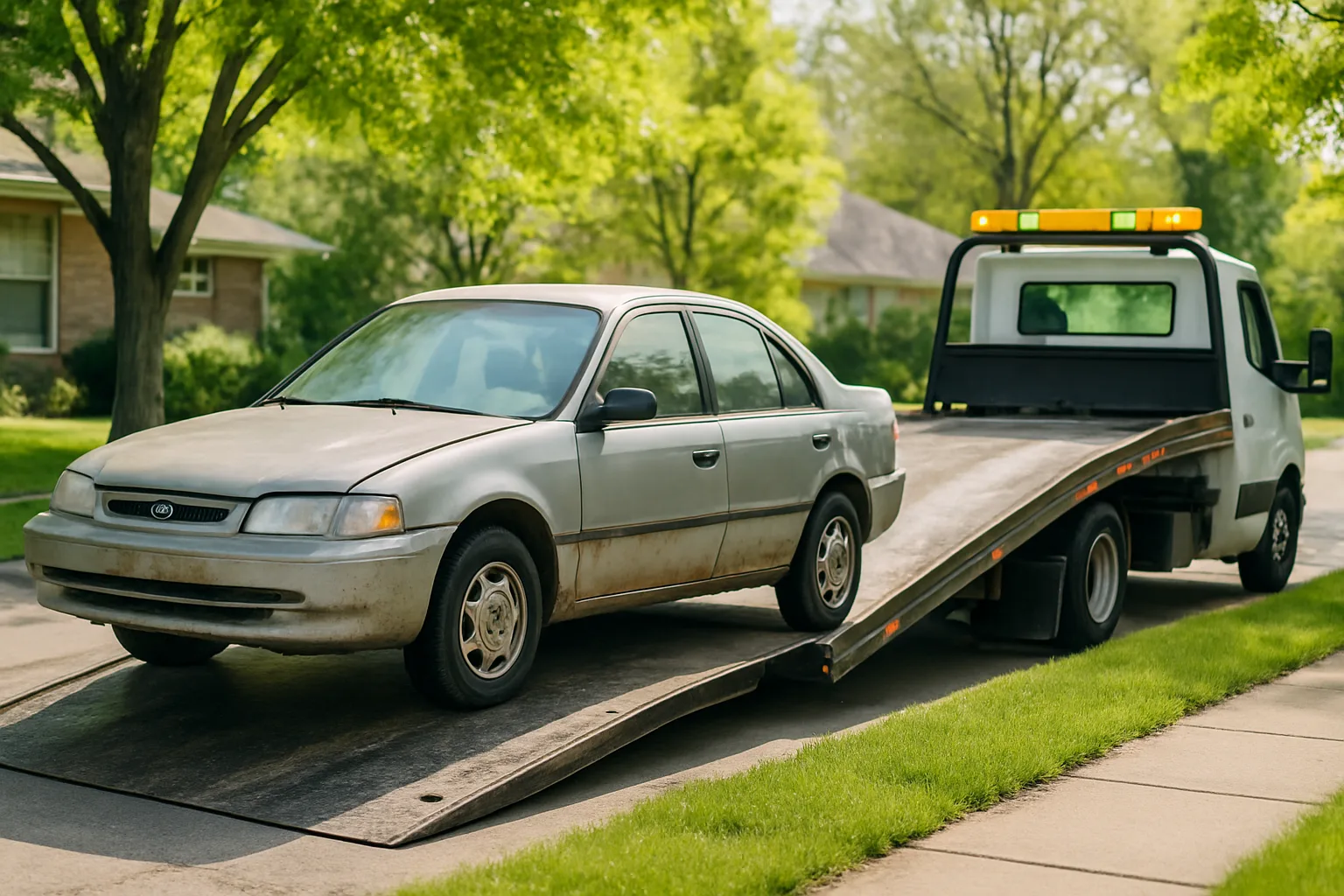
Most people have no idea that roughly 80% of a scrapped vehicle's materials get recycled — steel, aluminum, copper, and more. If you're sitting on a dead car in Atlanta and wondering what to do with it, the answer isn't the landfill. It's a process that's cleaner, faster, and more valuable than most people realize.
Eco-friendly car disposal isn't just a feel-good talking point. It's a structured recycling chain that recovers usable metals, safely neutralizes hazardous fluids, and puts real money in your pocket. If you want to sell your scrap car for fair pricing, understanding how that process works — and where your vehicle's value actually comes from — puts you in a stronger position from the start.
Why Eco-Friendly Car Disposal Matters More in 2026
End-of-life vehicles are one of the most recyclable products on the planet. A single scrapped car contains hundreds of pounds of steel, significant amounts of aluminum and copper, and a catalytic converter packed with platinum-group metals. None of that belongs in a landfill — and in most states, including Georgia, regulators have tightened requirements around fluid disposal, refrigerant recovery, and parts documentation over the past several years.
In 2026, auto recycling standards have continued to evolve. Responsible recyclers in Atlanta and across Georgia follow a depollution process before any vehicle gets crushed or shredded. That means draining motor oil, transmission fluid, coolant, brake fluid, and fuel. It means recovering the refrigerant from the A/C system. It means pulling the battery — especially important with the growing number of hybrid and EV trade-ins hitting the secondary market. Skip any of these steps and you're looking at environmental liability, not just poor practice.
For sellers, this matters because a legitimate recycler handles all of it. You don't touch a fluid or file a hazmat form. You get paid, and someone else manages compliance.
What Actually Happens to Your Car After Free Scrap Car Pickup in Atlanta
Once a tow truck rolls away with your vehicle, here's what a responsible recycling chain looks like:
- Depollution — All fluids are drained and segregated. Coolant and oil get recycled separately. Refrigerant is captured, not vented.
- Battery removal — Lead-acid batteries are one of the most recycled products in North America. Hybrid and lithium packs follow separate handling protocols.
- Parts harvesting — Engines, transmissions, doors, and electronics that still have usable life get pulled and resold through the used parts market. This extends the life of those components and reduces demand for new manufacturing.
- Catalytic converter removal — This is where real value lives. The converter contains palladium, platinum, and rhodium. These metals get extracted and re-enter industrial supply chains. More on this below.
- Hulk crushing and shredding — The remaining shell gets flattened and shredded into fist-sized chunks. Magnetic separation pulls ferrous steel. Eddy-current separators recover non-ferrous metals like aluminum and copper. The output gets sold to steel mills and foundries.
- Fluff disposal — The residual non-metal material — plastic, foam, glass — is called auto shredder residue (ASR) or fluff. Responsible operators minimize this and look for ways to divert it from landfill where possible.
This is why schedule a free scrap car pickup with a vetted service matters. Not every tow operator runs a compliant process. Working with services connected to legitimate recyclers means your car is handled correctly — and your payment reflects actual market value, not a lowball from someone cutting corners on the back end.
How Much Is My Car's Scrap Value? Understanding Where the Money Comes From
If you've ever asked how much is my car scrap value, the honest answer is: it depends on more variables than most buyers will tell you upfront.
Here are the main factors that drive your number:
- Vehicle weight — Steel scrap pricing is based on weight. A full-size truck or SUV outweighs a compact sedan by 1,000 pounds or more, and that difference shows up directly in the offer.
- Current steel and non-ferrous prices — Scrap metal is a commodity. Prices move with global steel demand, Chinese import/export activity, and domestic mill output. What a car is worth in April isn't necessarily what it's worth in July.
- Catalytic converter — The converter on a 2018 Toyota Camry is worth a very different number than the one on a 2010 Chevy Aveo. Make, model, and engine size all affect converter value. Platinum-group metal prices fluctuate independently from steel.
- Reusable parts — An engine with relatively low miles or a transmission in working condition adds value. Recyclers factor this in, even if they don't always explain it.
- Location — Towing distance, regional demand, and proximity to shredding facilities all affect what a buyer is willing to pay net of logistics.
The old way of getting a scrap car quote was calling one buyer, taking their number, and hoping it was fair. You had no reference point. Platforms like SMASH change that dynamic by creating competition — multiple vetted buyers bidding on the same load, which gives you actual price discovery instead of a guess. That's the difference between a single phone call and a real market.
For Atlanta sellers, this matters. Georgia's auto recycling market is active, with real demand for ferrous and non-ferrous materials. You deserve an offer that reflects that demand, not one that assumes you'll take whatever you're given.
The Catalytic Converter Auction: Why Your Converter Deserves a Closer Look
If you're selling a scrap car in Atlanta, don't overlook what's sitting under your vehicle. The catalytic converter is often the single most valuable recoverable component on an end-of-life car — sometimes exceeding the value of the entire hulk for certain makes and models.
Palladium, platinum, and rhodium prices have remained volatile through 2025 and into 2026. The amounts in any single converter are small, but they are real, and they are valuable. The problem historically has been transparency — sellers had no way to know whether a buyer's offer reflected actual converter value or absorbed that premium on their side.
This is exactly where a catalytic converter auction format through SMASH adds tangible value. Rather than accepting one buyer's assessment of what your cats are worth, SMASH puts them in front of multiple vetted buyers who compete for the material. Documented inventory, serial tracking, and photo documentation give buyers the confidence to bid aggressively — because they know exactly what they're bidding on. More buyers, better price discovery. That's the model.
If your end-of-life vehicle came off a fleet, or if you have a volume of cores sitting in a yard, this matters even more. For individual car sellers, it means the platform behind your transaction should be working to surface converter value — not bury it. You can read scrap car selling guides to better understand how to assess your vehicle's components before you sell.
Free Junk Car Removal for Cash: What to Expect in Atlanta
The phrase free junk car removal for cash gets used a lot in this market. Here's what it actually means in practice — and what to watch for.
What legitimate free towing looks like:
- No upfront fees. The tow is included in the transaction.
- You receive payment at pickup or via transfer shortly after — not weeks later.
- The buyer collects the title. You sign it over and get paid.
- The vehicle is removed from your property completely. No partial strip jobs left on your driveway.
Red flags to avoid:
- Offers that drop significantly at pickup compared to the phone quote.
- Buyers who want to take the catalytic converter separately before agreeing on a full-vehicle price.
- No documentation, no receipt, no title transfer process.
- Buyers who can't tell you what yard the vehicle is going to.
Atlanta has a competitive market for junk car removal. That's an advantage for sellers — but only if you know how to use it. Getting multiple quotes, using services backed by vetted buyer networks, and understanding your vehicle's component value before you sell all tilt the outcome in your favor. Services like free junk car removal from GetMyScrapCar connect sellers with legitimate buyers who handle the tow, the paperwork, and the payment without the runaround.
Sell Scrap Car in Georgia: Making the Right Move at the Right Time
Timing your sale isn't always possible — sometimes the car just dies and that's the end of it. But if you have flexibility, knowing that scrap metal prices move seasonally and with broader commodity cycles gives you a small edge. Spring and early summer have historically seen stronger demand, though 2026 market conditions continue to be shaped by domestic steel production levels and global non-ferrous demand.
For Georgia residents, Atlanta scrap metal services offer a practical starting point — local pickup, regional buyer networks, and familiarity with state title transfer requirements. Georgia requires a signed title for vehicle transfer in most cases. Have it ready before the tow truck arrives. If the title is lost, check with the Georgia Department of Revenue about replacement options before scheduling pickup.
SMASH brings a layer of infrastructure to this process that independent yard calls can't replicate. Vetted buyers, competitive auction format, auto-invoicing, and no subscription fees mean the platform only works when the seller gets a fair outcome. That's the right alignment of incentives.
If your car is sitting idle in Atlanta and costing you space, insurance, or just stress — now is the right time to act. Prices are what they are today. A running market is better than a parked decision. Get a free quote at sell-myscrapcar.com and find out what your vehicle is actually worth in 2026's market. No pressure, no subscription, no guessing.
Frequently Asked Questions
Q: How do I sell my scrap car in Atlanta with free towing?
Contact a licensed scrap car buyer or a platform like SMASH that connects you with vetted buyers in the Atlanta area. You'll get a quote based on your vehicle's year, make, model, and condition. If you accept, they schedule a free pickup — no towing fees out of pocket. Have your title ready and you'll receive payment at or shortly after pickup.
Q: How much is my car's scrap value in Georgia?
Scrap value depends on vehicle weight, current steel and non-ferrous metal prices, catalytic converter value, and whether the car has any reusable parts. Prices fluctuate with commodity markets, so what your car was worth six months ago may differ from today's rate. Always get current quotes from multiple buyers before committing. Disclaimer: Metal prices change frequently — check current market rates before selling.
Q: Does free junk car removal mean I get paid less?
Not necessarily. Legitimate buyers build the tow cost into their offer — it doesn't mean a lower net payout for you. The key is working with buyers who are transparent about how they price vehicles. If a buyer's quote drops significantly at pickup, that's a red flag worth walking away from.
Q: What happens to the catalytic converter when I scrap my car in Atlanta?
The converter is removed during the depollution process and its platinum-group metals are extracted by a refiner. These metals re-enter industrial supply chains for use in new converters and other applications. In a competitive auction format, the value of your converter is factored into what buyers bid — rather than being absorbed invisibly on the buyer's side.
Q: Do I need a title to sell a scrap car in Georgia?
Yes, Georgia generally requires a signed title to transfer vehicle ownership. If you've lost your title, you can apply for a replacement through the Georgia Department of Revenue before scheduling your pickup. Some buyers may work with you on alternative documentation in limited cases, but having the title ready speeds up the process and protects you legally.
Stay current on scrap metal market trends and price movements — follow SMASH on LinkedIn for industry updates, market insights, and recycling news across North America.
```