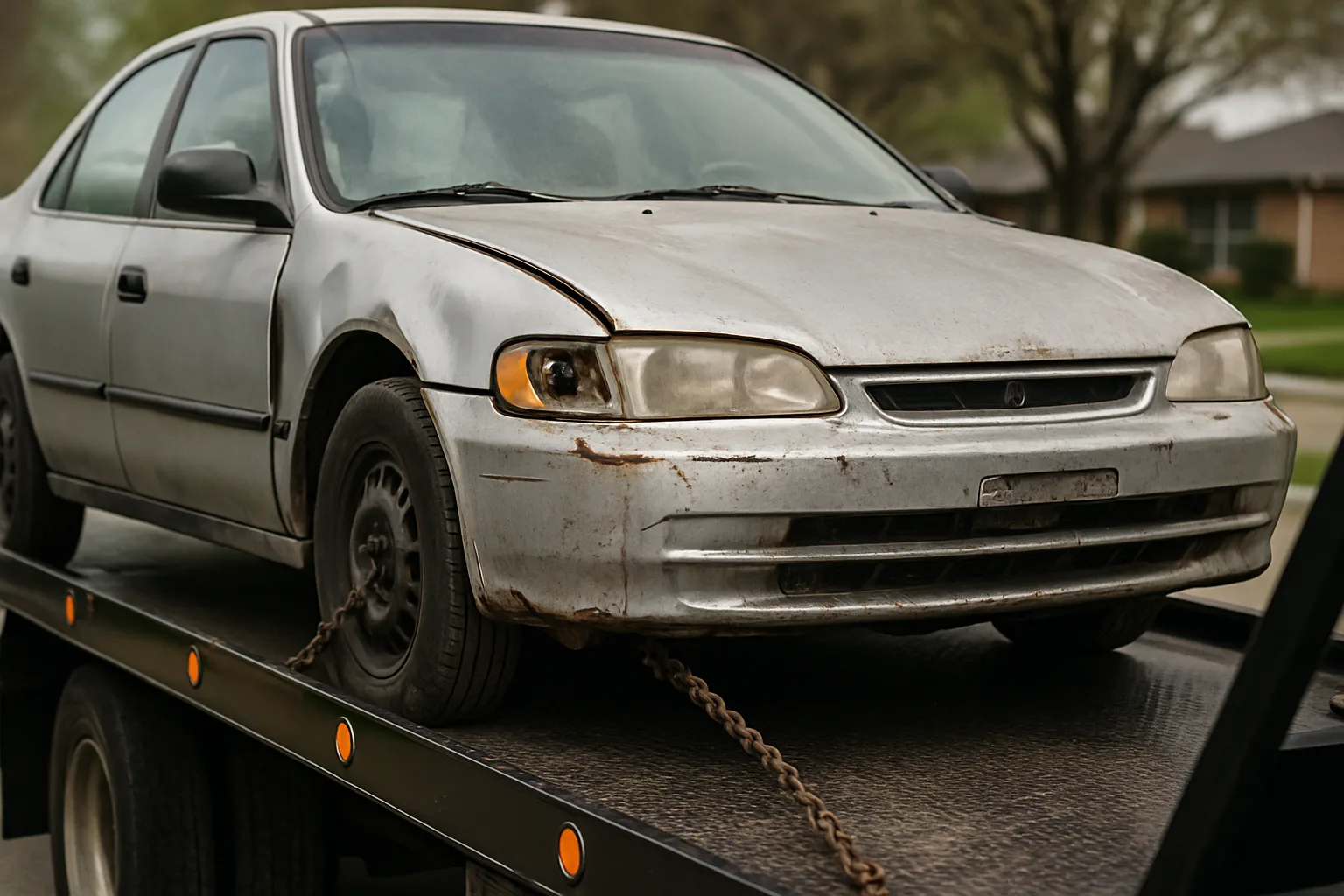
What Actually Happens to Your Junk Car After Pickup — A 2026 Recycling Breakdown
Most people think selling a junk car ends the moment the tow truck pulls away. It doesn't. What happens next is one of the most efficient recycling processes in North America — and if you're in Fort Worth looking to sell my car fast Fort Worth, understanding that process can help you make smarter decisions about who you sell to, what your car is actually worth, and why eco-friendly disposal matters more than ever in 2026.
The U.S. auto recycling industry processes millions of end-of-life vehicles every year. Steel, aluminum, copper, rubber, and fluids — almost nothing in a junk car is truly waste. But not every buyer handles disposal the same way. Some cut corners. Others — especially vetted buyers working through platforms like SMASH — follow documented, compliant processes that protect both the environment and your payout.
Why Eco-Friendly Car Disposal Matters More in 2026
Environmental standards around vehicle end-of-life have tightened significantly over the last few years. State-level regulations in Texas now require licensed dismantlers to properly drain and contain hazardous fluids — engine oil, transmission fluid, coolant, brake fluid, and refrigerants — before a vehicle is crushed or shredded. Failing to do this contaminates soil and groundwater, and it's illegal.
That matters to you as a seller for one key reason: if you hand your car to an unlicensed buyer who skips these steps, you could face liability. Getting cash for junk cars Fort Worth from a reputable, compliant buyer isn't just good for the planet — it protects you legally.
- Fluids drained and recycled: Oil, coolant, and brake fluid are collected, processed, and reused rather than dumped
- Refrigerants recovered: AC systems must be properly evacuated under EPA Section 608 rules
- Batteries removed: Lead-acid batteries are nearly 100% recyclable and carry real value
- Tires diverted: Shredded for rubberized asphalt, fuel, or playground surfaces
- Catalytic converters pulled: Recovered for platinum, palladium, and rhodium — these alone can drive significant value
When you sell your scrap car for fair pricing, you're not just getting cash in your pocket — you're ensuring the vehicle enters a regulated recycling chain instead of sitting in a field leaking fluids for years.
The Step-by-Step Recycling Process — From Your Driveway to the Shredder
Here's what a properly managed end-of-life vehicle goes through after pickup. This isn't theoretical — this is the standard process followed by licensed auto recyclers across Texas and the broader U.S. market.
- Depollution: All hazardous fluids, batteries, airbag pyrotechnics, and refrigerants are removed and handled according to environmental regulations. This step is non-negotiable at licensed facilities.
- Parts harvesting: High-demand components — engines, transmissions, doors, mirrors, and electronics — are pulled, tested, and inventoried for resale. This is where a lot of the vehicle's value lives before it ever hits the scale.
- Catalytic converter removal: Cats are separated for precious metal recovery. In 2026, this remains one of the highest-value components on many end-of-life vehicles, particularly trucks and SUVs common in Fort Worth.
- Hull crushing: Once stripped, the vehicle body is crushed or baled to reduce volume for transport.
- Shredding: The crushed hull goes into an industrial shredder that reduces it to fist-sized fragments in seconds.
- Metal separation: Shredder output is sorted using magnets (ferrous steel), eddy current separators (aluminum, copper), and density separation — recovering non-ferrous metals that go to smelters and mills.
- Shredder residue processing: The remaining fluff — foam, glass, plastic — is increasingly being recovered rather than landfilled, driven by tighter waste diversion targets in 2026.
This process is why auto recycling consistently ranks among the most material-efficient industries in North America. A typical passenger car is roughly 65-70% steel and iron by weight. Almost all of it gets recovered and re-enters the supply chain as recycled content for new manufacturing.
What Drives Your Scrap Car's Value — and How to Maximize It
Your car's value at end-of-life isn't random. It's driven by a combination of vehicle weight, metal composition, parts demand, and current commodity prices. Knowing these levers helps you get a fair deal instead of leaving money on the table.
Vehicle weight matters most for scrap metal value. A heavy-duty pickup truck or full-size SUV common in the Fort Worth market will typically outweigh a compact sedan by 1,000 pounds or more. More steel, more aluminum, more value. That weight difference shows up directly in your offer.
Beyond bulk weight, these factors move the needle:
- Catalytic converter condition and quantity: Trucks with dual cats can carry significant PGM value
- Engine and transmission condition: Running or rebuildable powertrains command parts premiums
- Non-ferrous content: Aluminum wheels, copper wiring, and brass fittings all add up
- Complete vs. stripped: A fully intact car is worth more than one that's had its cats, battery, or wheels already removed
- Model year and demand: Newer vehicles with popular platforms often have more reusable parts driving offer value
Platforms like SMASH bring competitive bidding into this equation. Instead of accepting a single offer from one junk car buyer near me for cash no title situation — where you have no idea if the number is fair — multiple vetted buyers compete, which means better price discovery. You see what the market actually values your vehicle at, not just what one buyer wants to pay.
To schedule a free scrap car pickup and get a quote that reflects your vehicle's actual composition, you need a service that does this properly — documentation, photo capture, and transparent offers.
The No-Title Question — What Texas Law Actually Says in 2026
One of the most common concerns sellers in Texas have is what happens when they don't have a title. It's a real barrier, but it's not always a deal-breaker. Here's the honest breakdown:
In Texas, licensed salvage dealers are generally required to obtain a title or a properly executed bill of sale for vehicles they purchase. However, certain exemptions apply to older vehicles (typically those over a certain model year threshold), and some buyers will work with sellers to obtain a bonded title or reconstruct ownership through the Texas DMV process before completing the transaction.
If you're searching for a junk car buyer near me for cash no title, be cautious. Some buyers who claim to take any car with no title are operating outside licensing requirements — which creates legal exposure for you as the seller. Work with licensed, verifiable buyers and ask directly about their title requirements before you commit.
For most Fort Worth sellers with a missing title, the practical steps are:
- Request a duplicate title through Texas TxDMV — it's a straightforward process and costs a small fee
- If the vehicle is very old or title is unrecoverable, ask the buyer specifically what documentation they require
- Get the transaction in writing regardless of title status
Don't let the title question stop you from getting value for your vehicle. Explore your options with licensed buyers who can walk you through it. You can also read scrap car selling guides for more detail on navigating title issues across different states.
Free Towing in Fort Worth — What's Included and What to Expect
Free towing is standard on legitimate junk car offers in 2026. If a buyer is quoting you a price and then subtracting a tow fee at the end, that's a red flag — and a sign the initial number wasn't real. Your quoted offer should be what you receive, with pickup handled at no cost to you.
In the Fort Worth area, most licensed junk car buyers operate across the full metro — from the Southside to North Fort Worth, out to Haltom City, Saginaw, and into the surrounding Tarrant County communities. Pickup turnaround is typically one to two business days once your offer is confirmed, though same-day pickup is available through some buyers when scheduling allows.
Here's what a clean free-tow transaction looks like:
- You provide vehicle details (year, make, model, condition, location)
- You receive a firm offer — not an estimate that changes at pickup
- The buyer confirms a pickup window that works for your schedule
- Payment is issued at pickup, typically by check or electronic transfer
- The buyer handles all paperwork, including the release of liability filing
That last point matters. Once your car leaves, you want your name off it. A proper release of liability filed with TxDMV protects you if the vehicle shows up in an accident or gets ticketed before it's fully processed. Ask your buyer to confirm this step is included.
If you're looking for Fort Worth scrap metal services that cover pickup, documentation, and full compliance, make sure you're working with a buyer who treats this as standard — not an upsell.
And for sellers who want their vehicle to enter a competitive, transparent market rather than a single-buyer guessing game, SMASH connects you with vetted buyers whose offers reflect actual current demand — not lowball numbers based on your lack of alternatives. More buyers means better price discovery. That's not a slogan. It's just how auctions work.
If you're ready to stop wondering what your old truck or sedan is actually worth, free junk car removal from GetMyScrapCar is another option worth checking alongside your research. Compare your offers. Know what you're working with before you sign anything.
You've got a vehicle that's done its job. Now make sure it ends up in the right hands — a licensed recycler, a transparent buyer, and a process that pays you fairly for what the car is actually worth. Get your quote today at sell-myscrapcar.com and let the truck come to you.
Frequently Asked Questions
Q: How fast can I sell my car fast in Fort Worth and get same-day pickup?
Most licensed junk car buyers serving Fort Worth can arrange pickup within one to two business days of confirming your offer. Same-day service is available through some buyers depending on your location within Tarrant County and their current schedule. Have your vehicle details ready — year, make, model, condition, and whether you have the title — to speed up the quote process.
Q: Do I need a title to get cash for junk cars in Fort Worth?
Texas law generally requires a title or valid bill of sale for licensed buyers to complete a purchase. However, older vehicles may qualify under different rules, and duplicate titles can often be obtained quickly through TxDMV. Ask any buyer directly about their specific requirements before assuming you can't sell without one.
Q: What is my junk car actually worth for scrap in 2026?
Scrap car value depends on vehicle weight, metal composition, parts demand, and current commodity prices — all of which fluctuate. Heavier vehicles like trucks and SUVs common in Fort Worth typically return higher scrap value than compact cars. Getting multiple offers through a competitive platform gives you better insight into what your vehicle is actually worth at current market rates. Prices fluctuate — always verify current rates before accepting an offer.
Q: Is free towing really free, or does it come off my offer?
With reputable buyers, free towing means the quoted price is what you receive — no deductions at pickup. If a buyer quotes you a number and then subtracts a tow fee when the driver arrives, walk away. Legitimate junk car removal services in Fort Worth include towing in the offer, not as a hidden fee.
Q: What happens to my car after it's picked up — does it actually get recycled?
Licensed auto recyclers in Texas follow a regulated process: fluids are drained and contained, usable parts are harvested, and the remaining hull is crushed and shredded for metal recovery. Steel, aluminum, copper, and other materials re-enter the supply chain. A vehicle processed through a licensed, compliant buyer is handled far more responsibly than one sold to an unlicensed operator.
Stay current on scrap metal market trends and industry news by following SMASH on LinkedIn — practical updates for recyclers, yards, and sellers who want to stay ahead of the market.