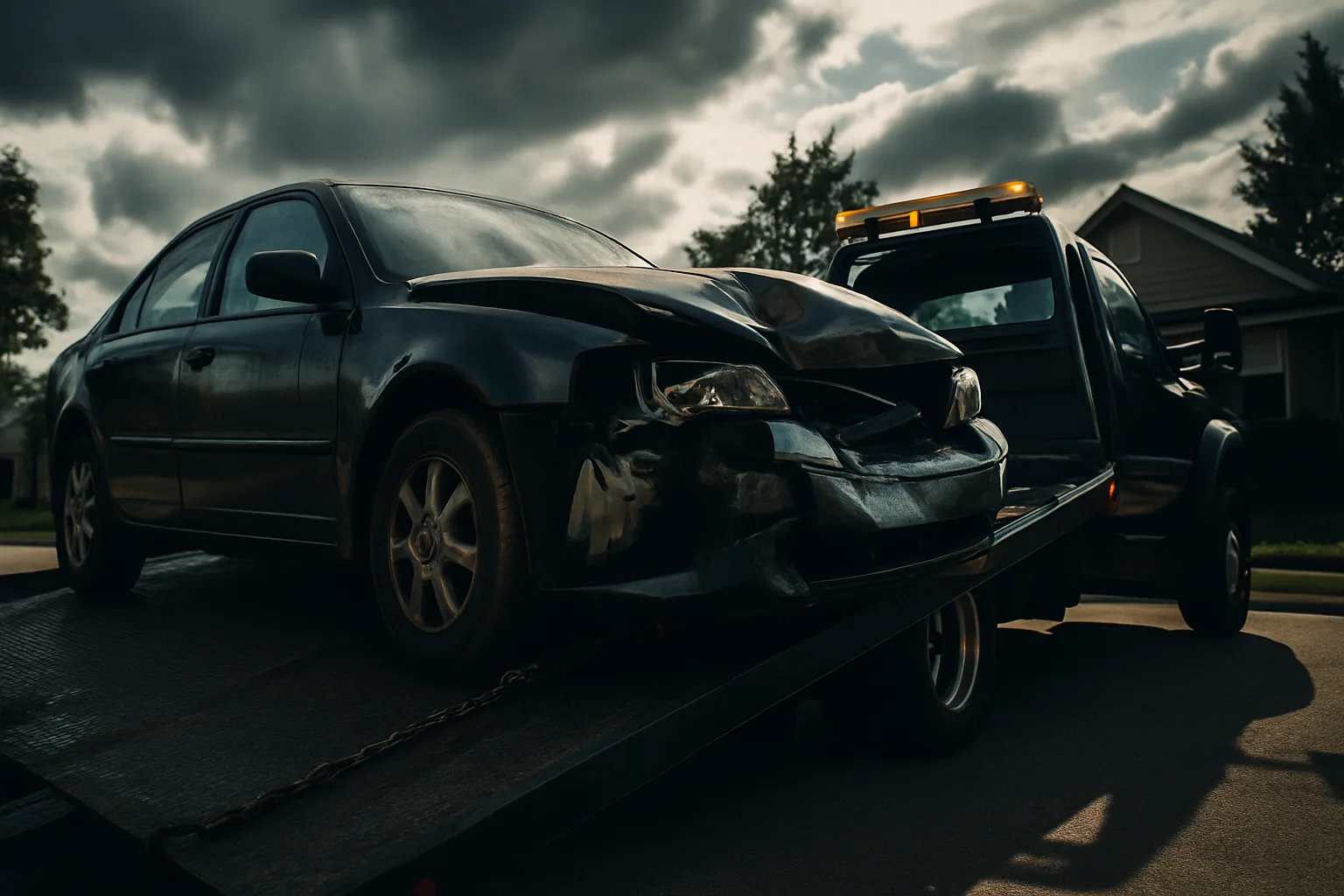
A flood took out your car's electrical system. A garage fire turned your truck into a shell. Now it's sitting in your driveway, undriveable, uninsurable, and eating up space you need back. Here's what most people don't realize: a damaged vehicle still has real value — and yards that specialize in we buy junk cars Detroit want it, even in that condition.
This isn't a motivational pitch. It's a practical breakdown of what happens when you try to sell a flood-damaged or fire-damaged car, what buyers are actually paying for, and how platforms like SMASH are changing who gets to compete for your vehicle — and what that means for your payout.
What Flood and Fire Damage Actually Does to a Vehicle's Value
Before you call anyone, it helps to understand what salvage buyers are looking at when they assess your car. A flooded vehicle doesn't become worthless — it becomes a parts vehicle. The engine block, transmission, catalytic converters, alternator, suspension components, and body panels may all survive a flood completely intact. What's typically destroyed is the wiring harness, ECU, interior, and anything electronic.
Fire damage is more variable. A front-end engine fire often leaves the rear axle, fuel tank, exhaust system, and trunk components untouched. A total cabin fire is more destructive, but the drivetrain and underbody components can still hold significant scrap and parts value. Either way, you're not selling a driveable car — you're selling a collection of recoverable materials and components.
- Catalytic converters — often survive flood events and can carry meaningful precious metal value
- Non-ferrous metals — aluminum, copper wiring, and radiators are recoverable from most flood damage
- Steel and iron — the bulk of any vehicle's scrap weight, valued per ton
- Reusable parts — transmission, axles, wheels, and glass can all be pulled and resold
The bottom line: the vehicle has layers of value. How much you recover depends on who's bidding on it and how they plan to process it.
The Old Way Was a Guessing Game — And Sellers Always Lost
Here's how most people in Michigan have sold damaged cars for decades. They call one yard. The yard sends someone out, they poke around the car for five minutes, and they name a number. You either take it or you don't. You have no idea if that number reflects the actual market, the actual weight of your vehicle, or the actual demand for its parts.
That information gap is where sellers lose money. A single buyer has every incentive to offer you the lowest number you'll accept. Without competition, there's no pressure to price fairly. That's not a knock on individual yards — it's just how single-buyer markets work.
Now contrast that with what happens when multiple vetted buyers compete for the same load. The floor gets raised. Buyers who know they can extract value from your specific vehicle — because they have the equipment, the parts customers, or the downstream buyers for your catalytic converters — will bid accordingly. More buyers means better price discovery. That's the core mechanic SMASH is built on.
If you're sitting on a flood-damaged Silverado or a fire-damaged F-150 in the Detroit metro area, the difference between one phone call and a competitive auction can be significant. Not guaranteed — market conditions and vehicle condition always matter — but the odds are better when more qualified buyers are in the room.
What Scrap Car Removal Detroit Actually Looks Like for a Damaged Vehicle
One of the biggest concerns sellers have with flood or fire-damaged cars is logistics. The car doesn't run. It may be in a garage, on a flooded lot, or in a location with limited access. Will anyone actually come get it?
Yes — and scrap car removal Detroit services that handle damaged vehicles are set up for exactly this. Flatbed tow trucks, not standard wheel-lift rigs, are standard for salvage pickups. Free towing is typically included when you accept an offer, and the buyer coordinates the logistics. You don't need to move the car to a road-accessible spot in most cases.
Here's what the typical process looks like:
- Document the vehicle. Take photos of every angle — interior, engine bay, undercarriage if accessible. Note the damage type (flood vs. fire), the extent, and any components you know are intact.
- Gather what paperwork you have. A title is ideal, but some buyers will work with a bill of sale and proper ID in certain states. Michigan has its own requirements, so confirm what your buyer needs before scheduling pickup.
- Get multiple offers. Don't settle for the first number. Use a platform where buyers compete rather than calling one yard at a time.
- Confirm the tow is free and the price is locked. Some buyers adjust their offer at pickup when they see the actual vehicle. Get it in writing before they show up.
- Hand over the keys (or what's left of them) and get paid. Most legitimate buyers pay cash or e-transfer on the day of pickup.
If you want to sell your scrap car for fair pricing, starting with accurate documentation is the most important step — especially for damaged vehicles where condition varies significantly.
Catalytic Converters, Non-Ferrous Metals, and What's Worth Pulling First
If your car has been sitting since a flood or fire, and you have the ability to remove components before selling, there's a question worth asking: is it worth pulling the catalytic converter or other high-value parts yourself before handing the vehicle over?
The honest answer is: it depends on whether you can do it legally and safely. In Michigan, if you own the vehicle and have the title, you can legally remove components before selling the shell. But removing a catalytic converter from a fire-damaged vehicle that may have compromised structural integrity carries real safety risk. If you're not a mechanic, don't do it.
What you can do is be transparent with buyers about what components are present. If the catalytic converter is still on the vehicle and intact, say so. Buyers who plan to process the car for parts will factor that in. If you want to sell catalytic converters online separately, platforms like SMASH allow you to list components individually with photo documentation and serial tracking — so you're not guessing what the market will pay.
The same logic applies to aluminum wheels, copper wiring, and radiators. Documented, itemized inventory gives buyers more confidence — and more confidence typically means stronger bids. That's not a promise of a higher price; it's just how informed buyers behave.
Cash for Cars Michigan: What to Watch Out For With Damaged Vehicle Sales
The cash for cars Michigan market has its share of operators who will lowball flood and fire-damaged vehicles because they know sellers are often desperate to move them. Here are the red flags to watch for:
- Price drops at pickup. A buyer who agreed to one number on the phone and shows up offering less is not a buyer you want. Walk away.
- No written offer. If the quote isn't documented, it isn't real.
- No tow truck confirmation. Some services take your information, never show up, and tie up your time. Legitimate buyers confirm logistics before day-of.
- Pressure to skip the title transfer. Selling without proper paperwork can leave you liable for that vehicle long after it's gone. Don't skip this step.
- No receipt of sale. Always get a signed bill of sale or receipt. Keep a copy for your records and for insurance purposes.
The Detroit area has strong competition among scrap buyers, which is generally good for sellers. But competition also means there are operators trying to win business by saying yes first and adjusting later. SMASH's vetted buyer network exists specifically to filter out that behavior — buyers on the platform have agreed to terms that protect sellers from last-minute bait-and-switch tactics.
For those outside Michigan dealing with similar situations — whether that's cash for cars no title Las Vegas or selling a damaged vehicle in any other state — the principles are the same: document your vehicle, understand your state's title requirements, and get competing offers before you commit.
How to Get Moving: Your Next Steps
If you're ready to get a flood or fire-damaged vehicle off your property in Detroit, here's the short version of what to do right now.
Start by reading scrap car selling guides to understand what documentation you need and what the process looks like end-to-end. Then get your vehicle documented — photos, VIN, damage description — so any buyer can assess it accurately.
Reach out to a service that offers free towing and fair pricing for damaged vehicles, not just running cars. You can schedule a free scrap car pickup and get a quote based on actual vehicle data, not a guess. And if you want real competition driving your offer, SMASH puts your vehicle in front of vetted buyers who are actively looking for exactly this type of inventory.
You don't need to navigate Detroit scrap metal services alone. The right buyer is out there. The goal is making sure they're competing for your vehicle — not the only one who knows about it.
When you're ready to move, schedule a free scrap car pickup and find out what your damaged vehicle is actually worth in today's market. Prices fluctuate based on metal markets, vehicle weight, and component condition — so getting a current quote matters more than any number you've heard secondhand.
Sell your scrap car today — whether it drove away from the flood or it didn't, it still has value. Get your free quote at sell-myscrapcar.com and find out what the market is actually paying right now.
Frequently Asked Questions
Q: Can I sell a flood-damaged car with no title in Detroit?
Michigan requires a title for most vehicle sales, including scrap and salvage. If your title was lost in the flood, you can apply for a duplicate through the Michigan Secretary of State before selling. Some buyers may work with alternative documentation in specific circumstances, but always confirm requirements before scheduling a pickup — selling without a title can create legal liability that follows you after the car is gone.
Q: How much can I get for a fire-damaged car in Detroit?
There's no single answer — it depends on the vehicle's make, model, weight, which components survived, and current scrap metal prices. Fire-damaged vehicles typically sell for scrap weight value plus any recoverable parts value. Getting multiple offers through a competitive platform gives you a better read on actual market value than any single quote. Note: scrap metal prices fluctuate — always check current rates before committing to an offer.
Q: Do junk car buyers in Detroit offer free towing for damaged vehicles?
Yes — most legitimate we buy junk cars Detroit services include free towing as part of the offer. For flood or fire-damaged vehicles that can't be driven, flatbed towing is standard. Confirm that towing is included and that the quoted price won't be adjusted at pickup before you agree to anything in writing.
Q: What happens to a flood-damaged car after it's picked up?
It depends on the buyer's operation. Some yards part out the vehicle, selling usable components individually and scrapping the shell. Others process the whole vehicle for ferrous and non-ferrous metal value. Catalytic converters, aluminum components, and copper wiring are typically extracted before the steel body is crushed and sent to a shredder.
Q: Is it worth selling a flood-damaged car or should I try to repair it?
For most flood-damaged vehicles — especially those with water intrusion above the floor level — repair costs typically exceed the vehicle's post-repair value. Electrical systems, ECUs, and interiors are expensive to replace, and flood damage often causes mold and corrosion issues that surface months later. In most cases, selling to a scrap or salvage buyer and putting that money toward a replacement vehicle is the more practical financial decision.
Follow SMASH on LinkedIn for scrap metal market updates, industry insights, and practical tips for getting the most from your next vehicle or metal sale.
```