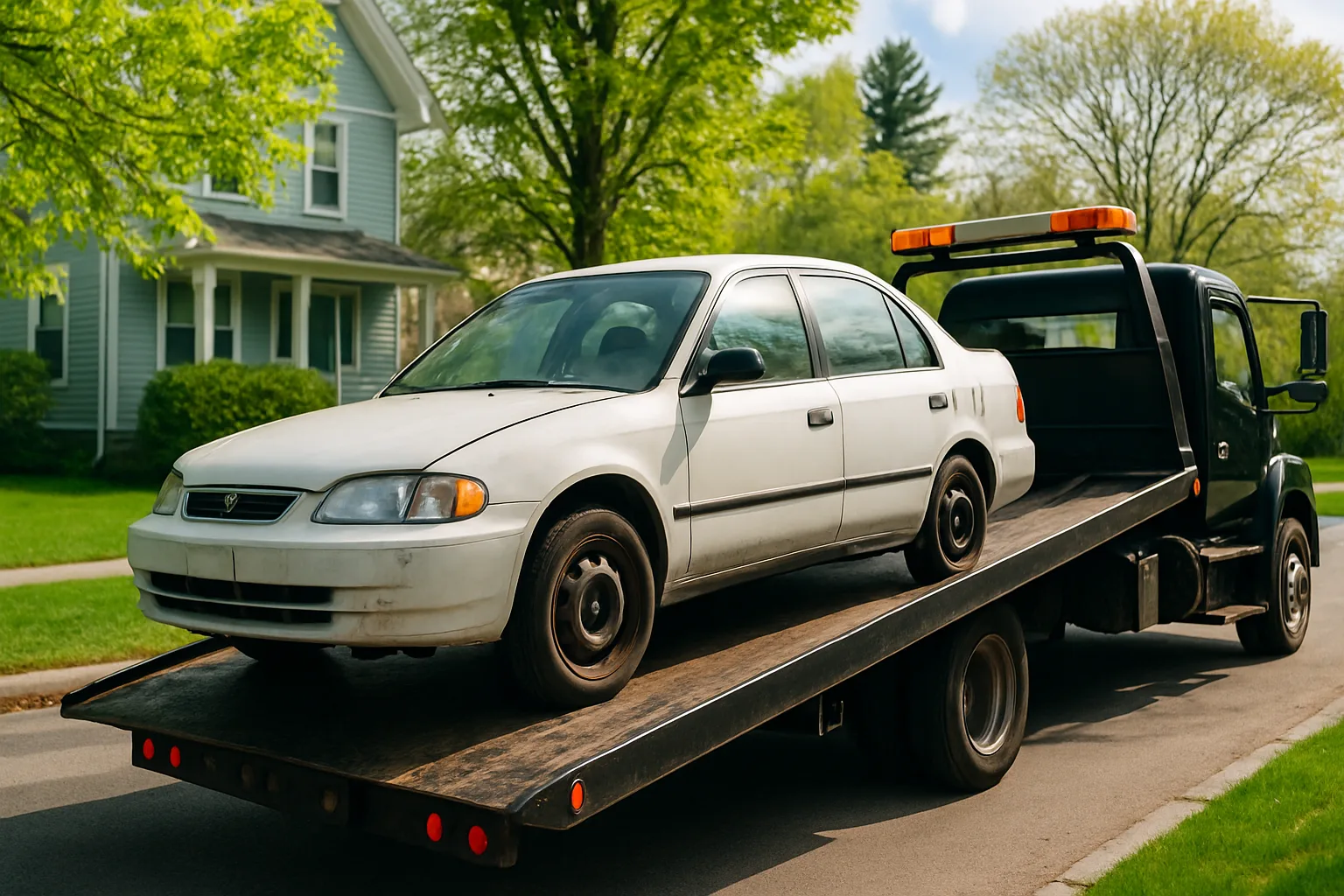
Over 12 million vehicles reach the end of their life in the United States every year — and what happens to them matters more than most people realize. If you're sitting on a dead car in your driveway and searching for junk car buyers near me Boston, you're not just solving a parking problem. You're making an environmental decision.
The good news? Scrapping a car the right way is one of the most effective forms of recycling available. Steel, aluminum, copper, and catalytic converter metals from your junker can be reclaimed and reused — cutting down on mining, energy use, and landfill waste. But not every disposal method is equal. Some are cleaner than others. And some put more cash in your pocket while doing it right.
This guide breaks down the eco-friendly car disposal and recycling processes you should know about — and how to sell your scrap car for fair pricing while doing right by the environment.
Why Eco-Friendly Car Disposal Matters for Boston Drivers
A single end-of-life vehicle contains a surprising list of hazardous materials: motor oil, transmission fluid, brake fluid, antifreeze, battery acid, refrigerants, and residual gasoline. Left sitting in a yard or improperly crushed, those fluids don't just disappear — they leach into soil and groundwater.
Massachusetts has long pushed for stricter environmental standards across industries, and auto recycling is no exception. Boston scrap metal services operating within the state are subject to MassDEP guidelines that govern how end-of-life vehicles are handled, depolluted, and processed. Working with licensed, compliant buyers isn't just better for the environment — it protects you from liability too.
The scrap car sitting on your property represents roughly 2,400 lbs of recyclable material on average. That's metal, rubber, glass, plastics, and fluids — nearly all of it recoverable through proper channels.
5 Eco-Friendly Car Disposal Methods Compared
Not all disposal routes are created equal. Here's a straight comparison of the main options — ranked by environmental impact and value to you as the seller.
1. Licensed Auto Recyclers (The Gold Standard)
Licensed auto recyclers — also called salvage yards or dismantlers — follow a structured depollution process before anything gets crushed. They drain fluids, pull the battery, recover refrigerants, and catalog usable parts. Whatever can't be resold gets sent to a shredder, where the ferrous and non-ferrous metals are separated magnetically and sold to mills.
- Environmental rating: Excellent
- Payout potential: Moderate to strong, depending on metal markets
- Towing: Often included free
- Paperwork: They handle title transfer and provide a certificate of destruction
This is the route most aligned with environmental best practices — and the most common when you work with vetted platforms in Massachusetts.
2. Auction-Based Scrap Platforms
Here's where things get interesting for sellers. Platforms like SMASH connect your vehicle inventory to multiple vetted buyers competing in an auction format. Instead of one phone call to one buyer who quotes you a number you can't verify, you get competitive bids — which can help reveal the actual market value of your load.
- Environmental rating: Excellent (buyers are vetted and licensed)
- Payout potential: Strong — competition drives better price discovery
- Transparency: Full documentation, photo records, and auto-invoicing
- No subscription fees
For yards handling volume in the Boston area, SMASH changes the math. More buyers means better price discovery. The old way — one buyer, one call, one guess — leaves money on the table every time.
3. Donation to a Nonprofit or Charity
Some charities accept running and non-running vehicles and partner with recyclers to process them. The vehicle still gets scrapped properly, and you may qualify for a tax deduction based on the sale price the charity receives.
- Environmental rating: Good (depends on the charity's recycling partner)
- Payout potential: Zero cash upfront; potential tax offset
- Best for: Sellers who don't need immediate cash and want a simple handoff
Verify the charity uses a licensed dismantler. Not all do — and if the vehicle ends up in a backyard operation, the environmental benefit disappears.
4. Private Sale for Parts
Selling parts individually before scrapping the shell can maximize total value — but it's labor-intensive, slow, and requires storage space. You'll also be responsible for managing whatever fluids and hazardous materials remain in the vehicle.
- Environmental rating: Moderate (depends on how you manage the remaining shell)
- Payout potential: Highest ceiling, lowest floor
- Time investment: High — weeks or months to move parts
- Best for: Mechanically savvy sellers with time and storage
5. Municipal Scrap Programs and Junk Haulers
Some municipalities offer vehicle disposal programs, and general junk removal companies will sometimes take cars. These options are convenient but often pay little to nothing — and environmental compliance can be inconsistent depending on where the vehicle ends up.
- Environmental rating: Variable
- Payout potential: Low to none
- Best for: Absolute last resort when speed is the only priority
What Actually Happens to Your Car After Pickup — The Recycling Process Step by Step
Most people hand over their keys and never think about what comes next. Here's what a proper recycling process looks like when you work with compliant buyers in the cash for cars Boston market.
- Depollution: All hazardous fluids are drained and collected — motor oil, coolant, brake fluid, gasoline, transmission fluid, and refrigerants. Batteries are removed separately for lead reclamation.
- Parts Harvesting: High-value components are pulled before crushing — catalytic converters, engines, transmissions, alternators, and usable body panels. Cats alone can carry significant value depending on their platinum group metal content.
- Shredding: The stripped shell goes through an industrial shredder, which tears the vehicle into fist-sized pieces in seconds.
- Metal Separation: Ferrous metals (steel and iron) are pulled magnetically. Non-ferrous metals like aluminum, copper, and brass are separated through eddy current and sensor-based systems.
- Mill Sale: Separated metal is sold by the ton to steel mills and foundries, where it gets melted down and recast into new material. Recycled steel requires roughly 74% less energy than producing new steel from raw ore.
- Shredder Residue: What remains — foam, rubber, glass, plastics — is called shredder fluff. Increasing percentages of this material are now recovered through advanced separation technology, though some still goes to landfill.
Understanding this process helps you ask better questions when you get quotes. Buyers who can't tell you where your vehicle goes aren't buyers you want handling your disposal.
How Junk Car Prices Per Ton Are Set — And What Affects Your Payout
If you've searched junk car prices per ton or wondered how much is a scrap car worth, you already know the answer isn't fixed. Scrap car pricing moves with the global ferrous and non-ferrous metal markets. Your payout depends on several factors working together.
Factors that affect what your car is worth:
- Current scrap steel prices: The benchmark ferrous price fluctuates based on mill demand, trade conditions, and energy costs. Check current market rates — prices from even a few months ago may not reflect today's market.
- Vehicle weight: Heavier vehicles yield more metal. A full-size pickup yields significantly more by the ton than a compact sedan.
- Catalytic converter value: Depending on the make and model, your cat could be worth more than the scrap steel in the entire vehicle. Platinum, palladium, and rhodium inside cats are tracked separately.
- Condition and completeness: A car missing its engine, transmission, or catalytic converter will be valued differently than an intact vehicle.
- Buyer competition: This is the one most sellers ignore. A single quote from a single buyer tells you almost nothing about market value. When multiple vetted buyers compete — like they do on SMASH — price discovery happens in real time.
Disclaimer: Scrap metal prices fluctuate based on market conditions. Always check current rates before accepting any offer.
How to Sell Scrap Car in Massachusetts Without the Guesswork
If you're ready to move your vehicle and want the process to be clean — literally and financially — here's how to approach it in the sell scrap car in Massachusetts market.
Step 1: Gather your documents. You'll need the title. Massachusetts requires a clean title transfer for most scrap transactions. If you've lost the title, contact the Massachusetts RMV to request a duplicate before you call buyers.
Step 2: Know what you have. Year, make, model, and approximate weight. Note whether the catalytic converter, engine, and transmission are still in the vehicle. This affects your quote.
Step 3: Get multiple quotes. Don't accept the first offer. The cash for cars Boston market has multiple active buyers — use that competition to your advantage. Platforms that bring buyers to you, rather than making you call each one individually, save time and tend to surface stronger offers.
Step 4: Confirm free towing is included. Licensed buyers almost always offer free pickup. If a buyer wants to charge you for towing, that's a red flag — or at minimum, a negotiating point.
Step 5: Get paid before the truck leaves. Cash, check, or electronic transfer on pickup. Don't hand over keys without payment in hand.
When you're ready, schedule a free scrap car pickup and get a quote without the runaround. You can also read scrap car selling guides to get sharper on the process before you pick up the phone.
Frequently Asked Questions
Q: How do I find reliable junk car buyers near me in Boston?
Look for licensed, insured buyers who offer free towing and handle the title paperwork on your behalf. Avoid any buyer who can't confirm where your vehicle will be processed — that's a sign they may not be operating within MassDEP compliance standards. Getting multiple quotes, either through individual calls or a platform that aggregates buyers, gives you a baseline to work from.
Q: What's the average cash for cars payout in Boston?
Payouts vary based on vehicle weight, condition, current scrap steel prices, and the value of components like catalytic converters. There's no single fixed rate — the market moves. Getting competing offers is the most reliable way to find out what your specific vehicle is worth right now. Always check current market rates rather than relying on numbers you read a few months ago.
Q: Do I need a title to sell my junk car in Massachusetts?
In most cases, yes. Massachusetts requires a title for legal transfer of ownership on a vehicle being scrapped. If you've lost yours, you can apply for a duplicate through the Massachusetts RMV before scheduling pickup. Some buyers can work with you on alternative documentation — ask upfront.
Q: Is scrapping a car actually better for the environment than letting it sit?
Yes, significantly. A vehicle sitting idle still contains hazardous fluids that can leach into the soil over time. Proper scrapping through a licensed recycler removes those fluids safely, recovers usable metals, and reduces the need for virgin material extraction. It's one of the most effective forms of material recycling available at the consumer level.
Q: How quickly can I get my junk car picked up in Boston?
Most licensed buyers in the Boston area can arrange pickup within one to three business days, sometimes same-day depending on availability. Have your title and vehicle information ready when you call — it speeds up the quoting and scheduling process considerably. Explore scrap car removal services at GetMyScrapCar to see what's available in your area.
Your end-of-life vehicle has real value — in the metal it contains, in the parts that can be reused, and in the environmental benefit of keeping those materials out of the waste stream. Boston has active buyers and a competitive market. Use it. If you're ready to turn that junker into cash and move on, sell your scrap car for fair pricing today at sell-myscrapcar.com — no guessing, no haggling, free towing included.
Stay sharp on scrap metal market trends and industry updates — follow SMASH on LinkedIn for insights that actually help you make better decisions.
```