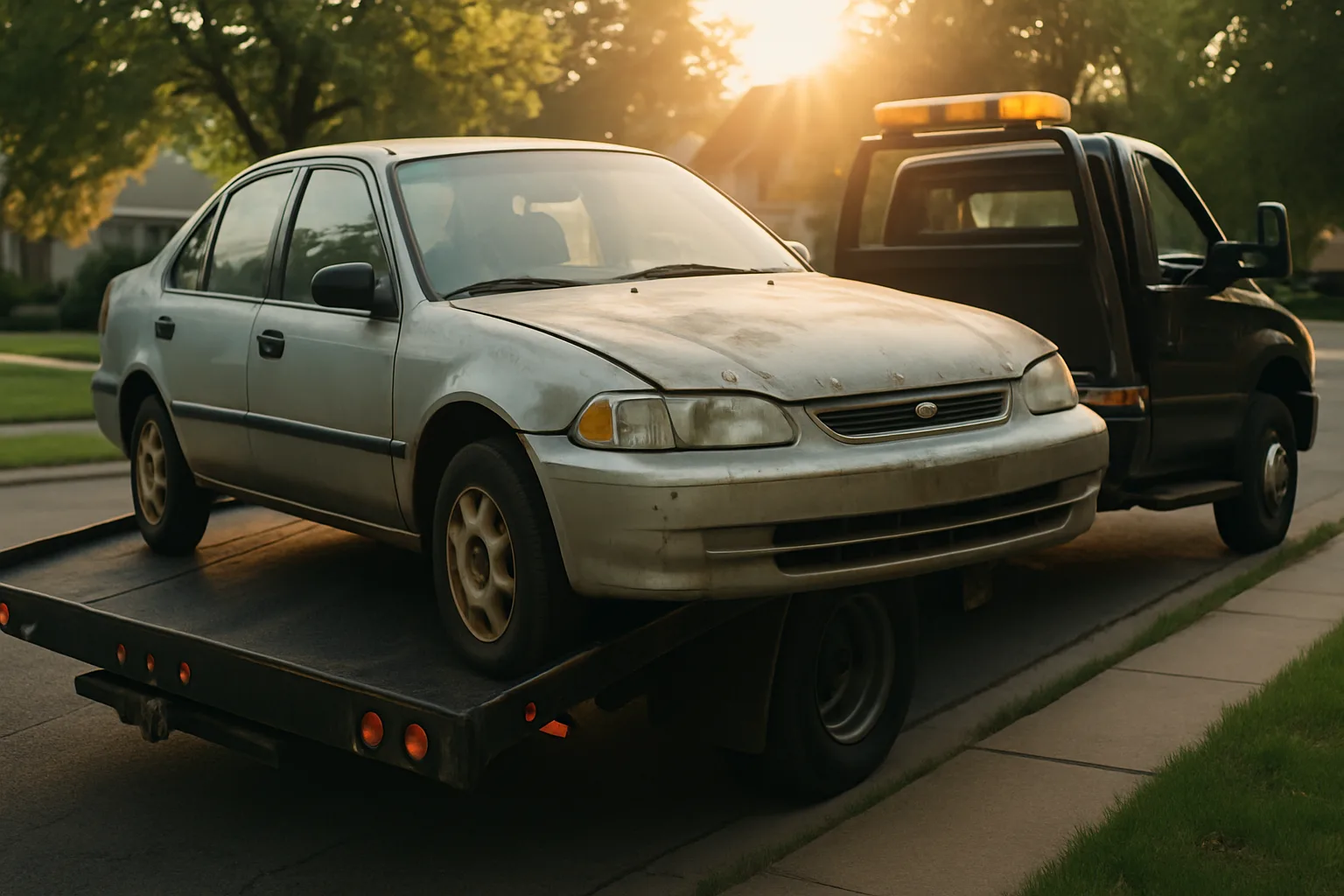
What's Your Scrap Car Actually Worth in 2026? Here's the Honest Answer
Most people selling a junk car for the first time expect a ballpark number and get a runaround instead. One buyer quotes $150. Another quotes $600. A third never calls back. That gap isn't random — it reflects how broken the traditional cash-for-cars process actually is. If you want to understand scrap car value today, you need to know what actually drives the number, not just what someone's willing to tell you over the phone.
This guide cuts through the guesswork. Whether you're in Detroit sitting on a rusted-out F-150, or anywhere else in Michigan trying to get rid of an end-of-life vehicle, here's what your scrap car is realistically worth — and how to make sure you're not leaving money on the table.
The Core Factors That Determine Scrap Car Value Today
Your car's value at a scrap yard is not a fixed number. It's a formula. Several variables move the needle, and understanding them puts you in control of the conversation.
Here's what actually matters when a buyer prices your vehicle:
- Curb weight: Scrap cars are often priced by the ton. A heavier vehicle — a full-size pickup, a large SUV, a commercial van — earns more than a compact sedan just by mass alone. Most passenger cars weigh between 2,800 and 4,500 lbs.
- Steel and metal prices: The scrap metal market fluctuates daily. When steel prices rise, your car's baseline value goes up. When they fall, it goes down. Nobody controls this — not you, not the buyer.
- Catalytic converter: If your car still has its cat, that's often the highest-value single component on the vehicle. Cats contain platinum, palladium, and rhodium. A missing or stolen cat can cut your offer significantly.
- Condition and completeness: A car that's complete — engine in, transmission in, all four tires, glass intact — fetches more than one that's been stripped. Buyers price what's there, not what used to be there.
- Location and logistics: In dense markets like Detroit, where auto recyclers are plentiful and competition is real, you're more likely to get a stronger offer than in a rural area with one buyer within 50 miles.
- Drivability: A car that runs gets a higher offer than one that doesn't, even if both end up getting crushed. Buyers factor in the cost of moving a non-runner.
None of these factors are secret. But most sellers don't know to ask about them — and most single-buyer phone quotes don't volunteer the breakdown either.
Why Detroit Sellers Have a Real Advantage Right Now
Detroit isn't just the Motor City by reputation. It still has one of the densest concentrations of auto recyclers, dismantlers, and scrap metal buyers in the country. That density matters. More buyers means more competition. More competition means better price discovery — a real number instead of a lowball guess.
Michigan's auto manufacturing legacy also means the regional scrap infrastructure is built for volume. Yards in and around Detroit move serious tonnage. They need inventory. That's leverage for the seller — if you know how to use it.
The problem? Most vehicle owners in Detroit still sell the old way. One phone call, one offer, done. They have no idea whether that offer was fair, high, or embarrassingly low. A platform like SMASH changes that dynamic entirely by putting your vehicle in front of multiple vetted buyers simultaneously, letting competition surface the real market price instead of whatever a single buyer feels like offering that morning.
If you want to sell your scrap car for fair pricing, the first step is understanding that "fair" requires more than one data point.
Scrap Car Pricing Ranges: What to Realistically Expect in 2026
Without inventing specific numbers — because metal prices change and every car is different — here's a realistic framework for how cars typically tier out in the current market. Use these as directional guides, not guarantees.
Lower range (economy sedans, high mileage, missing components):
Small cars under 3,000 lbs with no catalytic converter, stripped interiors, or significant body damage land at the lower end of the market. Think compact vehicles from the early 2010s or older with nothing left worth parting out.
Mid range (average passenger cars, complete condition):
A complete mid-size sedan or crossover with its cat intact, no major missing parts, and at least some remaining drivability typically lands in the middle tier. These are the most common scrap cars sold.
Upper range (trucks, SUVs, vans, complete with catalyst):
Full-size pickups, large SUVs, and commercial vans push to the top of the range on weight alone. Add a working cat and a complete drivetrain and you're looking at significantly stronger offers — especially in a competitive market.
The honest reality: a single phone quote rarely reflects the upper range. That's not because the buyer is dishonest — it's because they're running a business and have no incentive to bid against themselves. SMASH's auction format exists precisely to close that gap. Documented inventory, photo records, and serial tracking give buyers the confidence to bid aggressively instead of hedging low on unknowns.
Disclaimer: Scrap metal and junk car prices fluctuate based on commodity markets, regional demand, and vehicle condition. Always verify current rates before selling.
The Documentation Advantage — Why Prepared Sellers Get Better Offers
Here's something most sellers never think about: the quality of your documentation affects the quality of your offer. Buyers bidding blind on an undocumented vehicle have to factor in risk. Risk means lower bids.
When you show up — or list — with clean documentation, you eliminate that hedge. What good documentation looks like for a scrap vehicle:
- Clear title or equivalent paperwork: Michigan has specific requirements for transferring title on a vehicle being sold for scrap. Have it in order before you start calling.
- VIN confirmed and accessible: Buyers need to confirm what they're buying. A visible, verifiable VIN removes friction and doubt.
- Photos of actual condition: Exterior, interior, engine bay, and undercarriage. Honest photos build buyer confidence. Surprises at pickup destroy it and sometimes kill deals.
- Inventory of intact components: Catalytic converter, tires, battery, key fobs, and any aftermarket parts. If it's there, say so. If it's missing, say that too.
Platforms built for scrap metal inventory management — like SMASH — handle this systematically. Serial tracking, photo documentation, and organized listings mean buyers across North America can evaluate your vehicle with real information rather than assumptions. That's the difference between a guess and a competitive bid.
Want to read scrap car selling guides that walk you through the full prep process? There's a lot more ground to cover before your first pickup.
Free Towing and What It Actually Means for Your Net Payout
A lot of junk car buyers advertise "cash for cars" and then quietly deduct towing fees from your offer at the end. You think you're getting $400. You're actually getting $250 after the tow. That's not a conspiracy — it's just a common pricing tactic that obscures the real value.
When a service advertises free towing, that cost is genuinely absorbed by the buyer, not hidden in the quote. The number you're told is the number you receive. That distinction matters, especially if you're comparing multiple offers at once.
In Detroit, free towing is more common because the density of buyers makes it competitive to offer. In more remote parts of Michigan, you may encounter distance surcharges. Always confirm: is towing included in the quote, or deducted from it? Get it in writing before you agree to anything.
You can schedule a free scrap car pickup without navigating hidden fee structures when you use a transparent service upfront about what the offer includes.
How to Get the Strongest Offer on Your Scrap Car
You don't have to be an expert to sell smart. You just need a process. Here's a straightforward approach that works regardless of whether you're in Detroit or anywhere else in Michigan:
- Gather your paperwork first. Title, ID, any service records if you have them. This speeds everything up and signals you're a serious seller.
- Don't strip the car. It feels counterintuitive, but removing parts before sale often lowers your total offer more than those parts were worth sold separately. Let buyers see a complete vehicle.
- Get multiple quotes. One quote is a data point. Three quotes are a market. Use competition to find the real number, not just the first available one.
- Ask specifically about the catalytic converter. If it's intact, make sure the buyer knows. If it's missing, disclose it upfront.
- Confirm free towing is actually free. Not a deduction. Not a "we'll handle logistics." Free means it costs you nothing off your offer.
- Use documented listings where possible. Schedule a free scrap car pickup through a service that treats your vehicle as inventory, not just a cold call lead.
The sellers who get the strongest offers aren't the ones who got lucky. They're the ones who showed up prepared and didn't accept the first number they heard.
Frequently Asked Questions
Q: What is my scrap car worth today in Detroit?
Scrap car value today depends on your vehicle's weight, condition, whether the catalytic converter is intact, and current steel prices. In Detroit, where buyer competition is strong, you're more likely to surface a competitive offer than in lower-density markets. Get multiple quotes rather than relying on a single phone call to know your real number.
Q: Does a car need to run to have scrap value?
No. Non-running vehicles still have real scrap value — they're priced on metal content and components, not drivability. However, a running or drivable vehicle typically commands a higher offer because buyers factor in lower logistics costs. Disclose the condition honestly upfront so there are no surprises at pickup.
Q: How do I sell my junk car today without getting lowballed?
The most effective way is to get competing offers simultaneously rather than serially. A single buyer has no incentive to bid their best price — competition changes that. Platforms like SMASH put your vehicle in front of vetted buyers and let the market decide the price, which is how you avoid leaving money behind.
Q: Is free towing really free, or is it deducted from my offer?
It depends on the service. Some buyers advertise free towing but deduct it from the quoted price at pickup. Always confirm in writing whether towing is included in your offer or subtracted from it. Legitimate free towing services absorb that cost — you receive the full quoted amount.
Q: Do junk car prices vary across North Carolina and Michigan the same way?
Yes — regional market conditions, buyer density, and local scrap infrastructure all affect what you're offered. Michigan markets, especially in Detroit, tend to be highly competitive due to auto industry density. Markets in states like North Carolina vary by region. In all cases, more competing buyers means better price discovery regardless of where you are.
If you're ready to stop guessing and start getting real offers, sell your scrap car for fair pricing through a service built on transparency — no subscription fees, no hidden tow deductions, no single-buyer guesswork. The Detroit scrap metal services available through our platform connect you with vetted buyers who compete for your vehicle. That competition is how you find out what it's actually worth.
Follow SMASH on LinkedIn for ongoing scrap metal market updates, industry news, and pricing insights that help you sell smarter.